Rail-Optimized Networking Emphasizes Workload-Aligned Fabric Performance
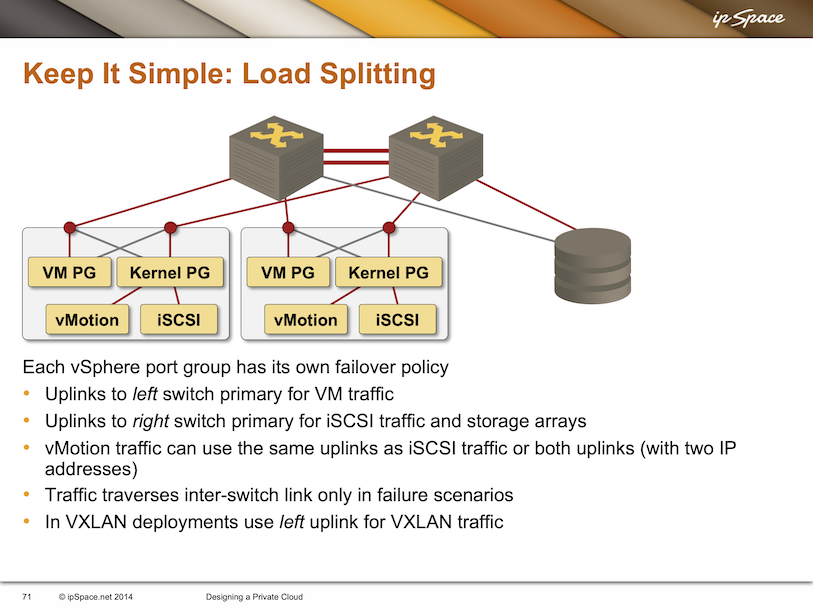
Phil Gervasi frames "rail-optimized" networking as an operational pattern layered on a standard Clos-based fabric, not a new physical topology. The core idea is deliberate workload placement so that most heavy east-west AI training traffic remains inside a leaf switch, bounding congestion and treating each rail as an independent failure domain. That behavior can be achieved through scheduling, rack placement, and intra-server communication techniques such as RDMA, rather than changing the underlying network fabric. The critique notes the concept is evolutionary rather than revolutionary, echoing older designs like SAN-A/SAN-B and longstanding best practices in private-cloud design. For AI infra teams, the takeaway is that workload-aware placement and predictable traffic engineering matter more than inventing new topologies; focus on orchestration, telemetry, and constrained failure domains to squeeze training throughput out of existing leaf-spine networks.
What happened
Phil Gervasi and commentators revived the term "rail-optimized networking" to describe an approach to AI training datacenter design where endpoints are mapped to persistent network planes inside a shared Clos-based fabric. The central claim is that by aligning workload placement, you can keep the majority of heavy, synchronized AI training traffic within a leaf switch or a bounded set of leaves, thereby reducing cross-fabric congestion and making each rail an independent failure and congestion domain.
Technical details
Rail-optimized networking is not presented as a new physical topology but as a mapping and operational model on top of existing leaf-spine fabrics. As Phil wrote, "A rail isn't a separate topology or a bypass of the leaf-spine fabric. Instead, it's a consistent mapping of endpoints to a specific network plane within a shared Clos-based fabric." Practically, this relies on three technical levers:
- •orchestration and scheduler-level placement to keep GPUs and storage traffic co-located inside leaf switches;
- •use of intra-server forwarding and host-level mechanisms, potentially leveraging RDMA, to move data between GPUs without traversing the fabric;
- •intentionally bounded failure and congestion domains so that one rail's problems do not cascade across the entire cluster.
Why it is not strictly new The critique emphasizes this is an application of long-standing principles: workload-aware placement and segregated failure domains. Concepts like SAN-A/SAN-B in the 1990s already separated traffic and bounded domains for storage. Similarly, private-cloud designs and rack-aware schedulers have long aimed to localize traffic to improve performance. The substantive novelty is not in inventing a new switching plane, but in operationalizing these choices for large-scale, tightly synchronized AI training workloads.
Tradeoffs and implementation choices
- •Benefits: bounded congestion, simpler failure isolation, predictable performance for synchronous all-reduce and model-parallel workloads.
- •Costs: reduced flexibility for general-purpose workloads, potential underutilization of cross-leaf bandwidth, increased scheduler complexity.
- •Implementation paths: stricter rack/GPU affinity policies in cluster schedulers, host-level RDMA/intra-server forwarding stacks, and enhanced telemetry to verify that traffic stays within intended rails.
Context and significance
This discussion sits at the intersection of networking, cluster scheduling, and ML systems. Large language model training amplifies east-west, high-throughput flows that expose assumptions of traditional leaf-spine fabrics. The industry response is varied: some vendors push alternative topologies like butterfly fabrics; others pursue smarter placement and host-level communication. For most operators, the pragmatic choice is to extract performance with minimal architectural change by aligning application placement and leveraging existing network fabrics.
What to watch
Monitor scheduler and orchestration feature adoption that supports strict rack and PCIe/GPU affinity, and watch for vendor tooling that surfaces per-rail telemetry and bounded congestion metrics. Evaluate whether host-level RDMA and intra-server forwarding patterns can be standardized into cluster runtimes to reduce reliance on specialized topologies.
Bottom line
Rail-optimized networking is a useful operational rubric for workload-aligned design, but it is primarily an organizational and scheduling solution layered on familiar fabrics, not a novel switching architecture. Practitioners should prioritize placement policies, telemetry, and host-level communication optimizations before committing to alternate physical topologies.
Key Points
- 1Rail-optimized networking is primarily workload placement on a Clos-based fabric, not a new physical topology.
- 2Keeping AI training traffic inside leaf switches bounds congestion and isolates failure domains, improving synchronous training scale.
- 3Practical gains come from scheduler affinity, host-level RDMA or intra-server forwarding, and per-rail telemetry more than new switching hardware.
Scoring Rationale
The topic is notable for datacenter and ML infrastructure teams because it clarifies that operational choices, not new topologies, often deliver most performance for AI training. It is relevant and actionable, but not a paradigm shift, so it scores in the mid high range for infrastructure practitioners.
Sources
Public references used for this report.
Practice interview problems based on real data
1,625 SQL & Python problems across 15 industry datasets — the exact type of data you work with.
Try 250 free problems