
Rahul Gandhi Warns India’s Data Sovereignty Risks
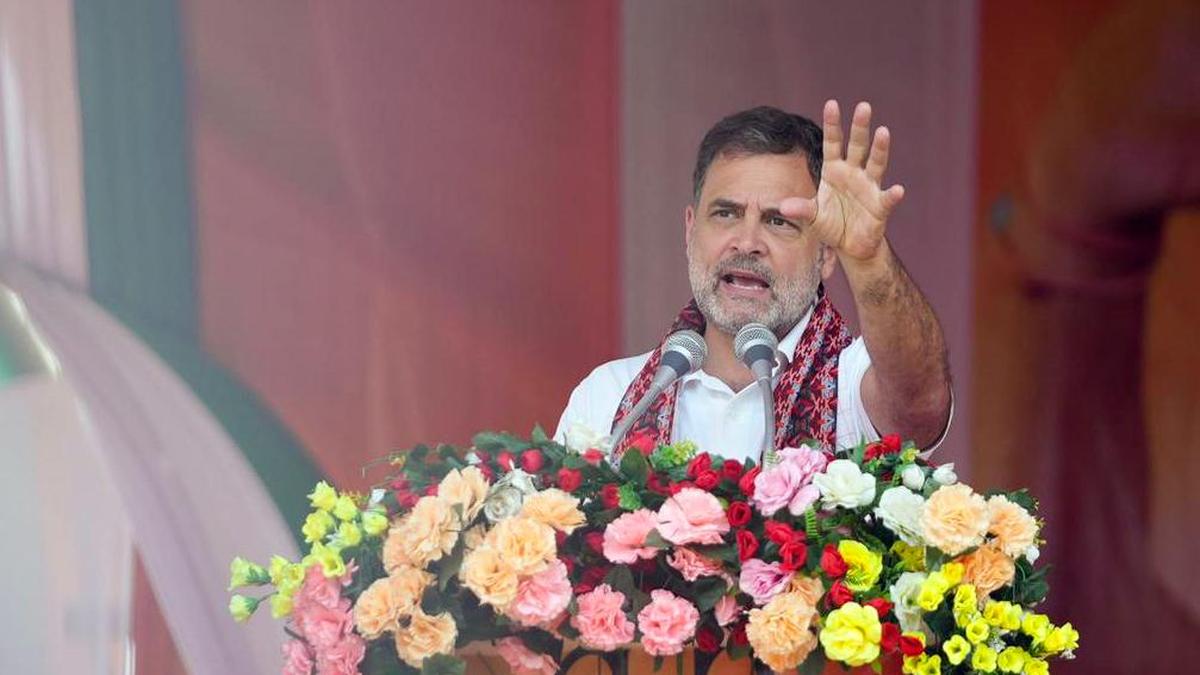
In a Lok Sabha speech tied to the Union Budget debate, Rahul Gandhi framed India’s 140 crore citizens’ data as a strategic asset and accused the government of compromising data sovereignty in negotiations with the United States. He distilled AI’s dependency on large, high-quality datasets—“AI without data is nothing” and “the petrol for AI is data”—and argued India’s freer, diverse social environment yields stronger data for building AI. Gandhi warned that failure to secure data and plan for AI’s disruption risks ceding economic leverage and displacing software-engineering jobs, urging strategic policy moves rather than incremental budgeting.
What happened
In a forceful Lok Sabha address during the Union Budget debate, Congress leader Rahul Gandhi framed data as India’s key strategic asset and accused the government of failing to safeguard national data sovereignty, particularly in the context of evolving trade talks with the United States. He repeated blunt metaphors—“AI without data is nothing” and that data is the “petrol for AI”—to stress data’s centrality to technological and geopolitical power.
Technical context
Gandhi’s remarks compress two technical realities: modern AI systems scale with access to large, diverse, high-quality datasets, and control over data flows translates to economic and strategic leverage. He contrasted India’s data pool with China’s on quantity, while claiming India’s social openness yields qualitatively richer behavioural and commercial signals beneficial for AI model development.
Key details from sources
Gandhi identified India’s population (140 crore) as a vast reservoir of behavioural, commercial and social data. He accused the government of “bargaining away” that asset in diplomatic and trade engagements, calling out the Union Budget for lacking strategic thinking about technology, energy and finance. He also warned of labour-market disruption—specifically that AI could replace “lots of our software engineers”—and linked data sovereignty to surveillance, privacy and national preparedness themes raised in parliamentary debate.
Why practitioners should care
The commentary signals political pressure for tighter data-localisation, stronger privacy controls, or negotiated restrictions on cross-border data access—each outcome materially affects engineering choices, data architecture, compliance workflows and go-to-market strategies for AI products built in or for India. If policymakers respond with regulation or emphasis on indigenous stacks, expect increased demand for secure data storage, federated learning patterns, privacy-preserving ML, and auditability tooling.
What to watch
Track legislative or budgetary follow-ups that translate rhetoric into concrete policy (data-localisation mandates, export controls, or sovereignty clauses in trade agreements), and monitor procurement or funding shifts toward domestic AI infrastructure and research. For teams, plan for increased compliance overhead, potential constraints on cross-border datasets, and opportunities in privacy-tech and onshore model-hosting services.
Key Points
- 1Data is central leverage in AI and geopolitics → control over citizen data shapes national technological power → policymakers must treat data as strategic infrastructure.
- 2India’s large, diverse dataset is a competitive AI advantage → freedom and behavioural variety yield richer signals → preserving access is vital for building robust models.
- 3Political scrutiny raises odds of regulatory action → potential data-localisation or sovereignty clauses will impact data architecture and compliance for AI teams.
Scoring Rationale
The story has high relevance to AI/ML practitioners because it directly concerns data access and sovereignty—core inputs for model development. Credibility is solid (major national outlets); scope is national with geopolitical implications. Novelty is moderate—political actors have long debated data policy—but near-term policy action could be consequential for practitioners.
Sources
Public references used for this report.
View 7 more sources
- Rahul Gandhi Criticizes Indo-US Data Deal - Devdiscoursedevdiscourse.com
- Rahul Gandhi accuses Centre of compromising India's data ...uniindia.com
- Rahul Gandhi Flags India's 'Data Currency' Risk In Lok Sabhabusinessworld.in
- India's AI crossroads: Lead or serve? - Deccan Heralddeccanherald.com
- India must build its own AI stack. It is now a strategic necessitytheprint.in
- Rahul Gandhi flags gaps in surveillance and data security ... - MSNmsn.com
- Leader of Opposition Shri Rahul Gandhi thrashes govt. over ...inc.in
Practice interview problems based on real data
1,625 SQL & Python problems across 15 industry datasets — the exact type of data you work with.
Try 250 free problems