Punjab Deploys AI E-Challan System in Khanewal
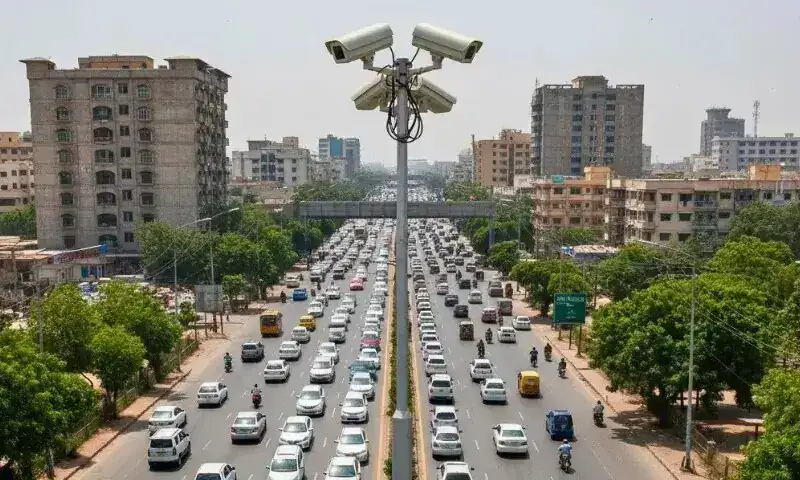
The Punjab Safe Cities Authority has deployed an AI-based e-challan system in Khanewal to automate detection and enforcement of traffic violations. The system uses Safe City camera infrastructure and computer-vision algorithms to flag offences such as over-speeding and lane violations, issue electronic challans, and reduce dependence on on-ground personnel. Officials position the rollout as a public-safety and compliance measure intended to improve road safety through data-driven monitoring. Practical questions remain for implementers: detection accuracy in local conditions, license plate recognition reliability, integration with payment and adjudication workflows, and data governance for citizen privacy.
What happened
The Punjab Safe Cities Authority has launched an AI-based e-challan system in Khanewal, making automated traffic violation detection and electronic ticketing operational across the city. The platform is integrated with existing Safe City camera feeds and is being promoted to improve enforcement efficiency and road safety.
Technical details
The deployment centers on computer-vision models trained to identify common traffic offences such as over-speeding, lane violations, and other moving-vehicle breaches. Detection runs on the Safe City camera network and triggers automated evidence collection, timestamped imagery, and generation of electronic challans for registered vehicles. Key implementation notes for practitioners:
- •Automated detection of speeding, lane violations, and signal-jumping from camera feeds
- •Evidence capture pipeline that links stills/video to vehicle registration databases for challan issuance
- •Reduced reliance on manual patrols, with enforcement workflow automation and digital notifications
Context and significance
This rollout follows a broader trend of municipal governments adopting AI for traffic management and public-safety operations. For ML teams, the practical lessons are in domain adaptation: models must handle local lighting, plate styles, occlusion, and two-wheeler/high-density traffic common in South Asian cities. Operationalizing such systems requires robust OCR/ANPR performance, drift monitoring, edge-versus-cloud inference trade-offs, and procedures for human review to limit false positives.
Risks and governance
Expect pressure points around false positives, contestation and appeals, data retention, and privacy. Successful deployments pair detection models with calibrated thresholds, audit logs, and transparent dispute resolution channels. Performance metrics city officials should publish include precision/recall on violation classes and average time-to-adjudication.
What to watch
Monitor reported accuracy rates, integration with payment and legal workflows, and whether Punjab scales the system to additional districts. Also watch governance moves: transparency on data retention, model audits, and citizen appeal mechanisms.
Key Points
- 1AI e-challan automates detection of speeding and lane violations, improving enforcement efficiency across Khanewal.
- 2Local conditions make ANPR and vision-model accuracy the central deployment risk, affecting false positives and trust.
- 3Operational success depends on integration with adjudication workflows, transparent metrics, and data-governance safeguards.
Scoring Rationale
This is a notable regional deployment of applied computer vision for traffic enforcement, relevant to practitioners working on production ML systems and governance. It is not a frontier research breakthrough but offers useful operational lessons about model adaptation, ANPR, and data governance.
Sources
Public references used for this report.
Practice interview problems based on real data
1,625 SQL & Python problems across 15 industry datasets — the exact type of data you work with.
Try 250 free problems