Predictive Model Estimates Dosimetry for PSMA Therapy
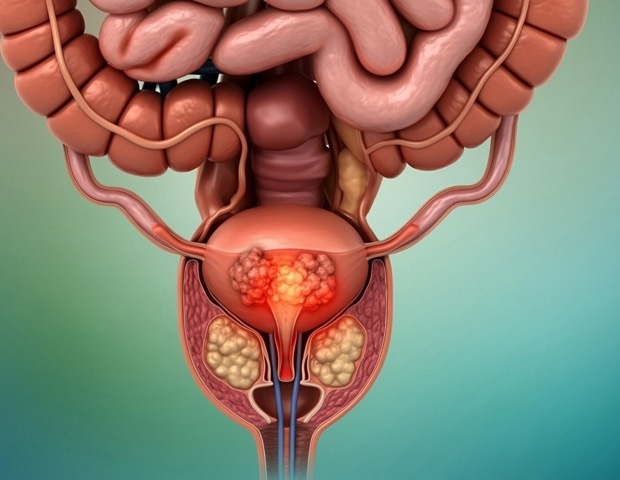
A machine-learning model using pre-therapy 18F-PSMA PET/CT data was developed to predict absorbed radiation dose to tumors and healthy organs, News-Medical reports. The proof-of-concept study included nine patients with metastatic castration-resistant prostate cancer (mCRPC), contributing 57 tumors, 36 salivary glands, and 18 kidneys for analysis, according to News-Medical. Researchers built a mixed-effects machine learning model combining uptake-based PET metrics, radiomic features, and clinical biomarkers, and compared predictions to post-therapy dosimetry after one cycle of 177Lu-PSMA radiopharmaceutical therapy, per News-Medical. The research was presented at the Society of Nuclear Medicine and Molecular Imaging 2026 Annual Meeting, News-Medical reports.
What happened
A proof-of-concept machine-learning model used pre-therapy 18F-PSMA PET/CT to predict absorbed radiation dose to tumors and organs, News-Medical reports. The study enrolled nine patients with metastatic castration-resistant prostate cancer, contributing 57 tumors, 36 salivary glands, and 18 kidneys for analysis, News-Medical reports. The work was presented at the Society of Nuclear Medicine and Molecular Imaging 2026 Annual Meeting, News-Medical reports.
Technical details
According to News-Medical, researchers developed a mixed-effects machine learning model that combined uptake-based PET metrics, radiomic features, and clinical biomarkers to predict post-therapy dosimetry. Predictions were compared with dosimetry calculated after one cycle of 177Lu-PSMA radiopharmaceutical therapy to assess accuracy, per News-Medical. The article quotes Amit Nautiyal, PhD, saying, "18 F-PSMA PET/CT is already routinely performed and widely available in prostate cancer patients, but its potential to predict treatment radiation dose has not previously been explored," News-Medical reports.
Editorial analysis - technical context
Early-stage models that link pre-therapy imaging to dosimetry can reduce reliance on post-therapy imaging workflows and speed decision cycles for radiopharmaceuticals. Observed patterns in similar translational studies show that combining classical uptake metrics with radiomics and patient-level random effects often improves sample-efficient prediction while raising the need for external validation.
Industry context
For practitioners, a validated pre-therapy dosimetry predictor would simplify patient selection and toxicity risk assessment for PSMA-targeted radioligand therapy across centers that already perform 18F-PSMA PET/CT. Observers should note the study's small sample size and single-cycle comparison when weighing generalizability.
What to watch
Look for larger, multi-center validation cohorts, prospective comparisons across imaging protocols, and tests of model calibration against multi-cycle dosimetry. News outlets and conference follow-ups that report validation results will be key indicators of clinical readiness.
Key Points
- 1Pre-therapy 18F-PSMA PET/CT can be used to predict post-therapy absorbed dose, potentially streamlining dosimetry workflows.
- 2Combining uptake metrics, radiomics, and clinical biomarkers with mixed-effects modelling supports patient-level variability in dosimetry prediction.
- 3Robust clinical impact depends on larger, multi-center validation and calibration across imaging protocols before deployment.
Scoring Rationale
The study proposes a practical ML application for pre-therapy dosimetry with direct relevance to radiopharmaceutical workflows, but it is a small, single-center proof of concept requiring larger validation before clinical impact.
Sources
Public references used for this report.
Practice with real Health & Insurance data
90 SQL & Python problems · 15 industry datasets
250 free problems · No credit card
See all Health & Insurance problems