PILA Trains on Screen Input to Play PolyTrack
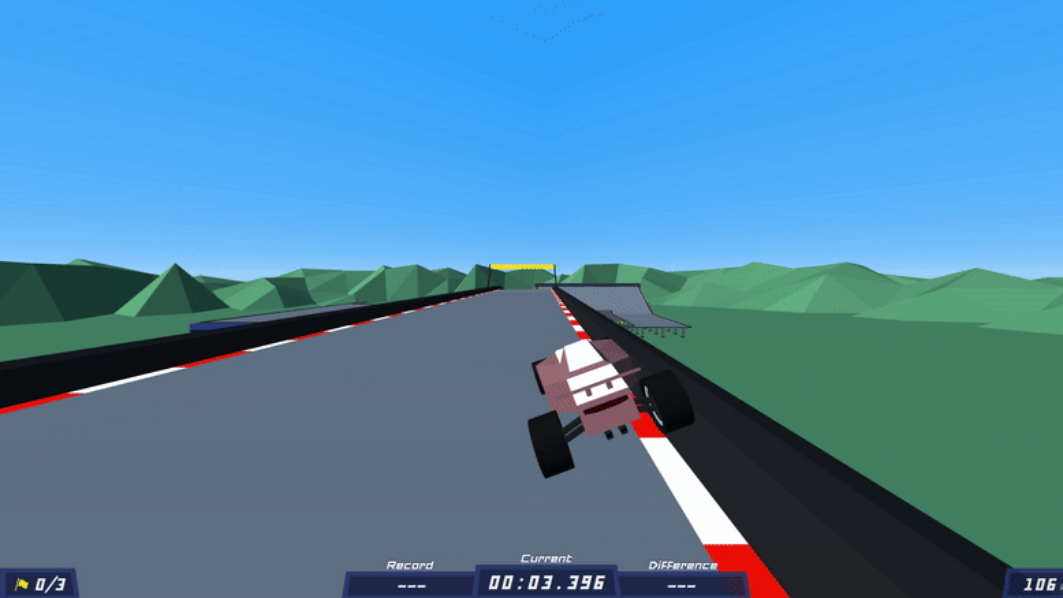
End-to-end imitation learning from raw screen pixels is a low-friction prototyping path for perception-to-action agents: no simulator instrumentation, no reward engineering, just human demonstrations mapped to actions. Developer tryfonaskam demonstrated this concretely with PILA (PolyTrack Imitation Learning AI), an open-source agent that learns to drive the browser racing game PolyTrack by observing screen captures and recorded human keyboard inputs. Implemented in PyTorch (Python 3.11), the pipeline records player controls alongside corresponding game frames, trains a supervised neural network on those state-action pairs, then runs real-time inference to issue keyboard commands from live frames. Released under Apache 2.0 on GitHub. Reported by Hackaday on June 28, 2026. For practitioners, PILA is a useful educational baseline that surfaces the practical engineering work of synchronizing frame capture with labeled actions and replaying inputs - details papers routinely omit.
Why this matters for practitioners
Screen-based imitation learning is the lowest-friction path to an end-to-end agent prototype. You avoid simulator state instrumentation, reward engineering, and environment wrappers. What you need instead is a synchronization layer between screen capture and input logging. Once a dataset of (frame, action) pairs exists, teams can benchmark multiple architectures - CNNs, temporal models, transformers - against the same data and compare behavioral cloning against RL fine-tuning on a shared baseline. PILA makes that scaffold concrete and reproducible.
What PILA does
tryfonaskam released PILA (PolyTrack Imitation Learning AI), an open-source PyTorch project (Apache 2.0, Python 3.11.9, CPU/GPU). The pipeline has three stages. Data collection: gameplay is recorded as screen capture frames alongside player controls (steering, throttle, brake). Training: a supervised neural network minimizes the difference between predicted and recorded actions, with checkpoints every two epochs. Inference: the trained model reads live game frames, predicts the next action, and issues keyboard inputs in real time. Hackaday's Zoe Skyforest reported on the project June 28, 2026, drawing comparisons to prior hobbyist Trackmania work and the Drivatar AI in the Forza series.
Technical context
Behavioral cloning from pixels typically needs temporal context - frame stacking, RNNs, or temporal convolutions - to handle momentary visual ambiguity, and generalization degrades when held-out tracks differ visually from training data. Standard mitigations include DAgger-style iterative data collection, data augmentation (color jitter, crop), and explicit action-delay modeling. PILA's single-frame architecture is a deliberate starting point, not a ceiling - it provides a reproducible scaffold practitioners can extend toward temporal models or RL fine-tuning on the same game environment.
What to watch
The GitHub repo had six stars and includes a Discord community at the time of reporting. For practitioners evaluating similar approaches, useful benchmarks are: held-out track performance (generalization), crash rate under visual perturbations (robustness), and comparison against a simple RL baseline on the same game. The project's accessibility - no complex environment setup beyond Python and a browser - makes it a practical first step for teams new to imitation learning.
Key Points
- 1PILA shows screen-based imitation learning lets teams prototype perception-to-action agents without simulator instrumentation or reward engineering.
- 2The PyTorch pipeline records (frame, action) pairs from human play, trains a supervised model, and runs real-time inference via keyboard injection - surfacing practical engineering details papers omit.
- 3Single-frame behavioral cloning is a reproducible baseline; practitioners can extend it with temporal models, data augmentation, or RL fine-tuning on the same PolyTrack environment.
Scoring Rationale
Well-executed hobbyist demo instructive for practitioners building end-to-end imitation learning agents, with a clean reproducible pipeline and open-source release. Not a frontier research advance or production milestone. Solid educational contribution in the niche-but-relevant tier.
Sources
Public references used for this report.
Practice interview problems based on real data
1,625 SQL & Python problems across 15 industry datasets — the exact type of data you work with.
Try 250 free problems