Pakistan, Turkiye Deepen Cooperation on AI-driven Education
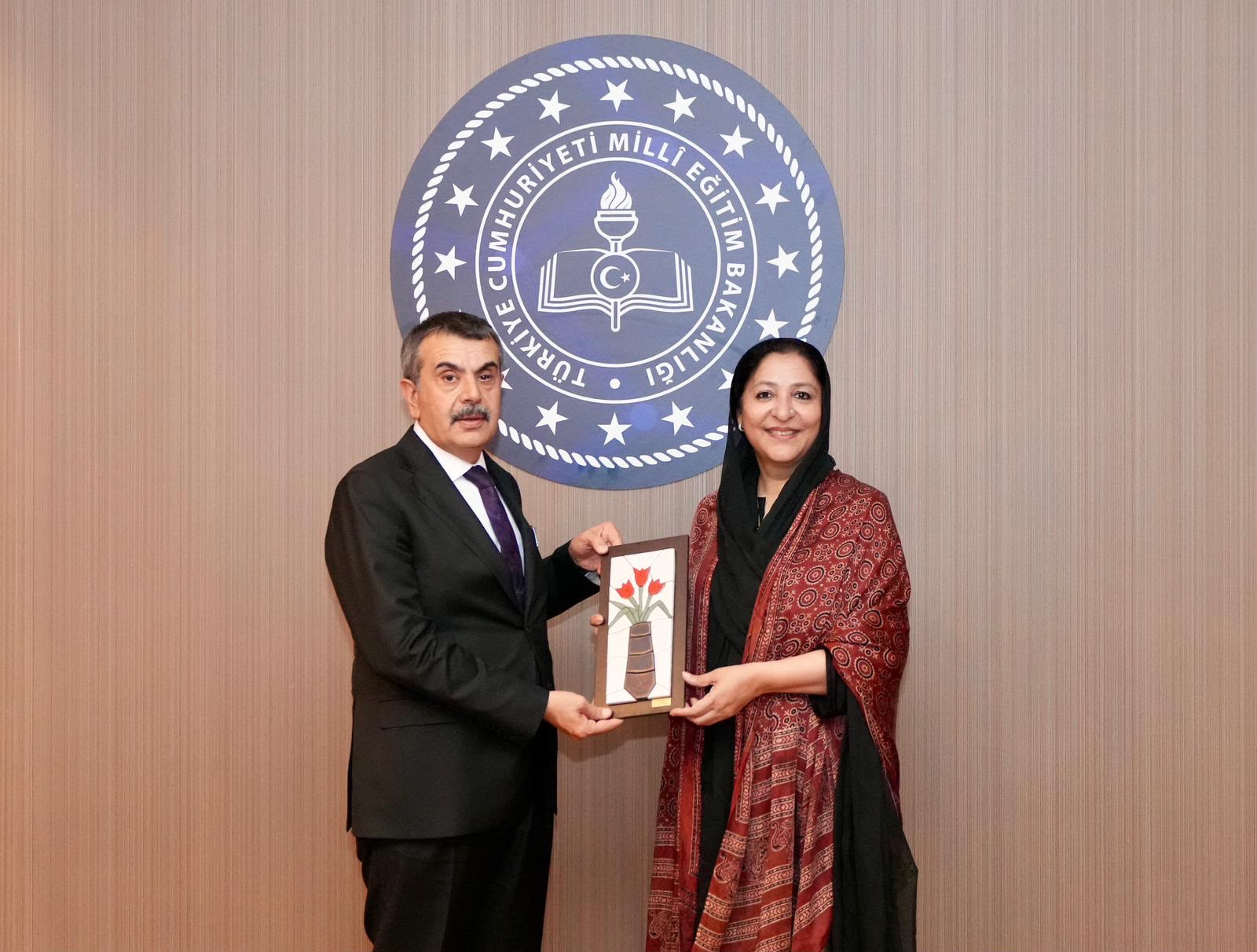
Pakistan's Minister of State for Federal Education and Professional Training, Wajiha Qamar, and Turkiye's Minister of National Education, Yusuf Tekin, met on the sidelines of the Turkiye Education Technologies Summit and Fair (TETZ 2026) in Istanbul, held June 26-28, 2026, according to Pakistan's APP news agency and confirmed independently by Radio Pakistan and Turkish daily Milliyet. Both sides reaffirmed commitments to deepen cooperation in education, skills development, and educational innovation, and discussed institutionalizing that cooperation through a comprehensive education agreement and joint working groups. Per APP, the ministers also explored developing AI-assisted platforms for teaching Turkish in Pakistan and Urdu in Turkiye. No funding, timeline, or technical specifications for the AI-language platforms have been disclosed.
For education-technology and NLP practitioners, the notable detail here is not the diplomatic meeting itself but the specific technical ask: government-to-government interest in AI-assisted platforms for teaching Turkish in Pakistan and Urdu in Turkiye. That is a concrete, if early-stage, signal of demand for low-resource-language tutoring systems and bilingual corpora - a segment that commercial AI-education vendors have mostly underserved relative to English and major European languages.
What happened
Pakistan's Minister of State for Federal Education and Professional Training, Wajiha Qamar, held a bilateral meeting with Turkiye's Minister of National Education, Yusuf Tekin, on the sidelines of the Turkiye Education Technologies Summit and Fair (TETZ 2026) in Istanbul, held June 26-28, 2026, according to Pakistan's state news agency APP. The meeting is independently confirmed by Radio Pakistan and by Turkish daily Milliyet, which reported (via Anadolu Agency) that Tekin held a series of bilateral meetings at TETZ 2026, including with counterparts from Pakistan, Montenegro, Iran, Mauritania, Senegal, the Turkish Republic of Northern Cyprus, and Togo. Per APP, both sides reaffirmed commitments to strengthen cooperation in education, skills development, and educational innovation, and discussed expanding collaboration in technical and vocational training, language education, educational technology, academic exchange, and cultural cooperation. APP reports the ministers discussed institutionalizing the collaboration through a comprehensive education cooperation agreement and joint working groups, and explored developing AI-assisted platforms for teaching Turkish in Pakistan and Urdu in Turkiye.
For practitioners
Government-backed, cross-border language-tutoring initiatives like this typically hinge on a handful of practical requirements before they produce usable systems: consented bilingual training corpora built under data-governance agreements between the two countries, adaptive models tuned to each country's curriculum and assessment standards, teacher-facing tools for monitoring and correcting AI output, and infrastructure that meets classroom latency and connectivity constraints. None of these have been disclosed yet; the current announcement is a statement of intent rather than a funded technical program.
What to watch
The concrete signals that would indicate this moves from diplomacy to deployment are a signed education cooperation agreement, formation of the joint working groups mentioned by APP, published pilot scopes or requests for proposals, and any data-sharing or research partnership announcements involving Turkish and Pakistani universities or ed-tech vendors.
Key Points
- 1Pakistan's Wajiha Qamar and Turkiye's Yusuf Tekin met at TETZ 2026 in Istanbul and agreed to deepen education cooperation, confirmed by three independent outlets.
- 2The ministers explored AI-assisted platforms for teaching Turkish in Pakistan and Urdu in Turkiye, an early-stage low-resource-language NLP demand signal.
- 3No funding, timeline, or technical specifications exist yet; watch for a signed cooperation agreement and joint working groups as the next concrete milestone.
Scoring Rationale
Early-stage bilateral government meeting with a concrete but undeveloped AI-language-education component (AI-assisted Turkish/Urdu tutoring platforms). Raised slightly from prior scoring after independently confirming the meeting across three separate national outlets (APP, Radio Pakistan, Milliyet/AA), which established this as a real, multi-country-reported diplomatic event rather than a single wire item. Still capped in the minor-to-solid range because no funding, timeline, or technical deliverables have been disclosed.
Sources
Public references used for this report.
Practice interview problems based on real data
1,625 SQL & Python problems across 15 industry datasets — the exact type of data you work with.
Try 250 free problems