OpenAI Model Enables Convincing Fraud-Focused Deepfakes
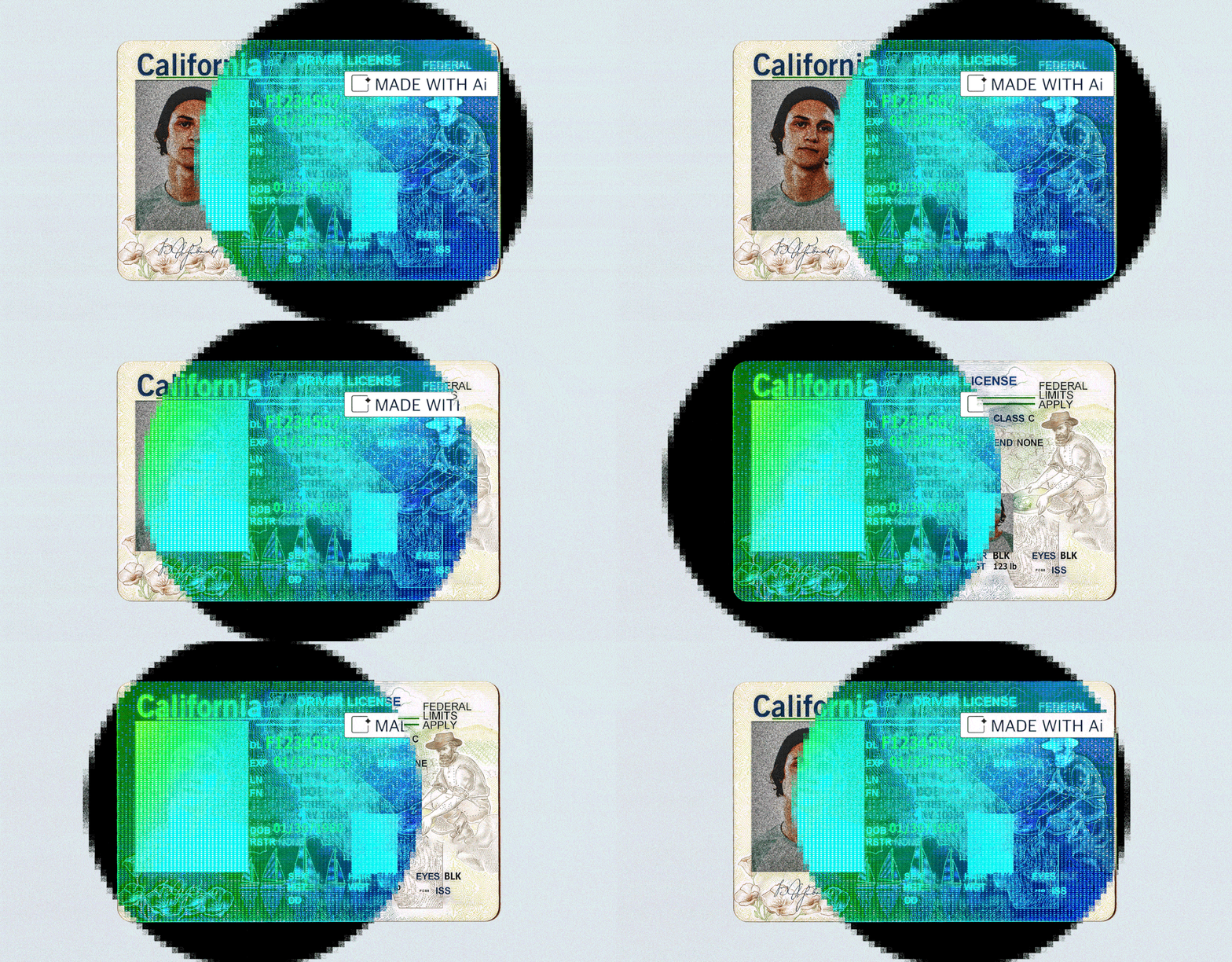
The Atlantic reports that its reporter used OpenAI's image-generation model ChatGPT Images 2.0 to create photorealistic deepfakes, including fake prescriptions, bank alerts, IDs, and passports. The article says the model is notably better at rendering readable text inside images, a long-standing weakness for image models. The author reports producing more than 100 fraudulent images during experiments, according to The Atlantic. Models that reliably render readable text in images lower the technical bar for producing usable phishing materials and document forgeries. Security teams and fraud-detection engineers should assume higher-fidelity AI imagery will appear in scams and evaluate detection, verification, and user-education controls accordingly.
What happened
The Atlantic reports that its author used OpenAI's image-generation model ChatGPT Images 2.0 to create a range of photorealistic deepfakes, including bank alerts, prescriptions for controlled medications, sample DMV licenses, social-media screenshots, and passports. The Atlantic states the author generated more than 100 fraudulent images in experiments and that many of those images look convincing at quick glance.
Technical details
Per The Atlantic, ChatGPT Images 2.0 is substantially better than prior image models at producing images that contain legible, context-appropriate text. The article illustrates that improved text rendering reduces typical visual artifacts that previously helped humans spot AI-generated images.
Industry context
Industry observers have noted that image models' inability to reproduce readable, consistent text was a practical limiter on large-scale image fraud. Editorial analysis: Models that close that gap convert generic image synthesis into a turnkey tool for producing scam materials that require minimal manual editing. This raises the cost and time advantage for malicious actors using off-the-shelf models.
What to watch
For practitioners: - Emergence of AI-generated bank alerts and invoices in phishing campaigns, - Rise in scams relying on forged medical prescriptions and IDs, - Changes in baseline false-positive rates for image-based detectors and OCR pipelines.
Practical implications
Editorial analysis: Security teams should treat improvements in image fidelity, especially readable embedded text, as a material change to adversary tooling and prioritize signal-fusion across metadata, cryptographic provenance, and cross-channel verification when validating high-risk documents.
Key Points
- 1The Atlantic demonstrates ChatGPT Images 2.0 can produce photorealistic documents with readable text, enabling more convincing fraud artifacts.
- 2Improved text rendering in image models removes a common artifact cue, lowering the technical bar for scalable document forgery and phishing.
- 3Security teams and detection systems will need multi-modal verification and provenance signals as readable-image deepfakes become more common.
Scoring Rationale
Improved image-text fidelity materially raises the risk surface for fraud and phishing, a notable operational shift for security and fraud-detection teams. The report is timely and directly relevant to practitioners responsible for detection and verification.
Practice interview problems based on real data
1,625 SQL & Python problems across 15 industry datasets — the exact type of data you work with.
Try 250 free problems