OpenAI Launches Codex Chrome Extension for Browsers
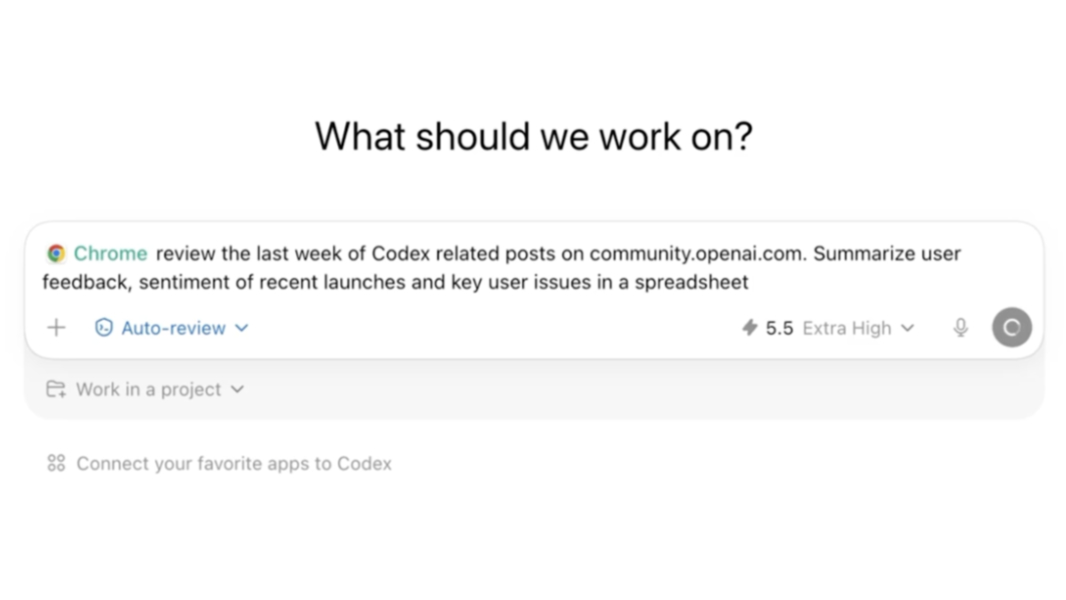
MacRumors, Engadget, and the Chrome Web Store report that OpenAI launched a Codex extension for Google Chrome on May 7, 2026. The extension lets Codex operate inside the browser on Mac and Windows to test web apps, gather context across open tabs, and interact with Chrome DevTools, while remaining intended to avoid taking over the user's active session (Chrome Web Store listing; Engadget). According to MacRumors, OpenAI says Codex has more than 4 million weekly active users, an 8x increase since the start of the year. The Chrome Web Store listing shows version 1.1.4, updated May 7, 2026, and describes permissions and prompts for sensitive actions.
What happened
MacRumors, Engadget, and the Chrome Web Store report that OpenAI launched a Codex extension for Google Chrome on May 7, 2026. The Chrome Web Store listing states, "Codex can now use Chrome on your computer to complete work inside the websites and apps where you're already signed in," and describes features for research, form filling, dashboard review, and multi-tab testing. Engadget notes the extension works on both Windows and Mac systems. According to MacRumors, OpenAI reports Codex has more than 4 million weekly active users, an 8x increase since the beginning of the year. The Chrome Web Store entry lists version 1.1.4, updated May 7, 2026, and notes that Codex asks for confirmation before accessing sites, history, or downloading/uploading files.
Technical details
Editorial analysis - technical context
Public reporting and the Chrome Web Store description indicate the extension exposes browser-level context to Codex so it can operate across logged-in web apps and browser state. That capability typically requires controlled permission scopes, tab-group context management, and careful UX for user confirmation; the Chrome Web Store listing explicitly references permission prompts and task-specific tab groups. Sources also describe interactions with Chrome DevTools and the ability to run nonintrusive background tasks while the user continues working (Engadget; Chrome Web Store). These are capabilities that, in other browser automation tools, rely on a mix of extension APIs, content scripts, and optional remote debugging interfaces.
Context and significance
Multiple outlets frame this launch as part of a broader push to bring agentic, browser-enabled assistants into everyday workflows. Reporting places the Chrome extension alongside recent Codex features such as desktop computer use and an in-app browser, and Engadget reports the company plans to eventually offer a combined app uniting Codex with ChatGPT and the Atlas browser. For practitioners, embedding an AI agent in the browser increases the set of real-world signals available to automation, including authenticated session state and multi-page workflows. That raises both utility for tasks like QA testing and form completion and operational considerations around permission granularity, secure handling of credentials, and reproducible test environments.
What to watch
For practitioners
Observers should monitor the extension's permission model and privacy documentation (the Chrome Web Store listing includes a privacy section and developer contact). Watch for published developer controls or enterprise settings governing where Codex can act inside logged-in applications, and for any security advisories or updates to the extension after initial roll-out. Also track integration points with ChatGPT and Atlas if OpenAI or reporting provides more concrete timelines or SDKs; Engadget reports that an eventual combined app is planned, but that plan is described by reporting rather than a direct company quote.
Limitations and sourcing
MacRumors, Engadget, and the Chrome Web Store listing are the primary sources for the reported launch and feature set. Where coverage paraphrases company rationale, that language is attributed to the reporting outlets. OpenAI has not been quoted verbatim in the scraped articles included here; the user metrics cited above are reported by MacRumors as coming from OpenAI.
Editorial analysis
Embedding AI agents in the browser is a sensible next step for workflow automation, but it concentrates sensitive context inside an extensible surface. Teams evaluating Codex for testing, QA, or internal app automation should treat the extension like any automation runtime and validate permission boundaries and audit trails before running it against production accounts.
Key Points
- 1OpenAI released a Codex Chrome extension that gives the agent browser-level access for multi-tab workflows and DevTools interactions.
- 2Industry observers note browser-enabled agents increase real-world context and utility, but they also raise permission and credential-handling concerns.
- 3Practitioners should audit extension permissions and observe any enterprise controls or security advisories after rollout.
Scoring Rationale
This is a notable product expansion that materially increases Codex's utility for web-based workflows, raising operational and security considerations for practitioners. It is not a frontier research release, so its impact is significant but not industry-shaking.
Sources
Public references used for this report.
Practice interview problems based on real data
1,625 SQL & Python problems across 15 industry datasets — the exact type of data you work with.
Try 250 free problems