OpenAI GPT Image 2 Beats Google Nano Banana 2 in Different Tasks
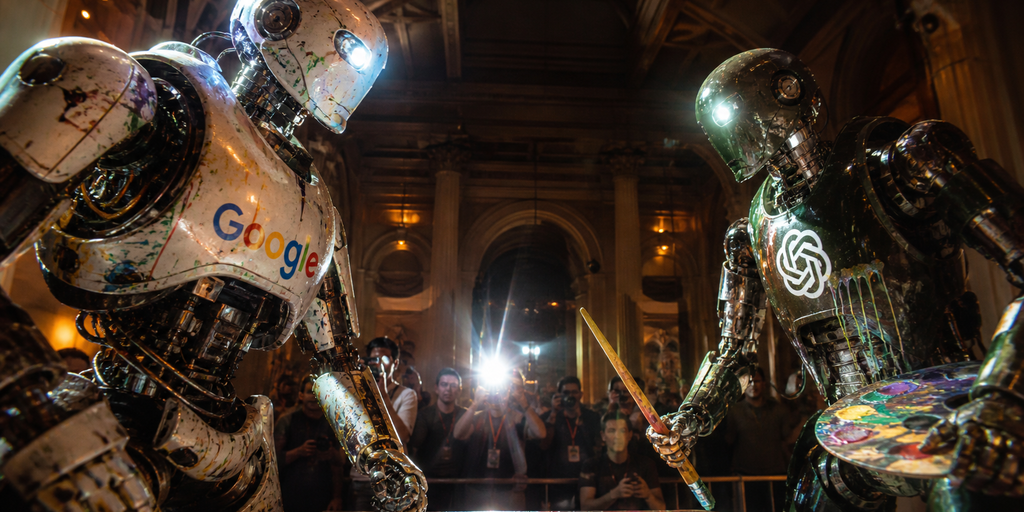
Multiple independent reviews compared OpenAI's GPT Image 2 and Google's Nano Banana 2 on image quality, text rendering, latency, and pricing. Pollo AI reports GPT Image 2 wins on spatial control and image text accuracy, while Nano Banana 2 wins on photorealism and faster iteration (Pollo AI). Atlas Cloud's benchmark lists GPT Image 2 with 4K max resolution, ~4,200 ms average latency and 98.5% typo/text accuracy versus Nano Banana 2 at 4K, ~850 ms latency and 91.2% typo accuracy (Atlas Cloud). EvoLink and Decrypt frame the choice as a workflow fit: EvoLink notes Google documented Nano Banana 2 as generally available with simpler per-image pricing, while OpenAI's pricing is tiered by quality and size (EvoLink, Decrypt).
What happened
Multiple outlets ran head-to-head comparisons of OpenAI's GPT Image 2 and Google's Nano Banana 2 and published results in April 2026. Pollo AI reports that GPT Image 2 outperforms on spatial logic and text rendering, while Nano Banana 2 leads on photorealism and generation speed (Pollo AI). Atlas Cloud published a technical benchmark that records GPT Image 2 at 4K max resolution, ~4,200 ms average latency and 98.50% typo accuracy, and Nano Banana 2 at 4K, ~850 ms latency and 91.20% typo accuracy (Atlas Cloud). EvoLink and Decrypt summarise the same practical split and document differences in official documentation and pricing between the two vendors (EvoLink, Decrypt).
Editorial analysis - technical context
Industry-pattern observations: model architectures that emphasise multi-step visual reasoning and layout control often yield stronger text-in-image fidelity and spatial consistency, while models optimised for Flash-style throughput and image priors tend to deliver more cinematic photorealism at lower latency. This mirrors the test results: GPT Image 2 shows higher measured typo/text accuracy in Atlas Cloud's matrix and Pollo AI's layout tests, while Nano Banana 2 posts far lower latency and stronger photoreal texture in Pollo AI's portrait and lighting comparisons (Atlas Cloud, Pollo AI).
Context and significance
practitioners choosing an image API in 2026 are balancing three operational axes: control/precision, throughput/latency, and cost model. EvoLink reports that Google's documentation frames Nano Banana 2 as generally available with a straightforward per-image pricing model, while EvoLink and Decrypt describe OpenAI's GPT Image 2 pricing as tiered by quality and output size, which complicates cost estimation for high-volume use (EvoLink, Decrypt). Atlas Cloud's latency and accuracy figures make these trade-offs concrete: teams prioritising exact text placement or complex multi-element layouts may prefer the higher text-rendering scores observed for GPT Image 2, whereas high-frequency automation and photoreal output favour Nano Banana 2's latency and cost profile (Atlas Cloud, Pollo AI).
For practitioners
Observed patterns in comparable evaluations suggest the practical decision is a workflow fit rather than a single "best" model. Key operational indicators to monitor in production are text-rendering reliability across your prompt set, end-to-end latency under realistic batch sizes, and the per-image cost profile once you include quality tiers, input-image tokens, and editing calls. Atlas Cloud's synthetic benchmark and Pollo AI's prompt-driven testing provide complementary evidence: synthetic metrics give repeatable baselines, while prompt tests reveal failure modes in composition and lighting (Atlas Cloud, Pollo AI).
What to watch
For teams evaluating these APIs, watch for changes in official documentation and pricing (EvoLink), updated latency/throughput in production traffic, and model updates that explicitly target text-in-image or layout reasoning. Reporting by Decrypt and EvoLink indicates the vendor documentation and billing formats are already differentiating factors; practitioners should track both measured model behavior and cost transparency as part of vendor selection (Decrypt, EvoLink).
Key Points
- 1GPT Image 2 delivers higher text-in-image fidelity and spatial control, making it better for layout-heavy designs (Pollo AI, Atlas Cloud).
- 2Nano Banana 2 offers lower latency and stronger photorealism, suiting high-volume automation and cinematic renders (Pollo AI, Atlas Cloud).
- 3Pricing and documentation differ: Google's per-image pricing is simpler while OpenAI's tiered quality/size model complicates cost estimates (EvoLink, Decrypt).
Scoring Rationale
This comparison is directly useful to practitioners selecting image APIs for production workflows; it clarifies trade-offs in control, latency, and pricing. The story is notable but not paradigm-shifting.
Sources
Public references used for this report.
View 1 more source
Practice interview problems based on real data
1,625 SQL & Python problems across 15 industry datasets — the exact type of data you work with.
Try 250 free problems