NVIDIA Rubin Platform Begins H2 2026 Ramp
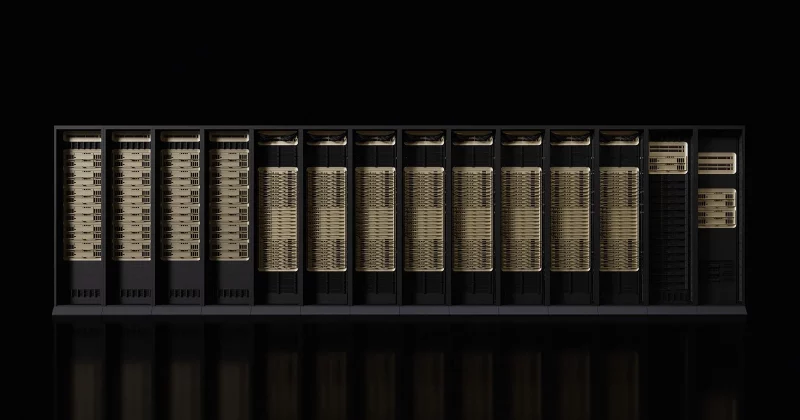
According to NVIDIA's news release, the Vera Rubin platform comprises six to seven co-designed chips and enters mass production with partner availability targeted in the second half of 2026. NVIDIA's materials and press coverage attribute a 10x reduction in inference token cost versus the Blackwell platform and a 4x reduction in GPUs required to train mixture-of-experts models, with outlets reporting performance-per-watt improvements ranging from 10x (CNBC) to as much as 50x (CryptoBriefing). NVIDIA also highlighted cloud and service provider plans, with Microsoft, AWS, Google Cloud and CoreWeave named as early Rubin adopters in H2 2026. Industry observers should view Rubin as a hardware and software stack push that could materially reshape AI data-center economics, while execution risks at foundries and supply chains remain a practical constraint.
What happened
According to NVIDIA's news release, the Vera Rubin platform is a next-generation, rack-scale AI architecture built from six to seven co-designed chips and is targeted for partner availability and volume shipments in the second half of 2026. Per NVIDIA, the platform combines a Rubin GPU, a Vera CPU, DPUs, advanced NVLink interconnects and other accelerators to create the NVL72 rack-scale system and PODs that scale to tens of racks. NVIDIA's release and accompanying materials claim up to 10x lower inference token cost and a 4x reduction in GPUs for Mixture-of-Experts (MoE) training compared with the Blackwell platform. CNBC reports that NVIDIA described Rubin as delivering 10x more performance per watt than Blackwell; CryptoBriefing and other outlets quote figures as high as 50x for performance-per-watt improvements. Multiple sources, including NVIDIA's announcement and HashrateIndex, note that Rubin GPUs are fabricated at TSMC and that major cloud providers including Microsoft, AWS, Google Cloud and CoreWeave are named for H2 2026 deployments.
Technical details
Per platform breakdowns published around GTC 2026 and in NVIDIA's technical materials, the Rubin GPU reportedly packs up to 336 billion transistors on a TSMC 3nm process with 288 GB HBM4 and very high NVLink bandwidth per GPU. HashrateIndex and other technical summaries list per-rack figures such as 3.6 EFLOPS NVFP4 inference and multi-rack POD scaling to 60 exaflops for full deployments. The platform includes new NVLink interconnect generations, BlueField-4 DPUs, advanced switch fabrics and dedicated inference LPUs. These components are described in vendor and media writeups as being co-designed to reduce cross-node bottlenecks and lower per-token inference cost.
Industry context
Context and significance
What to watch
Closing note
Editorial analysis
companies that deploy next-generation rack-scale architectures typically aim to change the cost structure for large-scale inference and multi-node training. A claimed 10x reduction in token cost materially alters economics for high-volume inference services and could accelerate migrations to larger, agentic AI deployments if the numbers hold in production. At the same time, industry-pattern observations note that foundry yield, packaging capacity and memory supply have been the constraining factors for past GPU ramps; reporting that Rubin is in mass production at TSMC raises the importance of those supply-chain variables for real-world ramp timing.
for practitioners, Rubin represents both an incremental and systemic change. Incrementally, higher compute density and per-watt efficiency matter for model parallelism and cost-aware inference pipelines. Systemically, a co-designed stack of GPUs, DPUs, switches and interconnects tightens the dependency between software stacks and hardware capabilities, increasing the value of optimized runtimes and vendor-provided orchestration. Public coverage also emphasizes the potential market effects: analysts and media link this generation to further infrastructure spending across hyperscalers and cloud providers, and to additional capacity demand at packaging and foundry partners such as TSMC.
observers should track four indicators over the coming quarters:
- •independent benchmarks and vendor-agnostic performance-per-watt and cost-per-token measurements from early Rubin deployments
- •TSMC yield and packaging reports that would confirm mass-production throughput
- •cloud provider instance availability and pricing for Rubin-based NVL72 systems from AWS, Google Cloud, Microsoft and providers such as CoreWeave
- •supply-side constraints, especially HBM4 memory supply and NVLink component availability. Media coverage and NVIDIA disclosures will also clarify how the Rubin rack and POD numbers translate to real-world model throughput and total cost of ownership
NVIDIA has presented Rubin as a major step-change in AI infrastructure. The practical impact for ML engineers, infra teams and platform architects will depend on measured per-token costs in production clusters, the pace of cloud provider rollouts, and whether the supply chain can sustain the simultaneous ramp of multiple, large die GPUs. Reported claims are large and industry observers will require independent validation before treating the headline numbers as settled facts.
Key Points
- 1NVIDIA targets H2 2026 mass availability for the Vera Rubin platform, claiming 10x lower inference token cost versus Blackwell.
- 2Rubin combines multiple co-designed chips and high-bandwidth NVLink to raise per-rack efficiency; independent benchmarks will determine real cost gains.
- 3Editorial analysis: supply-chain factors at TSMC and HBM suppliers remain the primary operational risk for the H2 2026 ramp.
Scoring Rationale
This is a major hardware and platform announcement with broad implications for AI data-center economics and cloud offerings. The score reflects Rubin's potential to materially lower inference costs and drive infrastructure spending, tempered by execution and supply-chain uncertainty.
Sources
Public references used for this report.
View 7 more sources
- NVIDIA Rubin Enters Full Production: The 336 Billion Transistor GPU Reshaping AI Infrastructureintrol.com
- Nvidia Vera Rubin Enters Production | InsiderFinanceinsiderfinance.io
- Nebius to offer NVIDIA Vera Rubin NVL72 in US and Europe from ...nebius.com
- NVIDIA: The AI Infrastructure Stack at Full Throttle - MLQ.aimlq.ai
- Exploring NVIDIA Rubin: The future of AI supercomputing - Wandbwandb.ai
- NVIDIA Rubin at GTC 2026: Full Technical Breakdown for ML ...blog.barrack.ai
- Preparing Enterprise Data Centers for the NVIDIA Rubin ...arccompute.io
Practice interview problems based on real data
1,625 SQL & Python problems across 15 industry datasets — the exact type of data you work with.
Try 250 free problems