NVIDIA DGX Spark Clusters Benchmark Dual-Node Inference
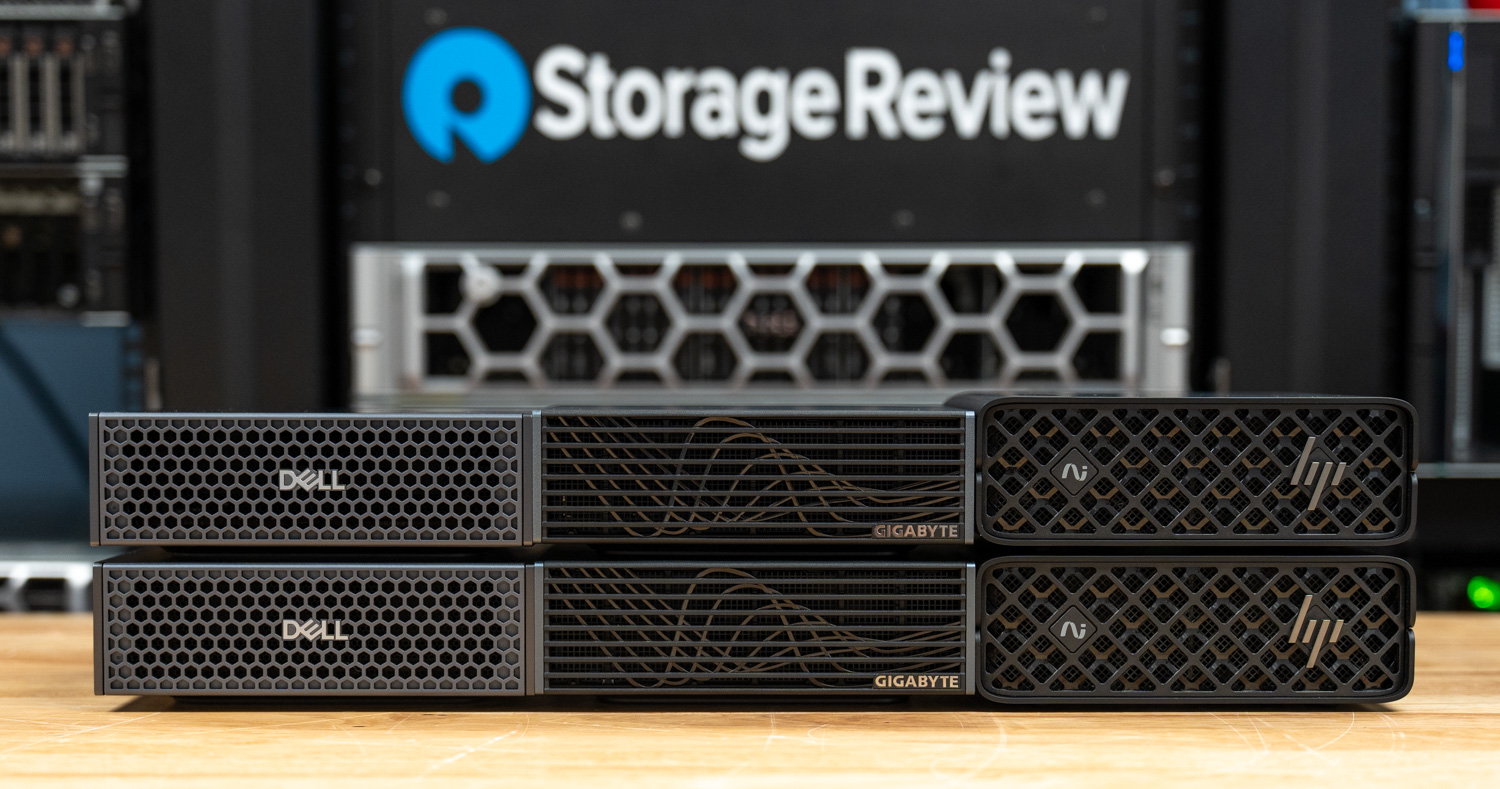
StorageReview benchmarks distributed inference on paired dual-node NVIDIA DGX Spark clusters supplied by Dell, GIGABYTE, and HP, connected over the appliance's 200 Gb fabric and tested across multiple model variants and three workload shapes, the outlet reports. StorageReview notes the DGX Spark advertises 128 GB of unified memory in a roughly $4,000 desktop form factor and uses an integrated NVIDIA ConnectX-7 SmartNIC behind Gen5 x4 PCIe, which yields a 200 Gb usable bandwidth ceiling, the review says. The reviewers used a direct Spark-to-Spark 200 Gb link for the two-node setup and report making a methodological model-splitting choice that diverges from NVIDIA's default, which they defend with data. For infrastructure teams, the story provides an OEM comparison and a practical baseline for two-node pipeline-parallel inference with DGX Spark appliances.
What happened
StorageReview benchmarked distributed inference on paired dual-node NVIDIA DGX Spark clusters built by Dell, GIGABYTE, and HP, sweeping model variants and three workload shapes, the review reports. The article highlights the Spark's headline specs: 128 GB of unified memory in a roughly $4,000 desktop appliance and a backplane that exposes an integrated SmartNIC and QSFP56 cages, per StorageReview.
Technical details
StorageReview documents that each Spark uses an integrated ConnectX-7 SmartNIC and that the NIC sits behind Gen5 x4 PCIe links, which sets a 200 Gb usable bandwidth ceiling regardless of how the QSFP56 cages are populated, the review says. The authors tested the validated two-node topology using a direct Spark-to-Spark 200 Gb link for their paired-cluster measurements and describe three common connectivity configurations (single 200 Gb link, two 100 Gb ring-like links, and split-role topologies), according to the article.
Editorial analysis - technical context:
Industry-pattern observations: High-bandwidth desktop appliances like the DGX Spark shift aggregation and inter-node fabric design into the workstation footprint, which frequently pushes pipeline-parallel inference workflows to treat the network as the primary scaling constraint. Observers and practitioners evaluating similar two-node setups typically find that model stage placement and microbatch sizing become critical levers because cross-box communication latency and throughput dominate end-to-end performance.
Context and significance
Editorial analysis
For procurement and ops teams, StorageReview's OEM comparison offers a practical baseline for real-world latency and throughput tradeoffs when deploying DGX Spark appliances for inference. The measured ceiling from the NIC/PCIe pairing implies that topology choices and PCIe/link provisioning are more consequential than raw QSFP56 port counts for two-node pipeline deployments.
What to watch
For practitioners
watch for how different topology choices (direct 200 Gb link, split 100 Gb ring, or switch-based fabrics) affect latency-sensitive workloads, how authors' model-splitting methodology compares with vendor guidance in published charts, and whether future firmware or platform revisions change the effective PCIe ceiling on bandwidth. StorageReview notes the authors defend their divergent splitting choice with data, so follow their detailed numbers for model shapes and throughput/latency tradeoffs.
Key Points
- 1Two-node DGX Spark clusters linked by 200 Gb fabric let pipeline-parallel inference scale beyond single-box limits, shifting bottlenecks to the interconnect.
- 2The ConnectX-7 behind Gen5 x4 PCIe imposes a 200 Gb usable ceiling, so QSFP56 port counts do not guarantee higher throughput.
- 3StorageReview's Dell, GIGABYTE, and HP comparison provides a practical vendor baseline for procurement and latency-sensitive inference evaluations.
Scoring Rationale
The review gives practitioners hands-on benchmarking data for a novel desktop-to-datacenter appliance and highlights real-world interconnect limits, making it notable for infra teams but not a frontier-model or research breakthrough.
Practice interview problems based on real data
1,625 SQL & Python problems across 15 industry datasets — the exact type of data you work with.
Try 250 free problems