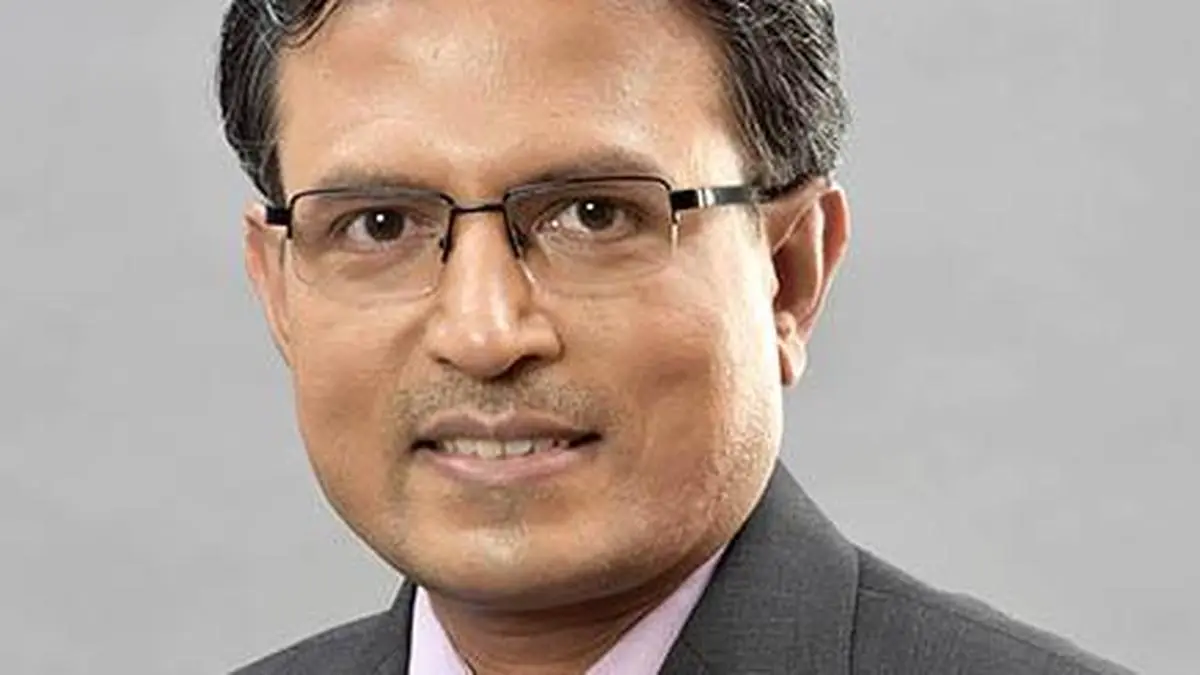
Nilesh Shah Frames AI Risks and Opportunities for India IT
AI represents a turning point for India's $350 billion IT sector, offering both productivity gains and disruption risk. Senior market voices led by Nilesh Shah warn that the transition is likely to be gradual, not instantaneous, and that current client behaviour has not broadly reflected contract cancellations so far. Shah expects large Indian IT firms to grow about 5-8% in rupee terms, which supports a lower fair multiple near 15 times trailing earnings versus the current 19-20 times. That implies a potential valuation reset of roughly 10-15% before the sector becomes clearly attractive. For practitioners and investors, the critical questions are how much work AI will automate versus augment, which service lines face structural headwinds, and how companies reprice capabilities and workforce strategies.
What happened
Senior market commentators led by Nilesh Shah flagged AI as both a major growth opportunity and a structural risk for the Indian IT sector, sized at about $350 billion. Shah emphasized that it is still premature to declare a definitive outcome, noting no widespread client contract cancellations to date and describing the likely shift as a drawn-out transition rather than a cliff event. He also argued that market valuations should reflect slower revenue growth, suggesting a fair multiple nearer 15 times trailing earnings versus current 19-20 times.
Technical details
The practical calculus for impact centers on which parts of IT work are automatable. Shah and company managements point out that a software developer typically spends 16-20% of time writing code; the remainder is client engagement, design, requirements, and problem-solving. If AI primarily automates code generation, that points to productivity uplift and margin expansion rather than immediate headcount elimination. Key commercial parameters mentioned are:
- •Revenue growth expectation for large IT firms at 5-8% in rupee terms
- •Suggested valuation multiple at ~15 times trailing earnings
- •Current consensus multiples near 19-20 times
Context and significance
India's IT exporters have adapted through multiple paradigm shifts, from Y2K to cloud and SaaS. That institutional memory matters: firms can re-skill, repackage services, and tilt to higher-value outcomes. However, AI introduces a different vector because it can compress labor costs, change delivery models, and reshape how IP and platforms are valued. A valuation reset of 10-15% is plausible if consensus growth proves optimistic, which would have downstream effects on hiring plans, M&A for capability gaps, and reallocation toward productized platforms and IP-rich services.
What to watch
Monitor client contracting behaviour, margin trajectories, and how vendors reprice managed services versus outcome-based, product-first offerings. Watch hiring and reskilling signals from the top-10 vendors, and whether guidance cycles and analyst models move from headcount-driven to output- or outcome-driven metrics.
Key Points
- 1AI will likely augment many developer activities, since coding is only 16-20% of their work, reducing immediate headcount risk.
- 2Shah's growth expectations of 5-8% in rupee terms imply a lower fair multiple around 15 times, from 19-20 times today.
- 3Transition is gradual not instantaneous, so investors should track client contract behaviour, margin signals, and vendor reskilling plans.
Scoring Rationale
The commentary comes from high-profile market voices and signals a notable repositioning for a large national sector, touching valuations, hiring, and M&A-important to practitioners and investors-but it is not a paradigm-shifting technical development.
Sources
Public references used for this report.
Practice interview problems based on real data
1,625 SQL & Python problems across 15 industry datasets — the exact type of data you work with.
Try 250 free problems