NHSBT pilots AI-genomic tool for blood matching
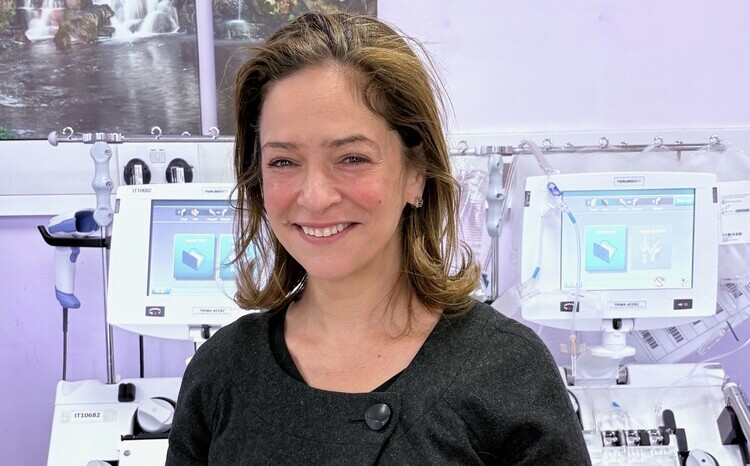
NHS Blood and Transplant (NHSBT) has launched a 12-month feasibility study to evaluate bloodMatcher, an algorithm that combines DNA-based genomic data and AI to select more closely matched donor blood for people with sickle cell disorder, according to NHSBT. The study will enrol around 40 adults who require regular transfusions at University College London Hospitals (UCLH) and compare algorithm-led selection against blood chosen manually under current policy, which typically matches sickle cell patients on only four core blood groups, NHSBT says. NHSBT estimates that about 17% of adults with sickle cell disorder develop alloantibodies after repeated transfusions, raising the risk of severe reactions. The work is funded by the National Institute for Health and Care Research (NIHR) AI programme, NHSBT, and the UCLH Biomedical Research Centre, and standard transfusion safety checks plus an additional clinical scientist review will remain in place. Clinical lead Dr Sara Trompeter says the tool will select units in a faster, more advanced way (Digital Health).
What happened
NHS Blood and Transplant (NHSBT) has launched a 12-month feasibility study to evaluate bloodMatcher, an algorithm that combines genomic blood-group data and AI to select donor units for people with sickle cell disorder, according to an NHSBT press release dated May 20, 2026. The study uses DNA-based genotyping of both donors and recipients and will enrol around 40 adult participants who need regular transfusions at University College London Hospitals (UCLH), NHSBT states. bloodMatcher will be evaluated against blood selected manually under the current policy, where people with sickle cell disorder are typically matched on only four core blood groups, the press release says. The work is led by NHSBT with UCLH and the NIHR UCLH Biomedical Research Centre, and is funded by the NIHR AI programme, NHSBT, and the UCLH Biomedical Research Centre. NHSBT and Digital Health report that all standard transfusion safety checks remain and that an additional clinical scientist review is built into the study workflow. Dr Sara Trompeter, consultant haematologist and clinical lead, said the algorithm "will... be able to select units in a faster, far more advanced way" (Digital Health).
Why it matters
NHSBT estimates that around 17% of adults with sickle cell disorder develop alloantibodies after repeated transfusions, which raises the risk of severe transfusion reactions (Digital Health). Closer antigen matching is a recognised route to reduce that risk, but conventional serology limits routine matching to a handful of blood groups. Using DNA-based genotyping to infer many minor blood-group antigens, paired with an algorithm to choose units, is a concrete attempt to push precision matching into routine national-service workflows rather than research labs.
Technical context
Genomic matching extends the antigen profile available for matching beyond conventional serology, and combining extended profiles with a matching algorithm shifts the task from manual lookup to a computational optimisation problem that must weigh antigen compatibility, inventory rarity, and unit availability over time. As a general pattern in clinical informatics, that implies practical challenges around reliable genotype-to-phenotype mapping, donor-genotype data quality, and the design of objective scoring functions that prioritise candidate units without skewing toward or against particular donor subpopulations. Algorithmic matching in clinical supply chains also typically requires clear audit trails and human-in-the-loop checkpoints to meet safety and regulatory expectations.
For practitioners, what to watch
Watch the study's predefined endpoints, including any published results on alloimmunisation incidence, transfusion reactions, and differences in matched-unit utilisation between algorithmic and manual selection. Look for documentation of the algorithm's matching criteria and performance, and for data on the accuracy and cost of the DNA-based genotyping workflow that NHSBT describes as faster and cheaper than conventional testing. Track whether later phases expand beyond a single centre, how the study handles consent and governance for donor genomic data, and what role the clinical scientist review plays in the matching pipeline, along with any external validation accompanying the results.
Key Points
- 1NHSBT has launched a 12-month feasibility study of bloodMatcher, an AI tool that uses DNA-based genomic data to improve transfusion matching for people with sickle cell disorder.
- 2The trial will enrol around 40 adults at UCLH and compare algorithm-led selection against manual matching limited to four core blood groups; NHSBT estimates about 17% of adults with the condition develop alloantibodies after repeated transfusions.
- 3Genomic matching reframes donor selection as a computational optimisation problem, raising data-quality, auditability, and governance requirements that clinical-AI practitioners must address for safe adoption.
Scoring Rationale
A genuine, well-sourced clinical-application pilot pairing AI with DNA-based genomic matching in a safety-critical national blood service, directly relevant to practitioners building clinical decision support and transfusion informatics. It is an early feasibility study of about 40 patients at a single centre rather than a validated deployment or frontier release, so impact is solid-to-notable but not major.
Sources
Public references used for this report.
Practice with real Health & Insurance data
90 SQL & Python problems · 15 industry datasets
250 free problems · No credit card
See all Health & Insurance problems