NHAI Launches AI-powered Barrier-free Tolling on NH-48
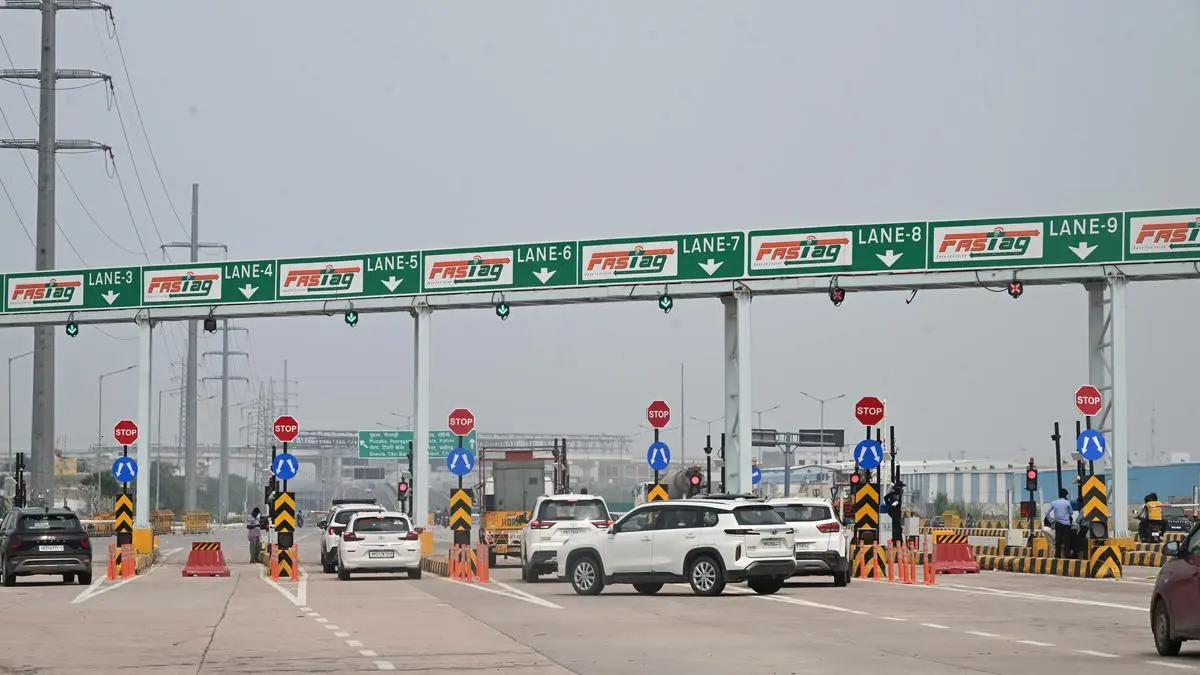
According to a ministry release reported by The Economic Times, the National Highways Authority of India (NHAI) launched India's first Multi-Lane Free Flow (MLFF) barrier-free tolling system at the Chorayasi toll plaza on the Surat-Bharuch section of NH-48 in Gujarat. The ministry reported that about 41,500 vehicles passed the MLFF location on day one and described the system as removing physical toll barriers using FASTag plus camera-based automatic number plate recognition. Reporting by NDTV notes NHAI's explanation that an electronic notice (E-Notice) is issued if a FASTag payment fails and that users must clear the charge within 72 hours to avoid penalties that can amount to double the normal toll. This is a significant operational step toward open-road tolling in India and will raise engineering and data-reliability questions for practitioners building ANPR and reconciliation systems.
What happened
According to a ministry release reported by The Economic Times, the National Highways Authority of India (NHAI) has launched India's first Multi-Lane Free Flow (MLFF) barrier-free tolling system at the Chorayasi toll plaza on the Surat-Bharuch stretch of NH-48 in Gujarat. The ministry reported that around 41,500 vehicles crossed the MLFF location on the first day. The Economic Times and NDTV describe the deployment as removing physical barriers and using FASTag-based electronic toll collection combined with camera systems to collect tolls at highway speeds.
NDTV reports NHAI's public explanation that the MLFF system uses automatic detection and that an electronic notice (E-Notice) is generated when a FASTag payment is missed, unsuccessful, or not detected. NDTV further reports NHAI's statement that users must pay the E-Notice within 72 hours to avoid penalties, and that paying after that window may result in charges up to twice the normal toll for the vehicle category.
Editorial analysis - technical context
Reporting describes the MLFF stack as a hybrid of FASTag RFID-based collection and camera-based automatic number plate recognition (ANPR) mounted on gantries. Earlier coverage in 2025 reported that NHAI had moved to pilot arrangements where financial-service entities bid to provide toll-collection services, and that pilots were proposed for several strategic plazas beyond Chorayasi. The implementation is consistent with global open-road tolling patterns that pair RFID and camera data for redundancy and enforcement.
Industry observers implementing similar systems typically focus on three engineering areas:
- •high-accuracy ANPR at highway speeds under varied lighting and plate conditions
- •real-time reconciliation between tag reads and camera captures to reduce disputed charges
- •low-latency edge processing or robust network links so that detection failures do not cascade into mass E-Notices
These are generic industry patterns, not claims about NHAI's internal architecture.
Context and significance
For national-scale tolling, removing physical barriers materially changes traffic flow, congestion profiles, and emissions on trunk corridors. The ministry framed the rollout as improving travel time, fuel efficiency, and emissions; The Economic Times reported those claimed benefits from the ministry release. NDTV's coverage highlights enforcement and user-experience tradeoffs created by the 72-hour payment window and penalty structure. Reporting from BusinessWorld (snippet) indicates FASTag adoption levels above 98%, which public reporting frames as an enabler for rapid MLFF adoption.
What to watch
For practitioners
watch operational metrics that will determine the rollout's success and reproducibility. Key indicators include ANPR read accuracy under rain/night/dirty-plate conditions, the proportion of passes resolved by FASTag deduction vs. E-Notices, rates of disputed or reversed charges, reconciliation latency between cameras and toll-account debits, and backend throughput during traffic peaks. Observers should also track how financial-clearance partners (reported in prior coverage as bank-led bidders) integrate settlement and dispute workflows with highway operators.
Editorial analysis
From a systems-perspective, barrier-free tolling at scale raises operational priorities that include model maintenance for ANPR, false-positive/false-negative mitigation, transaction audit trails, and dispute-resolution workflows. These are recurring concerns in other jurisdictions that have moved to open-road tolling.
Improvements in edge compute, model retraining pipelines, and integrated logging will be the practical levers teams use to reduce wrongful E-Notices and lower customer friction. These observations reflect standard industry practice when deploying ANPR-based enforcement in high-throughput transport systems.
Key Points
- 1NHAI launched India's first MLFF barrier-free tolling at Chorayasi on NH-48, using FASTag plus camera detection; 41,500 vehicles used it on day one.
- 2Enforcement relies on E-Notices and a 72-hour cure window; NDTV reports NHAI warns missed payments can attract up to double charges.
- 3Industry context: barrier-free tolling shifts operational risk to ANPR accuracy and reconciliation systems; practitioners should monitor read accuracy, dispute rates, and settlement latency.
Scoring Rationale
This is a notable infrastructure deployment for AI-enabled tolling that matters to practitioners building ANPR, edge inference, and transaction-reconciliation systems. It is not a frontier-model or breakthrough research release, but it is a significant real-world ML/vision production deployment.
Sources
Public references used for this report.
Practice interview problems based on real data
1,625 SQL & Python problems across 15 industry datasets — the exact type of data you work with.
Try 250 free problems