Product Launchhigh performance computingspace explorationnasaenergy efficiency
NASA Launches Athena 20-Petaflop Supercomputer For Missions
7.5
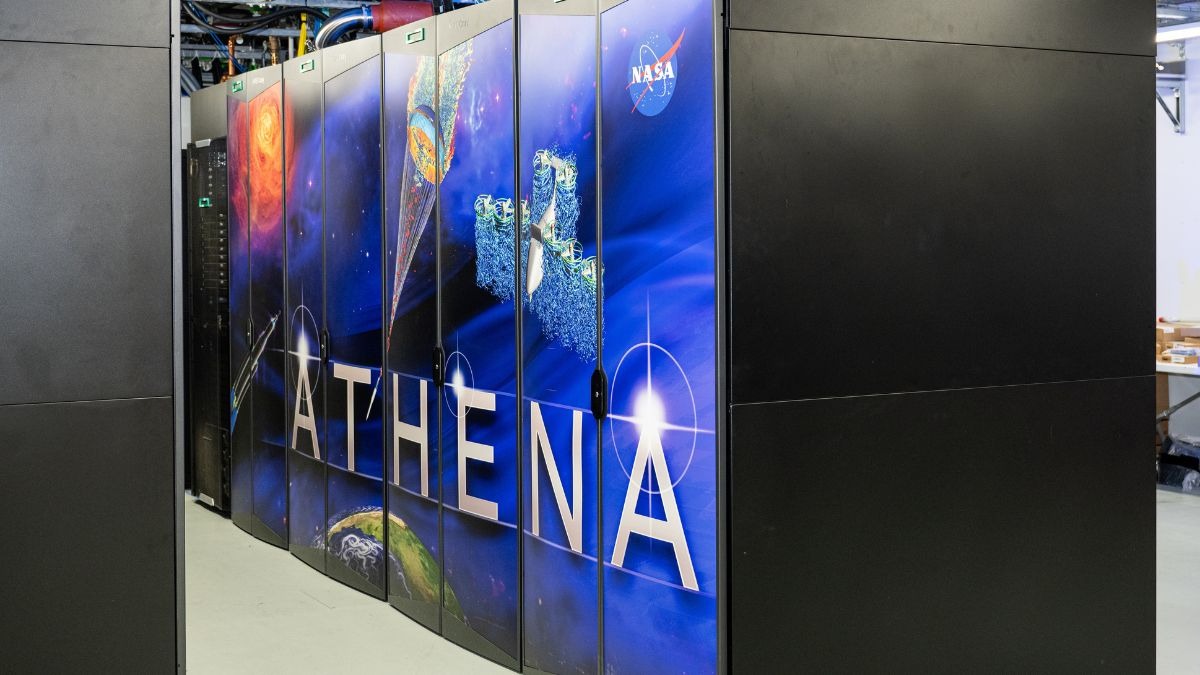
NASA launched Athena, a 20-petaflop supercomputer, in January 2026 at the Ames Research Center to support Moon and Mars missions. The energy-efficient system uses a modular design to reduce cooling and utility costs and will support large-scale AI training, high-fidelity rocket simulations, and climate data analysis. Managed by the Office of the Chief Science Data Officer, Athena complements commercial cloud platforms in a hybrid computing strategy.
Key Points
- 1Delivers over 20 petaflops peak compute, becoming NASA’s most powerful supercomputer as of January 2026
- 2Implements modular, energy-efficient design to reduce cooling and utility costs for sustained, 24/7 simulations
- 3Enables training large-scale AI and high-fidelity rocket, climate simulations—accelerating design validation and mission planning
Scoring Rationale
Significant agency-grade compute and research relevance drive score; limited paradigm-shifting novelty and moderate detail constrain wider impact.
Practice interview problems based on real data
1,625 SQL & Python problems across 15 industry datasets — the exact type of data you work with.
Try 250 free problems