Musk Pledges Grok Imagine Odyssey Feature Film
For practitioners, the announcement is a high-visibility test case for whether current generative-video systems can sustain character, scene, and narrative consistency across feature-length output rather than short clips. CNN, The Guardian, and The Hollywood Reporter report that Elon Musk wrote on X that Grok Imagine would make a full-length adaptation of Homer's "The Odyssey" before the end of 2026, which he described as "historically accurate and true to the art of Homer." His post linked to a three-minute Grok Imagine-generated scene featuring Odysseus and Calypso, according to those reports. The available coverage does not identify the proposed film's model version, production workflow, runtime, or technical evaluation criteria.
A public test of long-form AI video
For practitioners, this announcement puts a concrete, high-profile claim behind one of generative video's unresolved engineering problems: maintaining coherent characters, locations, motion, and story logic over a feature-length work. Short demonstrations can show visual fidelity, but long-form production introduces repeated inference, asset continuity, editability, and quality-control requirements that are materially different from producing isolated clips.
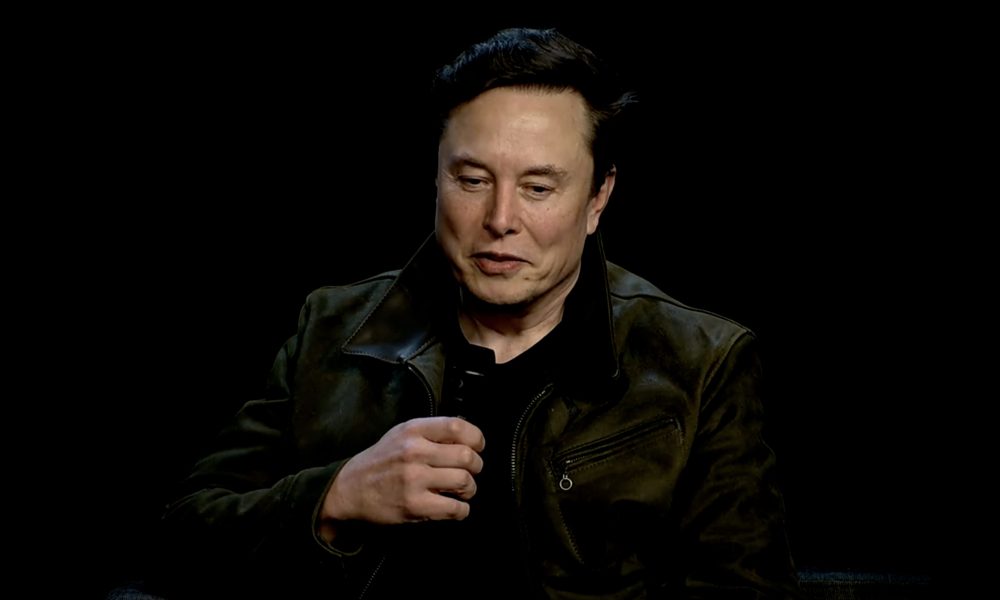
CNN, The Guardian, and The Hollywood Reporter report that Elon Musk wrote on X that Grok Imagine would make a full-length adaptation of Homer's "The Odyssey" before the end of 2026. Musk described the proposed output as "historically accurate and true to the art of Homer." The post linked to a three-minute scene between Odysseus and Calypso that was generated with Grok Imagine, according to the same reports.
Teslarati reported that Musk had previously predicted "full movies by the end of the year" while sharing a trailer made with Grok Imagine Video 1.5. The retrieved reporting does not specify the model version for the proposed feature, a target runtime, the number of generated shots, compute requirements, human editorial involvement, or an evaluation methodology.
Why feature length changes the technical problem
Industry context
systems used for long-form AI video commonly face compounding consistency problems. A character can drift in appearance between shots, physical details can change across edits, and generated motion or dialogue may require substantial review before it can support conventional narrative pacing. These constraints apply broadly to generative-video workflows and cannot be assessed from a three-minute sample alone.
For ML engineers, a credible feature-scale demonstration would require more than an appealing sequence. Useful implementation details would include:
- •mechanisms for persistent character and environment identity across scenes;
- •reproducible prompt, reference, and editing workflows for multi-shot continuity;
- •provenance for generated assets and any third-party source material;
- •human review processes for factual, visual, and narrative errors; and
- •information about rendering time, cost, and failure rates.
None of the retrieved reports provides those details. That absence matters because a public claim about a finished film is not itself evidence of durable production capability.
The cultural context
The announcement followed Musk's criticism of Christopher Nolan's theatrical adaptation, as reported by CNN, The Guardian, and The Hollywood Reporter. CNN reported that Nolan's film earned more than $264 million worldwide on its opening weekend. The Guardian reported that Nolan rejected the premise that AI would wholesale replace human creativity, calling it "a nonsense."
Musk also replied "I'm down" after an X user proposed that he fund a separate live-action adaptation with Mel Gibson, according to CNN and Teslarati. That response is distinct from the Grok Imagine claim and does not establish a funded production.
Editorial analysis
the most consequential near-term outcome for AI practitioners is not the rivalry with a theatrical release, but whether future disclosures provide verifiable evidence of feature-scale generation, continuity controls, and human-in-the-loop production. Until then, the reported three-minute clip is evidence of a short-form demonstration, while the full-film statement remains an announced objective attributed to Musk.
Key Points
- 1Musk publicly tied Grok Imagine to a feature-length Odyssey claim, creating a visible benchmark for long-form generative-video production.
- 2The reported three-minute clip demonstrates short-form output, while sources provide no proposed-film runtime, workflow, model specification, or evaluation details.
- 3Industry patterns show feature-scale AI video depends on continuity, editing, provenance, and review systems beyond individual high-quality generated shots.
Scoring Rationale
The story places a public, feature-length claim behind Grok Imagine, a relevant generative-video product area for ML and media practitioners. However, the available reporting contains no new model release, detailed technical specifications for the proposed feature, benchmark, or independently verifiable production result.
Sources
Public references used for this report.
Practice interview problems based on real data
1,625 SQL & Python problems across 15 industry datasets — the exact type of data you work with.
Try 250 free problems