Modal Labs Raises $355M at $4.65B Valuation
Modal Labs announced a $355 million Series C round at a $4.65 billion post-money valuation, according to a company blog post and reporting by Reuters. The round was led by General Catalyst and Redpoint Ventures, with participation from Accel, Menlo Ventures, Bain Capital Ventures, and others, per Modal's announcement. CEO Erik Bernhardsson told Reuters the company's annualized revenue has surged to about $300 million, up from $60 million in September. Modal provides serverless AI infrastructure, including access to GPUs for inference and a sandbox product for testing AI-generated code, and says customer demand has accelerated amid rising use of AI coding tools. Reuters and Dealroom reporting note the financing closed in two tranches, with an earlier tranche priced at a $2.5 billion valuation before the larger $4.65B tranche.
What happened
Modal Labs announced in a blog post that it raised $355 million in a Series C round at a $4.65 billion post-money valuation. The company's blog lists General Catalyst and Redpoint Ventures as the round leaders and names Menlo, Bain Capital Ventures, and Accel as participating new investors; Modal states that existing major investors also participated. Reuters reports CEO Erik Bernhardsson told the outlet the financing closed in two tranches, with an initial tranche priced at a $2.5 billion valuation and later investor demand lifting the second tranche to $4.65 billion.
According to Reuters and Modal's public post, Modal's annualized revenue rose to about $300 million, up from $60 million in September, a change Bernhardsson attributed to a surge in AI-driven coding activity. Reuters and Dealroom reporting also state Modal now integrates capacity from 13 cloud providers, up from five a year earlier.
Technical details
Editorial analysis - technical context
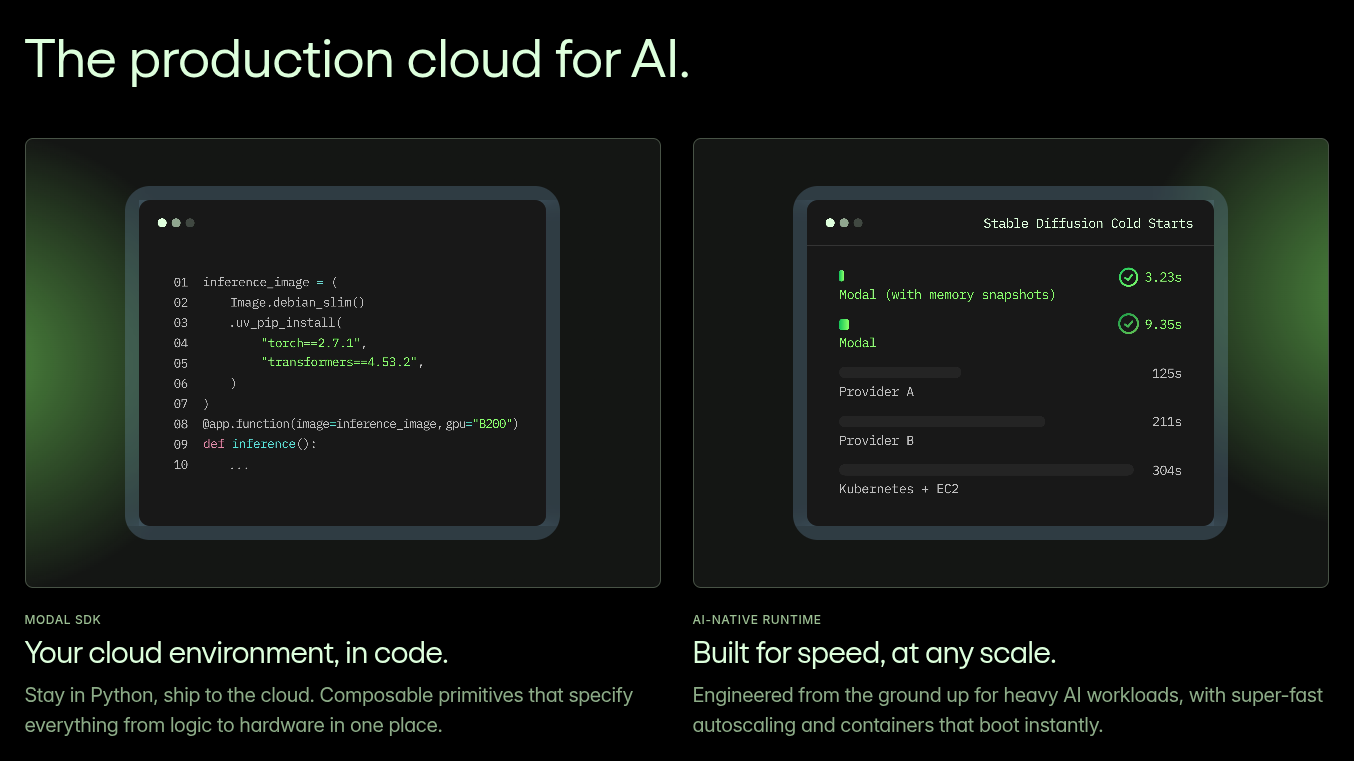
Modal is described by its founders as a serverless platform optimized for AI workloads rather than a single-purpose GPU cloud. The company emphasizes primitives for low-latency elastic inference, dynamic agent runtimes, reinforcement learning, and large-scale batch jobs in its blog post. Modal's product set, as reported, includes managed access to GPUs for inference and a sandbox environment intended for testing AI-generated or untrusted code prior to production deployment.
Context and significance
Large, late-stage rounds for infrastructure vendors indicate investor conviction that compute orchestration and developer UX remain bottlenecks as enterprises scale AI. Modal's reported revenue acceleration to $300 million and the move from five to 13 cloud providers for capacity point to both demand growth and a multi-supplier procurement approach. For practitioners, greater VC capital in this segment can mean faster product iteration from infrastructure vendors and more options for managed GPU access.
What to watch
Editorial analysis
For practitioners evaluating vendors, the raise is notable because it finances rapid scaling of orchestration, multi-cloud procurement, and developer-focused runtime features. Companies building production AI systems will want to compare Modal's managed offerings against self-hosted stacks and other managed providers on latency, cost, and sandboxing guarantees.
Direct quote from sources
Per Reuters, Erik Bernhardsson said, "Coding for the last six months has been driving everything," referring to increased demand driven by AI-assisted developer tools.
Bottom line
Industry context
Investor and press coverage frames the raise as a response to two industry trends reported in the sources: a rapid increase in AI-assisted code generation and tighter, more expensive compute supply. Reuters cites Bernhardsson on both trends; Modal's blog and other outlets highlight developer-facing primitives such as sandboxes and agent runtimes as the company's differentiators.
Observers should monitor three signals in the coming quarters:
- •whether Modal discloses product-market metrics such as ARR growth by vertical or customer cohort
- •pricing and spot-capacity dynamics for managed inference as compute markets remain tight
- •broader adoption of sandboxed execution environments for AI-generated code, which several sources flag as a growing operational requirement
Reuters also notes Modal's investor-backed board changes, with General Catalyst and Redpoint to have board seats, which could affect go-to-market and partnerships; that is a reported governance fact rather than an editorial claim.
The Series C and reported revenue jump are a concrete data point that investor appetite for AI infrastructure remains high. Practitioners should treat this as evidence that managed, serverless GPU and sandbox environments will continue to attract both engineering adoption and capital, while keeping an eye on pricing and capacity availability across providers.
Key Points
- 1Modal Labs raised $355M at a $4.65B valuation, signaling strong investor interest in AI infrastructure (Modal blog, Reuters).
- 2Reported annualized revenue surged to $300M from $60M in September, reflecting rapid demand tied to AI-driven code generation (Reuters).
- 3Industry observers should watch pricing, multi-cloud capacity, and sandbox adoption as managed GPU platforms scale (LDS analysis).
Scoring Rationale
This is a sizable Series C for an AI infrastructure vendor with reported rapid revenue growth, making it material for practitioners who operate or buy managed GPU and inference services. The story affects vendor landscape and compute procurement dynamics rather than introducing a new model or benchmark.
Sources
Public references used for this report.
Practice interview problems based on real data
1,625 SQL & Python problems across 15 industry datasets — the exact type of data you work with.
Try 250 free problems