Meta Signs Multibillion-Dollar Graviton5 Agreement with AWS
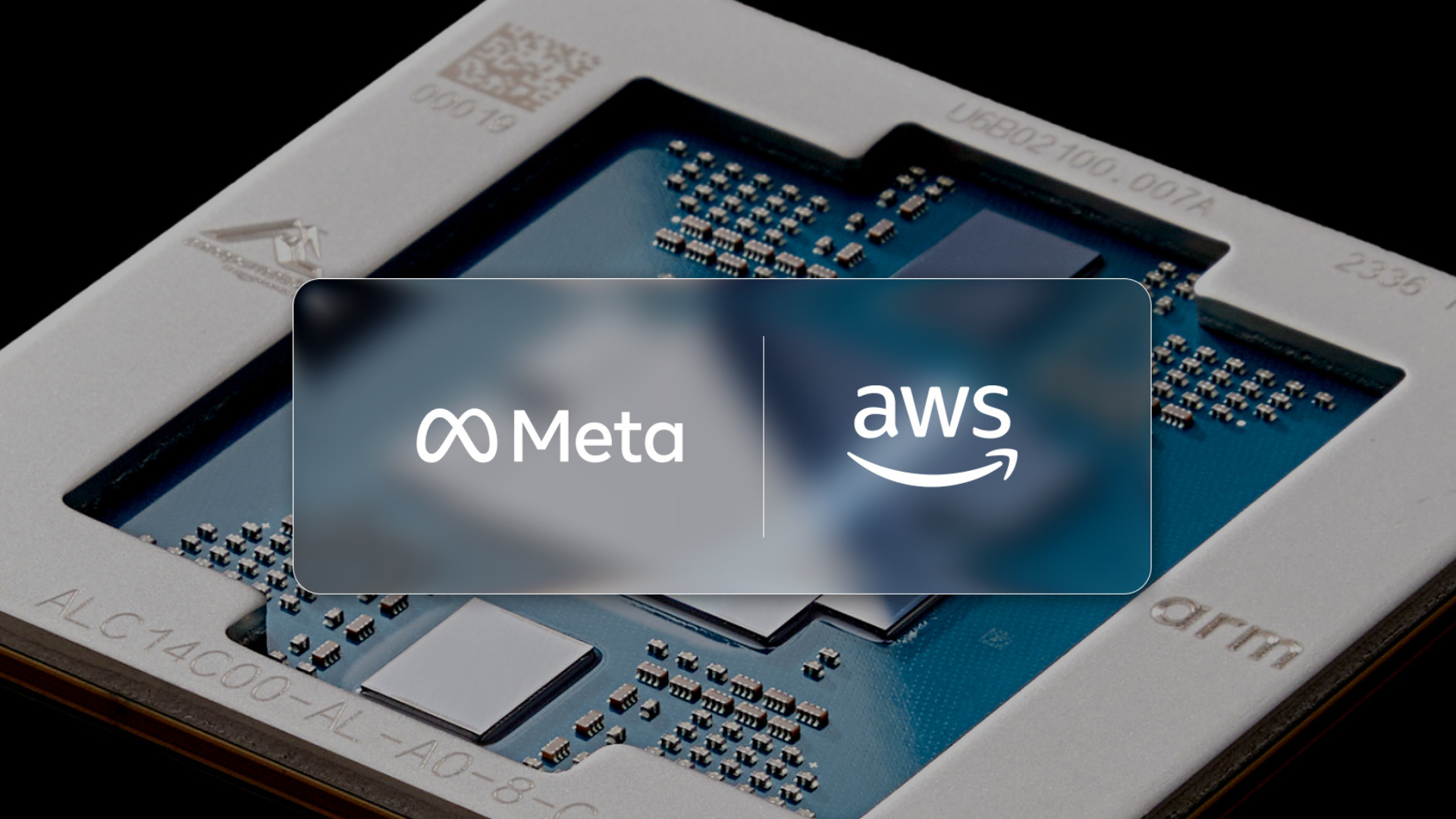
Meta signed a multi-year agreement with Amazon Web Services to deploy "tens of millions" of Graviton5 CPU cores, making Meta one of the largest Graviton customers, according to DataCenterDynamics and Bloomberg. The companies say the deployment targets CPU-intensive, agentic AI inference workloads such as real-time reasoning and multi-step orchestration, per Axios and Economic Times. AWS vice president Nafea Bshara is quoted saying the contract runs for at least three years and that most capacity will be deployed in the U.S., as reported by Tom's Hardware. Meta infrastructure head Santosh Janardhan is quoted describing diversification of compute sources as a "strategic imperative," per Economic Times and DataCenterDynamics. AWS has publicly claimed that Graviton5 uses 192 Arm Neoverse V3 cores on a 3nm process, with roughly 180 MB of L3 cache and performance improvements versus prior generations, according to Tom's Hardware and AWS statements reported by multiple outlets.
What happened
Meta signed a multi-year agreement with Amazon Web Services to deploy "tens of millions" of Graviton5 CPU cores, making Meta one of the largest Graviton customers worldwide, according to DataCenterDynamics and Bloomberg. The companies say the initial deployment is intended to support CPU-intensive, agentic AI inference workloads, including multi-step orchestration and real-time reasoning, per Axios and Economic Times. DataCenterDynamics and Tom's Hardware report the deal represents a "multibillion-dollar" arrangement over several years, though exact financial terms were not disclosed.
Technical details
AWS has stated that Graviton5 packs 192 Arm Neoverse V3 cores on a 3nm process with roughly 180 MB of L3 cache, and that the chip delivers about 25% higher compute performance versus its predecessor plus up to 33% lower inter-core latency, as reported at AWS re:Invent and summarized by Tom's Hardware and DataCenterDynamics. Tom's Hardware also reports AWS vice president Nafea Bshara confirming the contract runs at least three years and that the majority of the capacity will be deployed in the U.S.
Industry context
For practitioners
What to watch
Editorial analysis
Public reporting frames this agreement as part of a broader shift in AI infrastructure where CPU capacity is growing in importance for inference and agentic workloads. Axios and Bloomberg note that leading cloud providers are promoting in-house CPU and accelerator designs as GPU availability and Nvidia supply constraints tighten. Tom's Hardware cites Amazon CEO Andy Jassy describing agentic AI as "becoming almost as big a CPU story as a GPU story," an observation reported during the announcement.
Engineers and ML infrastructure teams should view this as evidence that large-scale inference, orchestration, and agent-style pipelines are increasing demand for high-core-count, cache-optimized CPUs in addition to GPUs. Organizations designing production inference stacks will likely need to benchmark CPU-bound components such as search, retrieval, tool orchestration, and light-weight model inference across both GPU and CPU instances to estimate cost-performance tradeoffs.
Monitor three indicators:
- •public capacity and reservation limits for Graviton instances at major clouds, which may reveal supply tightness
- •pricing movements for high-core-count CPUs and for GPU spot/ondemand instances, which will affect workload placement decisions
- •vendor disclosures about customer commitments or multi-year reservations, which can foreshadow longer-term shifts in procurement patterns
Observers should also watch whether other hyperscalers or chip vendors announce increased production or similar large-scale customer agreements.
Bottom line
Meta's AWS Graviton5 agreement is a high-profile example of growing CPU demand for agentic inference workloads, and reporting from multiple outlets places the deal in the context of constrained GPU supply and cloud providers pushing homegrown silicon. The announcement includes specific technical claims from AWS on Graviton5 performance and capacity commitments quoted by company officials, while financial terms remain described as "multibillion-dollar" by several outlets without line-item disclosure.
Key Points
- 1Industry observation: Large-scale agentic inference is shifting material compute demand from GPUs to high-core-count CPUs for orchestration and real-time reasoning tasks.
- 2Industry observation: Cloud providers' homegrown chips like Graviton5 gain traction when GPU supply tightness raises total infrastructure costs and deployment risk.
- 3Industry observation: Multiyear, large-volume CPU contracts can tighten supply and pricing for both CPUs and GPUs, affecting procurement and capacity planning.
Scoring Rationale
This is a notable infrastructure story: a major hyperscaler committing tens of millions of Graviton cores signals material demand-side change for AI inference. It affects capacity planning, procurement, and benchmarking for practitioners, though it is not a fundamental research breakthrough.
Sources
Public references used for this report.
View 7 more sources
- Meta signs "multibillion-dollar" agreement with AWS for large-scale Graviton5 deploymentdatacenterdynamics.com
- Meta inks deal to use more Amazon chipsaxios.com
- 1 Reason I'd Still Buy Amazon Stock Hand Over Fist and Never Sellfinance.yahoo.com
- Meta signs multibillion-dollar deal with Amazon to use its CPU chips ...msn.com
- Meta strikes deal with Amazon's cloud unit to use its CPU chipsthestar.com.my
- Meta to use Amazon Graviton chips to power AI services - AOL.comaol.com
- Meta's Graviton5 Deal: A $Billion CPU Cash Outflow - AInvestainvest.com
Practice with real Ad Tech data
90 SQL & Python problems · 15 industry datasets
250 free problems · No credit card
See all Ad Tech problems