Meta Adds AI Agentic Workflow to Immersive Web SDK
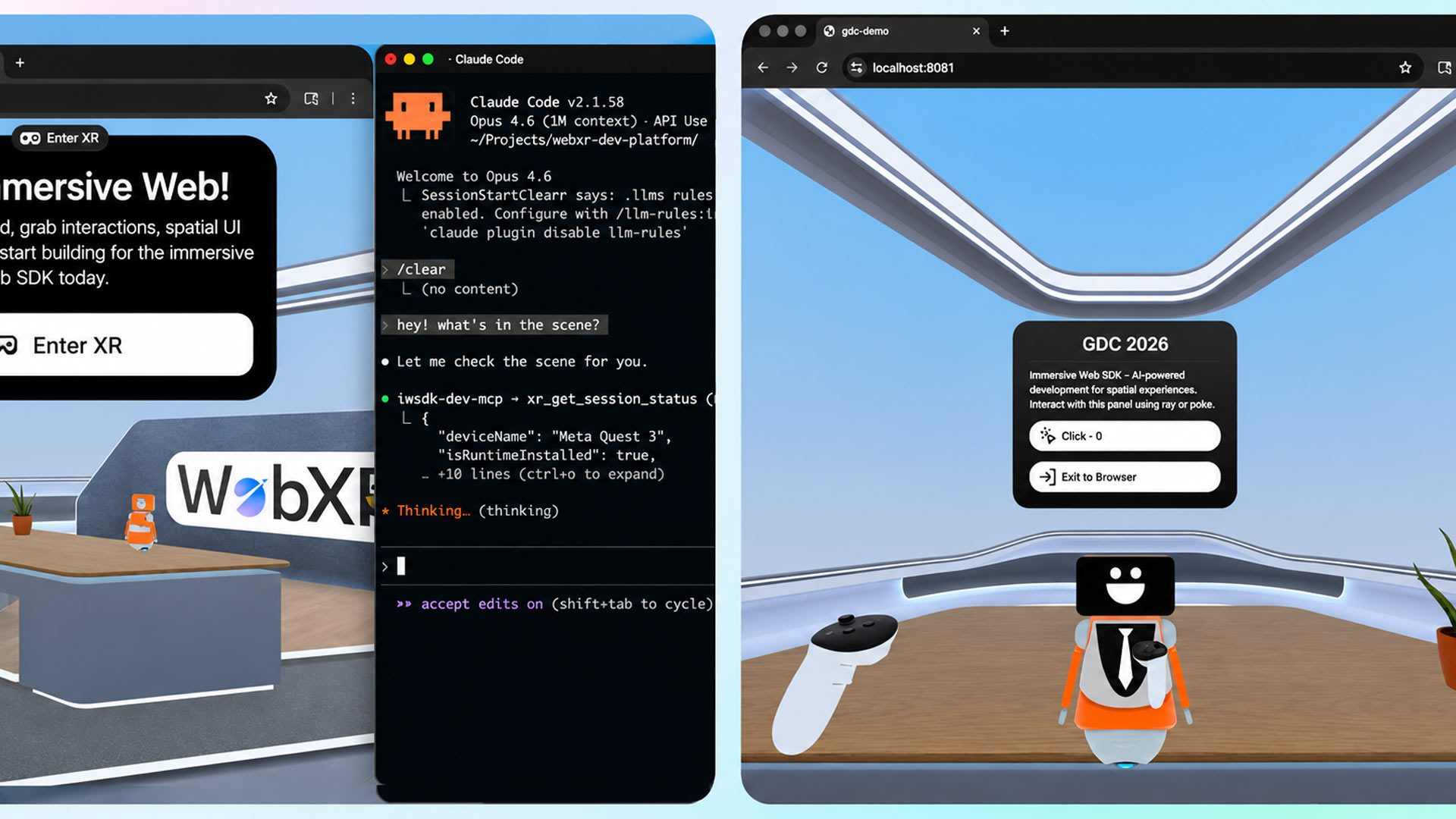
Road to VR reports that Meta updated its open-source Immersive Web SDK (IWSDK) to include an AI-driven "agentic workflow" for building WebXR experiences, integrating coding assistants such as Claude Code, Cursor, GitHub Copilot, and Codex. Road to VR quotes Meta: "In practice, agentic workflows mean the AI does more than generate code; it also tests and validates it." Road to VR also reports that Meta demonstrated the system by rebuilding a 2022 VR gardening demo in about 15 hours using IWSDK and existing assets, and that the project is available under an MIT license. This lowers technical friction for web-based VR by automating larger portions of development and validation, which could broaden the creator base for WebXR.
What happened
Road to VR reports that Meta released a major update to the open-source Immersive Web SDK (IWSDK), adding an AI-powered "agentic workflow" aimed at automating larger development tasks for WebXR. Road to VR reports that the update integrates AI coding assistants including Claude Code, Cursor, GitHub Copilot, and Codex. Road to VR quotes Meta: "In practice, agentic workflows mean the AI does more than generate code; it also tests and validates it." Road to VR reports that Meta rebuilt its 2022 VR gardening demo in approximately 15 hours using the new workflow and existing art assets. Road to VR also reports that IWSDK is published under an MIT license and that Meta said over one million monthly users already access WebXR content on Quest.
Technical details
Road to VR describes IWSDK as a framework that abstracts common VR tasks such as physics, hand-tracking, movement, grab interactions, and spatial UI, with the new addition enabling a closed-loop AI process that generates, tests, and validates code. The article frames the agentic workflow as more than boilerplate generation, citing Meta's demonstration where the AI produced a full interactive WebVR application. Editorial analysis - technical context: Agentic workflows combine code synthesis with automated testing and iterative refinement; in other toolchains this pattern reduces round-trip developer time but requires robust validation to avoid silent failures.
Industry context
Editorial analysis: Public reporting frames this update as part of a broader trend toward embedding generative AI into developer toolchains and low-code/no-code tooling. Editorial analysis: For practitioners, easier WebXR deployment matters because web delivery bypasses native app stores and long compile cycles, potentially increasing experimentation velocity for small teams and creators.
What to watch
Editorial analysis: Observers should track community uptake of IWSDK on GitHub, the quality and safety of AI-generated interactions in multi-device WebXR, and evidence of automated testing catching integration or physics regressions. Editorial analysis: Also watch for contributions or forks from the open-source community and any follow-up technical documentation or benchmarked failure modes published by Meta or third parties.
Key Points
- 1Meta added an AI "agentic workflow" to IWSDK, automating code generation plus testing and validation for WebXR development.
- 2Web-based deployment via IWSDK can speed iteration and distribution since WebXR runs in browsers and bypasses app-store installs.
- 3Industry trend: integrating generative AI into developer toolchains often lowers entry barriers but raises validation and maintenance demands.
Scoring Rationale
Notable product update: embedding agentic AI into an open-source WebXR SDK reduces friction for building VR web experiences and could broaden creator adoption. The change is tactical rather than paradigm-shifting, so it rates as a meaningful but not industry-altering development.
Practice with real Ad Tech data
90 SQL & Python problems · 15 industry datasets
250 free problems · No credit card
See all Ad Tech problems