Mathematicians Publish Leiden Declaration on AI Risks to Mathematics
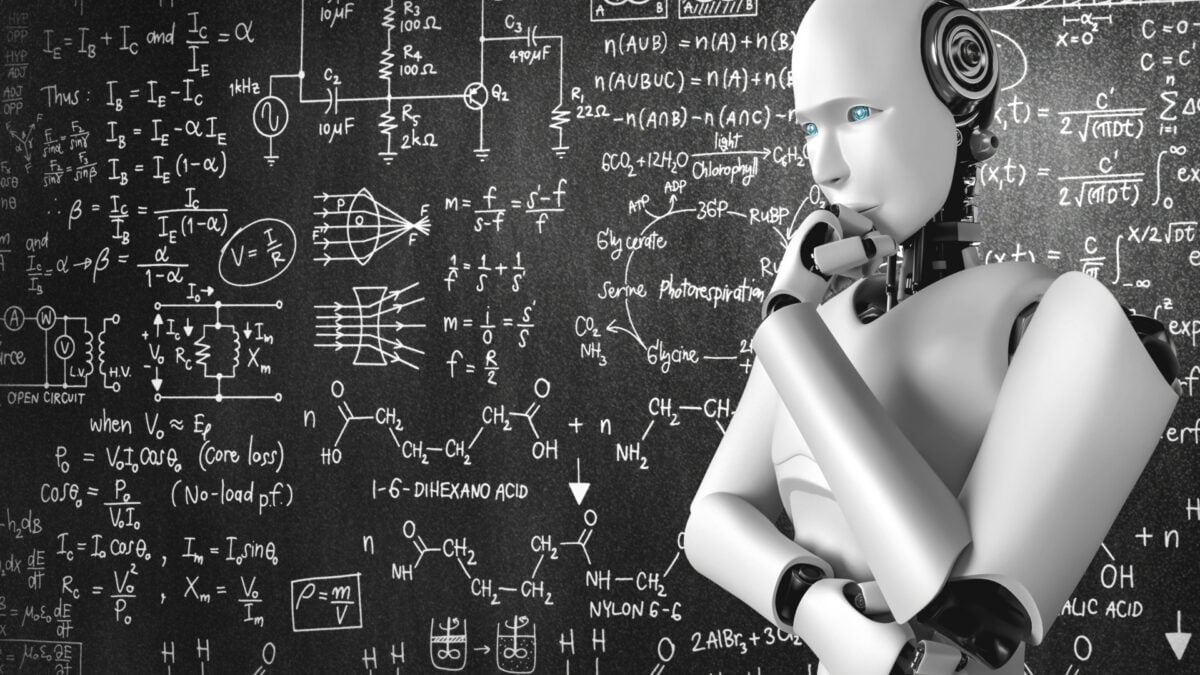
On June 2, 2026, a group of mathematicians published the Leiden Declaration on Artificial Intelligence and Mathematics, a statement developed after a 2025 workshop at the Lorentz Center in Leiden. Leiden University says 16 researchers from 15 universities issued the declaration, which is endorsed by the International Mathematical Union; Gizmodo reported it had drawn more than 130 signatories by publication. The document raises concerns about the reliability of AI-generated proofs, attribution when proprietary models are used, and effects on peer review and publication, according to the declaration text and coverage by the London Mathematical Society and Scientific American. It sets out recommendations for individual researchers, professional bodies, funders, and policymakers, such as disclosing AI use and preserving rigorous review. The Isaac Newton Institute notes the declaration does not call for an outright ban on AI in mathematics.
What happened
On June 2, 2026, mathematicians published the Leiden Declaration on Artificial Intelligence and Mathematics, a statement of values and recommendations for the mathematical community developed after a 2025 workshop at the Lorentz Center in Leiden, per the declaration website and Leiden University. Leiden University says the declaration was issued by 16 researchers from 15 universities and is endorsed by the International Mathematical Union, and Gizmodo reported it had attracted more than 130 signatories by the time of publication. The London Mathematical Society and Scientific American summarized the declaration's core concerns as the reliability of automatically generated results, attribution of work that uses proprietary models, and effects on publication and peer review.
What the declaration argues
The text centers on the role of proof in mathematical practice and the norms of attribution and responsibility for correctness, per the declaration preamble. It discusses both symbolic and neural methods for generating and formalizing mathematics and highlights tensions between rapid public dissemination of AI-generated claims and established procedures for validation, according to the declaration and reporting by Scientific American and Gizmodo. Rather than calling for a ban, the declaration recommends that authors disclose AI assistance, that results undergo peer review, and that funders and professional bodies develop policies to preserve scrutiny and accessibility, as described in the London Mathematical Society summary and on the declaration site. The Isaac Newton Institute likewise frames the effort as seeking guardrails rather than prohibition.
Editorial analysis
Industry-pattern observation: the issues the declaration raises, reproducibility and attribution, are the same technical-governance fault lines that recur whenever powerful automation enters a research discipline. If journals and funders begin to require disclosure of AI use and verifiable artifacts, demand tends to grow for tooling that emits machine-checkable proofs, for example formalization in proof assistants, and provenance metadata that records how a result was produced. Collective, field-level standards frequently follow workshops and declarations of this kind, which can accelerate editorial and funding guidelines even before formal regulation exists. A practical tension is that proprietary models complicate attribution and reproducibility precisely because their training data and internal reasoning are not open to inspection, so disclosure norms only partially resolve the verification problem.
What to watch
Useful signals include whether major mathematics journals and funding bodies adopt formal AI-disclosure requirements, whether the International Mathematical Union or national societies issue implementing guidance, and whether adoption of proof-assistant formalization and provenance tooling rises in response. Growth of the signatory list well beyond the initial 130-plus, and uptake among large professional bodies, would indicate how much consensus the declaration commands across the discipline.
Key Points
- 1Sixteen mathematicians issued the IMU-endorsed Leiden Declaration, drawing more than 130 signatories and flagging AI risks to proof reliability, attribution, and peer review.
- 2The declaration stops short of banning AI, instead urging disclosure of AI use and preservation of rigorous review across journals, funders, and professional bodies.
- 3Field-level standards often follow such declarations; expect pressure for machine-checkable proofs, provenance metadata, and AI-disclosure rules in mathematical publishing.
Scoring Rationale
The declaration addresses research integrity and reproducibility where AI is changing core scholarly workflows. It is particularly relevant to researchers, journal editors, and toolmakers, and may prompt policy and editorial changes across mathematical publishing.
Sources
Public references used for this report.
View 4 more sources
- Leiden Declaration on Artificial Intelligence and Mathematicslms.ac.uk
- Mathematicians call for action on AI to protect the future of the ...newton.ac.uk
- Mathematicians issue Leiden Declaration against AI misuse of their workthenextweb.com
- A New Declaration Warns AI Could Threaten the Foundations of Mathematicsgizmodo.com
Practice interview problems based on real data
1,625 SQL & Python problems across 15 industry datasets — the exact type of data you work with.
Try 250 free problems