
Maruti Suzuki Onboards Five Startups for Multilingual Support
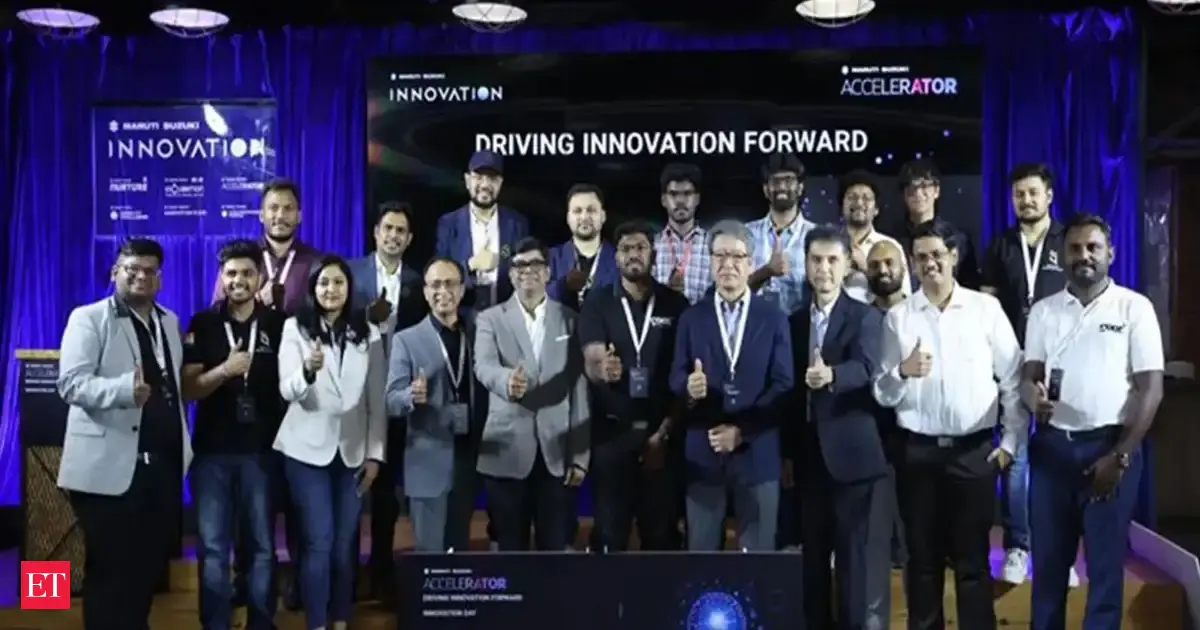
India's largest automaker Maruti Suzuki partnered with five startups, MiniMines, Easework AI, Sarvam AI, Siftly, and CodeMate AI, selected from the fifth cohort of its Maruti Suzuki Incubation Program, according to a company release reported by ANI and covered by AutocarPro and The Economic Times. The startups will work on battery recycling (MiniMines), agentic procurement automation (Easework AI), multilingual generative-AI customer agents (Sarvam AI), generative brand-visibility tools (Siftly), and AI-assisted software development (CodeMate AI). Per the release, Maruti Suzuki has screened about 7,400 startups, engaged 250-plus, and onboarded 38 partners over seven years. Sarvam AI's multilingual agent work is the most directly relevant thread for AI and data-science practitioners tracking enterprise GenAI deployment in India.
Large OEMs increasingly use structured incubation programs to source targeted generative-AI and automation capabilities while keeping integration and lifecycle risk external. For practitioners, that raises familiar questions: how these pilots will be instrumented for production-grade reliability, how multilingual NLU will be measured across regional languages, and whether the battery-recycling pilot will require cross-disciplinary data pipelines and regulatory data collection before it can scale.
What happened
According to a company release reported by ANI and published by AutocarPro and The Economic Times, Maruti Suzuki India Limited selected five startups from the fifth cohort of its Maruti Suzuki Incubation Program: MiniMines, Easework AI, Sarvam AI, Siftly, and CodeMate AI. Per the release, MiniMines will work on environment-friendly recycling of end-of-life lithium-ion batteries and extraction of valuable materials; Easework AI will automate procurement workflows for indirect consumables using agentic AI; Sarvam AI will develop generative-AI agents with multilingual capabilities for customer interaction; Siftly will apply generative AI to improve brand visibility; and CodeMate AI will use AI tools to accelerate software application development for business processes. The release also states that over the past seven years Maruti Suzuki has screened around 7,400 startups, engaged more than 250, and onboarded 38 as partners.
Technical context
The vendor descriptions point to two technical threads relevant to practitioners: multilingual generative-AI agents for customer engagement, and domain-specific automation for hardware-related processes such as battery recycling. Multilingual agents raise familiar requirements, including intent classification and slot-filling across low-resource languages, locale-balanced evaluation, and production considerations like latency, fallback routing, and localized retrieval-augmented generation sources. Battery-recycling pilots introduce data heterogeneity across manufacturing, materials chemistry, and reverse logistics, and will likely require sensor-data ingestion, traceability metadata, and data-sharing agreements with third parties.
Industry context
Reporting frames this as a continuation of Maruti Suzuki's multi-year startup engagement programs, run with NSRCEL at IIM Bangalore and tied to initiatives such as the Maruti Suzuki Accelerator, Mobility Challenge, Nurture, and FundRays, per AutocarPro and The Economic Times. Corporate incubators like this are an increasingly important vector for discovering niche machine-learning vendors, but they also tend to surface integration challenges, such as interface contracts, monitoring, and model ownership in mixed-vendor stacks, earlier than product-market-fit issues. Companies sourcing GenAI capabilities through incubators frequently run short, function-specific pilots that either harden into production connectors or are replaced by internal builds, so practitioners should treat early integrations as experiment scaffolds rather than finished systems.
What to watch
- •Pilot metrics and evaluation criteria, including published KPIs for multilingual NLU accuracy, latency, and end-to-end customer satisfaction.
- •Integration and data flows, including whether pilot architectures use RAG, local embeddings, or on-prem inference for sensitive data.
- •Battery-recycling outputs, including regulatory approvals, recovery rates, and supply-chain data interoperability that would indicate scaling beyond lab demonstrations.
Key Points
- 1Maruti Suzuki selected five AI and automation startups, including Sarvam AI for multilingual customer agents, from its fifth incubation cohort.
- 2Multilingual generative agents heighten the need for locale-specific evaluation, latency budgets, and robust fallback strategies in production.
- 3Battery-recycling and procurement-automation pilots will need cross-disciplinary data pipelines and regulatory data handling to scale beyond prototypes.
Scoring Rationale
A corporate incubator announcement from India's largest automaker selecting five AI and automation startups is a solid enterprise-AI signal, but it is a structured program press release, not a deployment milestone. Sarvam AI's multilingual generative agent work is the most technically notable thread for practitioners. Score held at 5.5 (pulled from an original 6.8) since the story documents vendor discovery and program metrics, not verified production outcomes.
Sources
Public references used for this report.
Practice with real Ad Tech data
90 SQL & Python problems · 15 industry datasets
250 free problems · No credit card
See all Ad Tech problems

