LLNL Deploys SpyCI-LAMBS to Accelerate Rare-Earth Screening
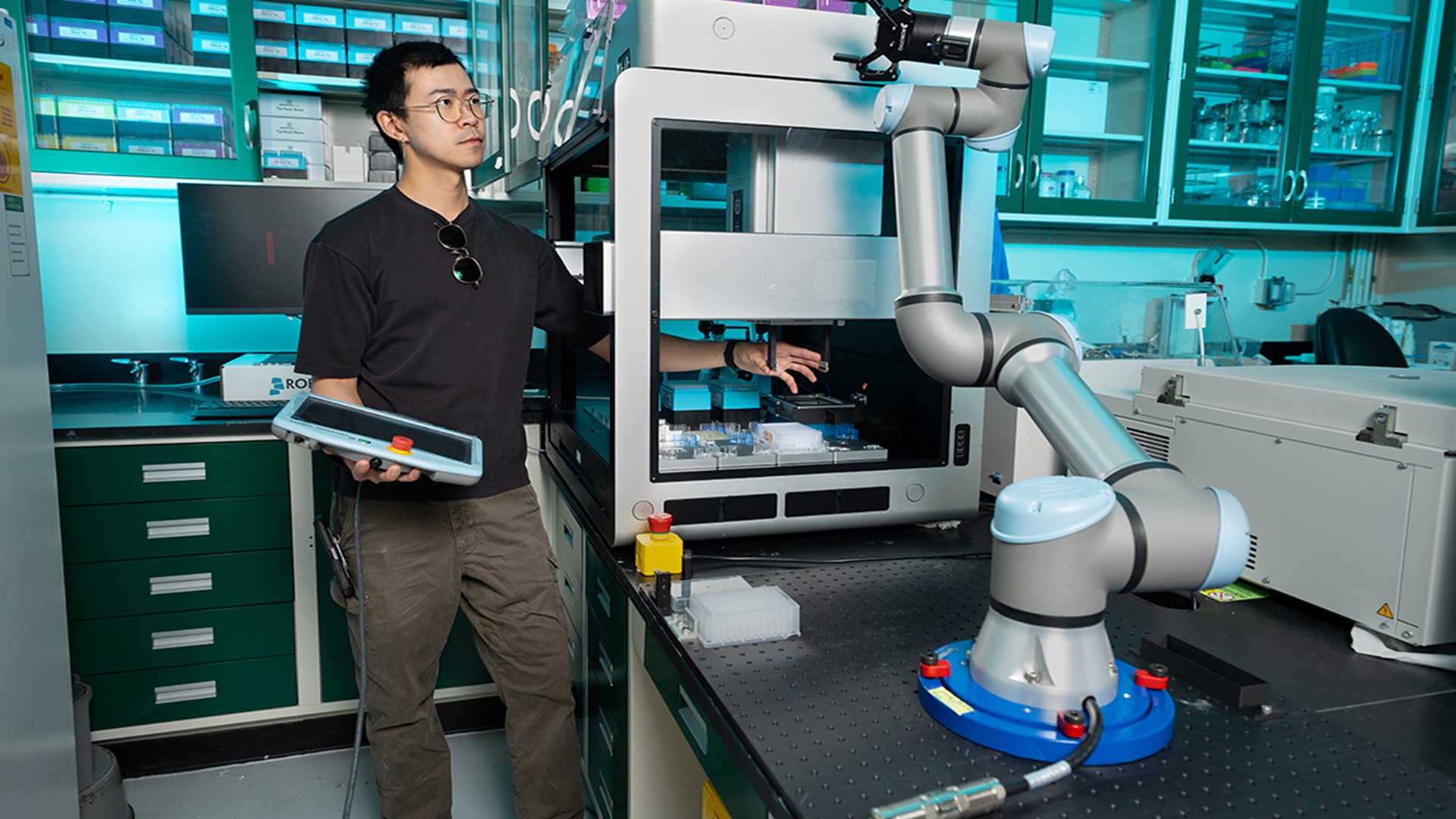
Lawrence Livermore National Laboratory developed a high-throughput protein-screening platform called SpyCI-LAMBS that compresses rare-earth binding experiments from years to weeks. The system uses bacterial lanmodulin proteins and a SpyTag-Catcher immobilization trick to bind proteins directly to solid supports, eliminating purification bottlenecks and enabling parallel assays in 96-well formats. LLNL collected data on 600 proteins in about a month, a dataset size previously impractical, and the workflow is automated and intended to feed machine learning for protein design. Funded by DARPA's EMBER program and published in Nature Chemical Biology, the platform targets scalable biomining and industrial rare-earth separation for magnets, batteries, and electronics.
What happened
Lawrence Livermore National Laboratory unveiled a high-throughput assay named SpyCI-LAMBS that reduces lanmodulin protein screening times from years to weeks, enabling a large-scale view of sequence-to-metal selectivity. The team collected data on 600 proteins in roughly a month, a result they estimate would have taken three to five years with conventional purification-based workflows. The work, supported by DARPA through the EMBER program, appears in Nature Chemical Biology and is presented as a direct enabler for biomining and domestic rare-earth separation efforts.
Technical details
The platform leverages engineered lanmodulin variants, bacterial expression, and SpyTag-Catcher immobilization to anchor target proteins to a solid surface without multi-step purification. By bypassing purification, the assay runs in parallel using 96-well formats and robotic handling to expose many variants to rare-earth element panels and quantify binding preferences. Key capabilities demonstrated include:
- •direct immobilization of lanmodulin variants via SpyTag-Catcher chemistry
- •parallelized assays in 96-well plates with robotic automation
- •high-throughput readouts that produce hundreds of labeled sequence-to-selectivity data points
- •compatibility with downstream machine learning to predict or design metal selectivity
The team still uses bacterial expression, notably E. coli, to produce variant libraries, but the immobilization step removes the need to purify single proteins from the background "protein soup."
Context and significance
Rare-earth elements power permanent magnets, batteries, and high-value electronics, and supply-chain concentration poses strategic risk. Biological binders like lanmodulin have long been of interest because they evolved metal selectivity in microbes, but discovery was constrained by low-throughput assays. SpyCI-LAMBS converts a bottleneck in wet-lab screening into a tractable data-generation pipeline, enabling the first broad mapping of sequence to metal-binding selectivity across a protein family. That mapping is precisely the kind of labeled dataset required to train supervised and generative models for protein engineering, so expect accelerated design cycles for binders with tuned selectivity or affinity.
Why practitioners should care
For computational protein engineers and ML practitioners, SpyCI-LAMBS supplies a reproducible protocol to generate mid-sized labeled datasets at scale, bridging lab throughput and model needs. For process engineers and materials teams, it lowers the barrier to iterate on binder design and increases the feasibility of biomining and bioassisted separations that are selective for specific rare-earths. For organizations focused on supply-chain resilience, the method shortens the time-to-evaluate candidate biobased separation strategies.
What to watch
The crucial next steps are demonstration of binder performance at process-relevant scales, integration of the LLNL-generated datasets into predictive models, and translation from bench assays to pilot separation columns. Watch for follow-on papers describing ML models trained on the dataset, scale-up experiments, or industry partnerships to commercialize biomining workflows.
Key Points
- 1LLNL's SpyCI-LAMBS converts low-throughput lanmodulin screening into a parallel assay, shrinking discovery time from years to weeks.
- 2Removing purification produces hundreds of labeled sequence-to-selectivity datapoints, enabling practical machine learning for protein design.
- 3Faster binder discovery materially improves feasibility of bio-based rare-earth separation, with downstream implications for supply-chain resilience.
Scoring Rationale
The method materially advances experimental throughput and creates datasets suitable for ML-driven protein design, a notable enabling step for biomining and separations. It is a lab-stage, research-driven result with clear downstream potential but not yet a commercial or paradigm-shifting deployment.
Sources
Public references used for this report.
Practice interview problems based on real data
1,625 SQL & Python problems across 15 industry datasets — the exact type of data you work with.
Try 250 free problems