Lightelligence Pursues Hong Kong IPO, Scales Optical AI Infrastructure
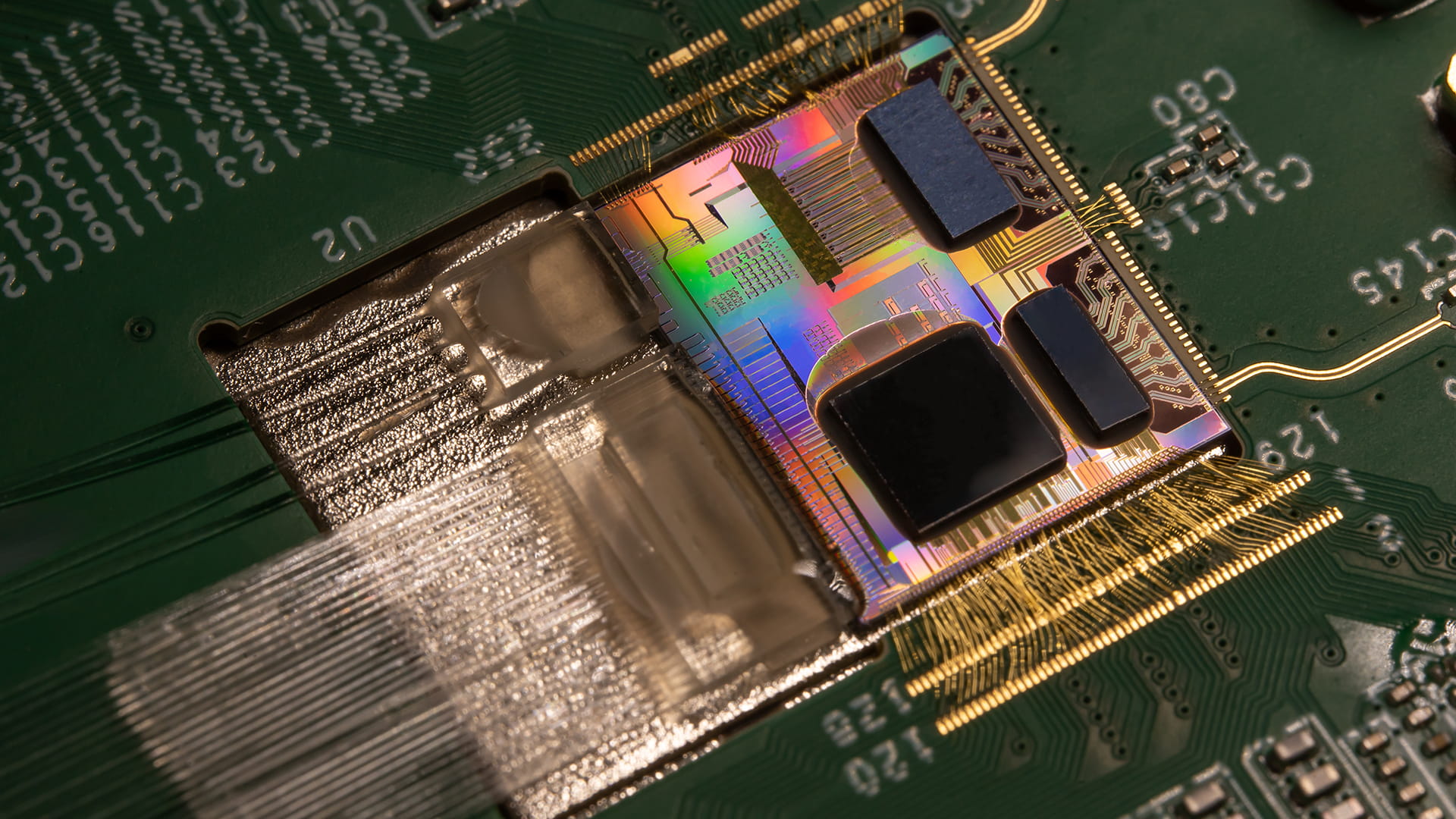
Lightelligence has passed a Hong Kong Stock Exchange listing hearing and filed a prospectus, positioning itself as the first public company focused on optical computing for AI. The Shanghai- and US-founded firm sells two core product lines, optical interconnect and optical computing, including the LightSphere X optical circuit switch and an xPU-CPO co-packaging prototype. It reports commercial deployments with 44 customers, support for several thousand-GPU clusters, and cumulative deployment of over 5,000 card clusters. The company posted RMB 106 million in revenue for 2025, raised RMB 300 million in its last round at a RMB 7.8 billion valuation, and counts strategic investors such as Tencent, China Mobile, and Baidu. Frost & Sullivan credits Lightelligence with leading shipments and commercial-scale deployment in optoelectronic hybrid computing, but revenue is still modest and integration risks remain.
What happened
Lightelligence has cleared a Hong Kong Stock Exchange listing hearing and published its prospectus, moving toward a Hong Kong IPO while pitching its optical AI infrastructure as a solution to data center bottlenecks. The company, founded by Dr. Yichen Shen in 2017, sells two complementary product suites: optical interconnect for high-bandwidth, low-latency connections across GPUs and servers, and optical computing for photonic-accelerated linear operations. The firm reports RMB 106 million revenue for 2025, 44 commercial customers, support for several thousand-GPU clusters, more than 5,000 card clusters cumulatively deployed, and a patent portfolio of 410 filings.
Technical details
Lightelligence bases its offering on optoelectronic hybrid chips and system-level optical switching. Key elements practitioners should note are:
- •LightSphere X, an optical circuit switching product introduced in 2025, designed to enable distributed optical circuit switching across clusters.
- •An xPU-CPO optoelectronic co-packaging prototype that places the optical engine and the compute xPU on a single substrate to reduce electrical transmission distance and power loss.
- •Reported operational metrics include increases in average model floating-point operation utilization (MFU) by >50% in some deployments and support for dense GPU pod topologies that emulate scale-up behavior across scale-out hardware.
Context and significance
Optical interconnect and photonic compute target two persistent AI datacenter limits: the energy and latency cost of moving data between memory and compute, and the network bottleneck between densely provisioned GPUs. Lightelligence sits alongside US peers like Ayar Labs but claims earlier commercial-scale deployment and a larger patent estate, as flagged by Frost & Sullivan. For ML engineers and infrastructure teams, the company's proposition reframes part of the compute arms race: improvements in effective utilization and inter-GPU bandwidth can yield system-level throughput gains without proportionate GPU count increases. That makes optical approaches complementary to, not a drop-in replacement for, continued GPU and ASIC scaling.
Business and adoption signals
Strategic investors such as Tencent, China Mobile, and Baidu have backed Lightelligence, and the company closed a RMB 300 million round in 2025 at an implied RMB 7.8 billion valuation. Commercial traction metrics are credible for a deep-hardware company: tripled sales over two years, early deployments with major AI chip and cloud customers, and a stated leadership position in cumulative optical computing chip shipments.
Risks and limitations
Revenue is still modest relative to hyperscaler procurement cycles, and integration complexity with existing server, PCIe, and RDMA ecosystems is nontrivial. Optical circuit switching adds new software and orchestration requirements for job scheduling, fault recovery, and telemetry. Supply chain and manufacturing yield for optoelectronic co-packaged solutions remain operational risks. Finally, competing architectures and vendor lock-in concerns could slow adoption despite technical gains.
What to watch
The IPO will reveal unit economics, gross margin trajectory, and detailed customer concentration. Track disclosed performance of LightSphere X, roadmap to mass production of the xPU-CPO subsystem, and hyperscaler trial outcomes that validate MFU and energy-efficiency claims. If Lightelligence converts pilot wins into multi-rack hyperscaler rollouts, optical interconnect could become a mainstream lever for scaling LLM training and inference.
Key Points
- 1Lightelligence targets datacenter bottlenecks with optoelectronic hybrid chips, offering scale-up and scale-out optical interconnect for GPU clusters.
- 2Commercial traction includes 44 customers, support for several thousand-GPU clusters, and over 5,000 card clusters deployed, validating early product-market fit.
- 3IPO will fund scaling and supply-chain ramp; primary risks are modest revenue, integration complexity, and manufacturing yield for co-packaged optics.
Scoring Rationale
This is a notable infrastructure milestone: a hardware-focused optical computing firm moving to public markets signals maturation of photonics for AI datacenters. The company shows commercial deployments and strategic investors, which matters to practitioners planning future cluster architectures. The story is not yet industry-shaking because revenue remains small and broad hyperscaler adoption is unproven.
Sources
Public references used for this report.
Practice interview problems based on real data
1,625 SQL & Python problems across 15 industry datasets — the exact type of data you work with.
Try 250 free problems