Kopilot Founder Warns AI Overload Is Frying Brains
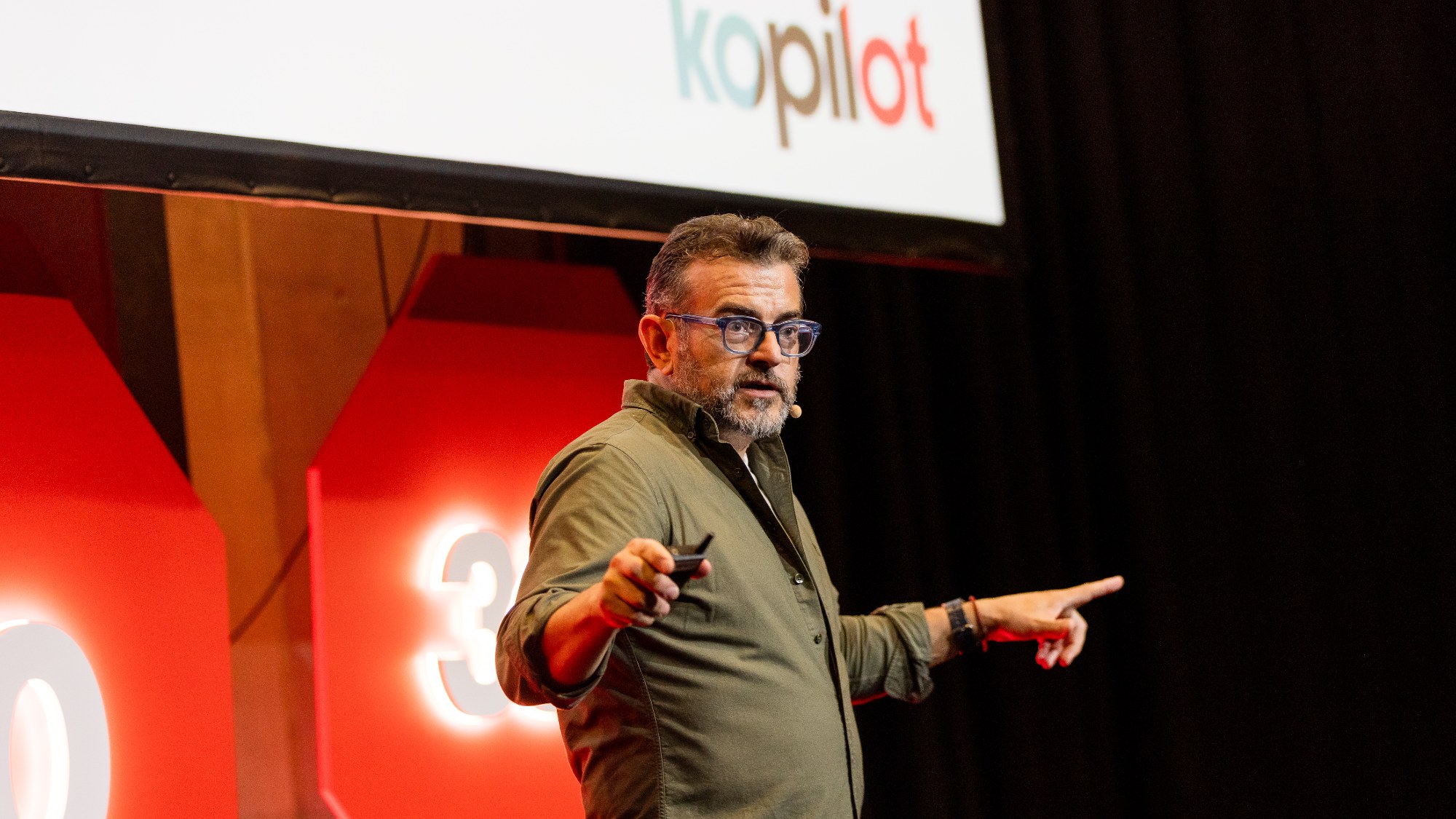
Kopilot founder Kenny Hill told the Futurist stage at Mumbrella360 that AI has closed gaps in data, insight and creativity but is now overwhelming workers with an "abundance without a filter," according to Mumbrella. Hill said AI has turned a previously controlled stream of assistance into a "full-blown fire hose," accelerating decision-making and offering near-infinite options while human "hardware" for thinking remains unchanged. He invoked Barry Schwartz and his book, "The Paradox of Choice," to argue that excess options increase hesitation, second-guessing and regret. Hill cautioned that the effect goes beyond fatigue to a more subtle erosion of decision satisfaction, per Mumbrella reporting.
What happened
Per Mumbrella, Kenny Hill, founder of Kopilot, closed the Futurist stage at Mumbrella360 and warned that AI is producing an overwhelming surge of choices for workers. Hill is quoted saying AI has become "abundance without a filter" and that "if AI was a tap before, it is now this full-blown fire hose that is just maxing out." He argued AI accelerates decision-making and supplies near-infinite options while "the human machinery that is required to keep up with this has not changed," according to Mumbrella. Hill cited Barry Schwartz and his book The Paradox of Choice to frame the problem as an intensification of preexisting choice overload.
Editorial analysis - technical context
Industry observers have noted that rapid generation of alternatives by generative AI creates new interaction design and cognitive-load challenges for product and UX teams. Companies integrating generative models now face higher upstream throughput of candidate outputs, which typically increases downstream filtering and ranking requirements. For practitioners: designing lightweight, reliable filters and progressive-disclosure UX patterns is a common mitigation strategy in comparable deployments.
Context and significance
Hill's remarks reflect a wider conversation about how generative tools change work patterns rather than simply automating tasks. Past research on choice overload, exemplified by The Paradox of Choice, provides a behavioral lens for understanding why more options can reduce satisfaction and slow decisions. For organisations, the phenomenon raises questions about workflow architecture, human oversight, and metrics that capture cognitive cost rather than only throughput.
What to watch
Industry context
Monitor how teams instrument user interactions with AI outputs, specifically metrics for time-to-decision, revision cycles, and abandonment. Observe product decisions that add rankers, guardrails, or templates to reduce option volume presented to end users. Also watch for empirical studies measuring decision quality and user satisfaction in high-output AI workflows.
Key Points
- 1Generative AI multiplies available options, raising cognitive load and increasing hesitation and regret, echoing Barry Schwartz's choice-overload findings.
- 2Design and engineering teams must convert high-output AI into actionable signals using filters, ranking, and progressive disclosure to avoid paralysis.
- 3Measuring cognitive cost alongside throughput, such as time-to-decision and revision cycles, becomes essential when AI dramatically increases candidate outputs.
Scoring Rationale
The report highlights an important, practical challenge for teams adopting generative AI: cognitive overload and decision friction. It is relevant for practitioners designing workflows, though it does not announce new technology or regulation.
Sources
Public references used for this report.
Practice interview problems based on real data
1,625 SQL & Python problems across 15 industry datasets — the exact type of data you work with.
Try 250 free problems