Keebler Health Secures $16M Series A Financing
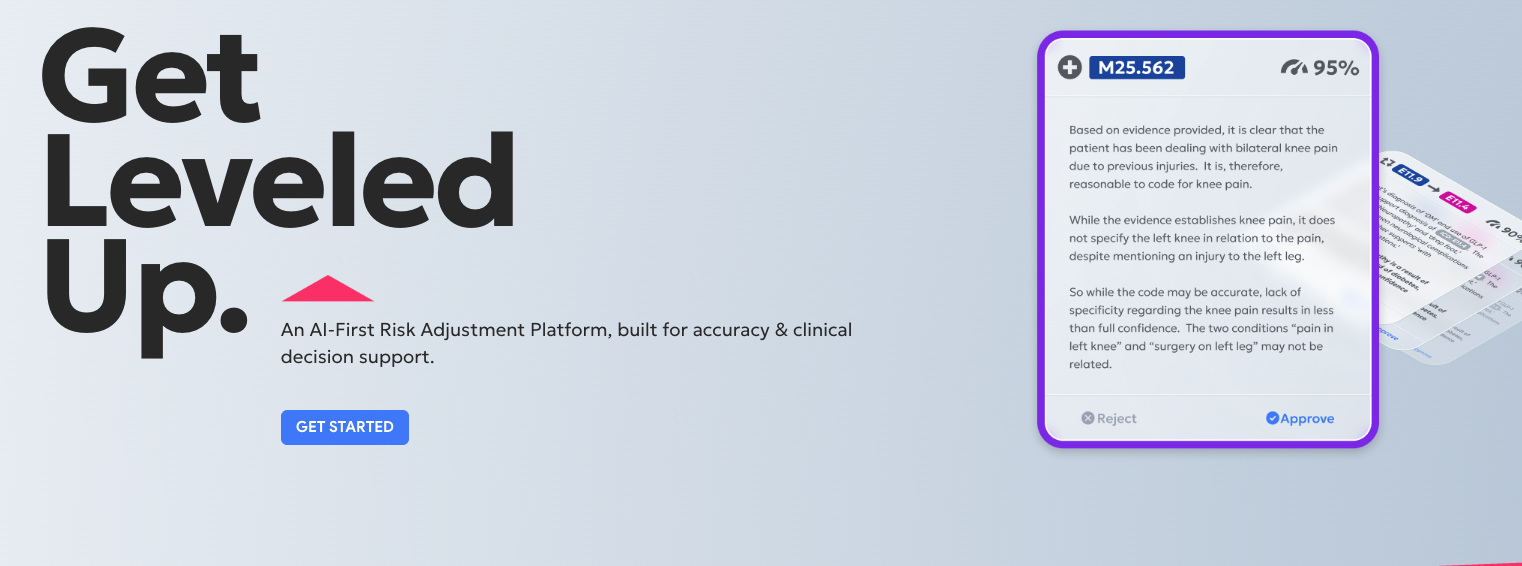
Keebler Health raised $16 million in a Series A round led by Flare Capital Partners with participation from Sands Capital and several strategic venture investors, bringing total funding to $23 million. The Durham, NC startup builds an LLM-native risk adjustment platform that processes unstructured clinical documentation to surface missed HCC coding opportunities across retrospective and concurrent workflows. Keebler will use the financing to scale commercial operations, expand its engineering and clinical teams, and grow infrastructure to serve value-based care organizations and managed care providers. The company positions its product as both a revenue-capture and population-health tool and sees adjacent use cases in compliance and RADV audit readiness as regulatory scrutiny on coding increases.
What happened
Keebler Health announced a $16 million Series A round led by Flare Capital Partners, with participation from Sands Capital, Tau Ventures, Freestyle Capital, Hustle Fund, and several other investors. The financing brings Keebler's total capital to $23 million since its 2023 founding. Keebler builds an LLM-native risk adjustment platform that ingests unstructured clinical notes, imaging reports, and discharge summaries to surface missed HCC opportunities and deliver clinician-facing insights at the point of care.
Technical details
The platform is architected around large language model primitives rather than retrofitted rule-based NLP. Keebler founders include Isaac Park, Andrew Stickney, and Kevin Hill, PhD, with Terrell Bacchus, MD as founding Chief Medical Officer. Key technical capabilities described by the company and investors include:
- •Processing high-volume unstructured clinical documentation to identify condition mentions and temporal context
- •Generating accurate HCC coding suggestions for both retrospective chart review and concurrent workflows
- •Delivering actionable, clinician-oriented prompts at the point of care to minimize workflow disruption
- •Supporting downstream use cases like population health analytics, compliance, and RADV audit readiness
The company emphasizes end-to-end productization rather than research prototypes: models are optimized for clinical precision, audit defensibility, and deployment in live EHR environments. The financing will fund commercial expansion, hiring of engineering and clinical staff, and scaling of infrastructure to meet the throughput and security needs of value-based care customers.
Context and significance
Risk adjustment is a structural problem in value-based care because much clinically meaningful information lives outside coded fields. Studies show chronic conditions are frequently under-captured across EHR sources, producing systematic gaps in risk capture and reimbursement accuracy. Keebler is one of several startups addressing this gap; competitors and adjacent players include Navina and other clinical-intelligence vendors that combine chart review, analytics, and ML.
Keebler's claim to differentiation is that it was built from the ground up as an LLM-native service, which can simplify extraction of nuanced clinical facts like temporality, certainty, and attribution. That positioning aligns with a broader industry trend toward AI-native healthcare platforms that prioritize model explainability, audit logs, and integration with compliance workflows. The presence of sector-focused investors like Flare Capital and Sands Capital signals continued VC appetite for applied healthcare AI that targets near-term revenue capture and regulatory risk reduction rather than pure research play.
Why it matters for practitioners
For data scientists and ML engineers working in healthcare, Keebler's raise highlights two practical takeaways. First, the market values end-to-end solutions that include clinical validation and operational integration, not just model accuracy metrics. Second, product roadmaps in this space must balance precision with auditability and traceability because payers and regulators will demand defensible outputs for reimbursement and RADV audits.
What to watch
Track early customer deployments and public benchmarks or validation studies that quantify sensitivity and specificity for HCC detection. Also watch whether Keebler publishes technical details about model fine-tuning, prompt engineering, or human-in-the-loop workflows that underpin audit defensibility.
Bottom line
The Series A positions Keebler to scale commercialization of an LLM-native risk adjustment product at a time when accurate capture of unstructured clinical data has direct financial and regulatory consequences for value-based care organizations.
Key Points
- 1Keebler raised $16M to scale an LLM-native platform that extracts missed HCC codes from unstructured clinical notes, unlocking revenue and clinical data.
- 2Investors led by Flare Capital signal confidence in healthcare AI that couples model performance with deployment, auditability, and point-of-care integration.
- 3Practitioners must prioritize precision, explainability, and traceability when building risk-adjustment models due to payer audits and regulatory scrutiny.
Scoring Rationale
This is a notable Series A for an applied healthcare AI company targeting a high-value, compliant-sensitive use case. The raise validates investor interest in LLM-native clinical products, but the amount and stage are mid-tier for the sector, so impact is important but not transformative.
Sources
Public references used for this report.
Practice with real Ad Tech data
90 SQL & Python problems · 15 industry datasets
250 free problems · No credit card
See all Ad Tech problems