JIATF-401 Awards $500M Counter-UAS Contract to Perennial Autonomy
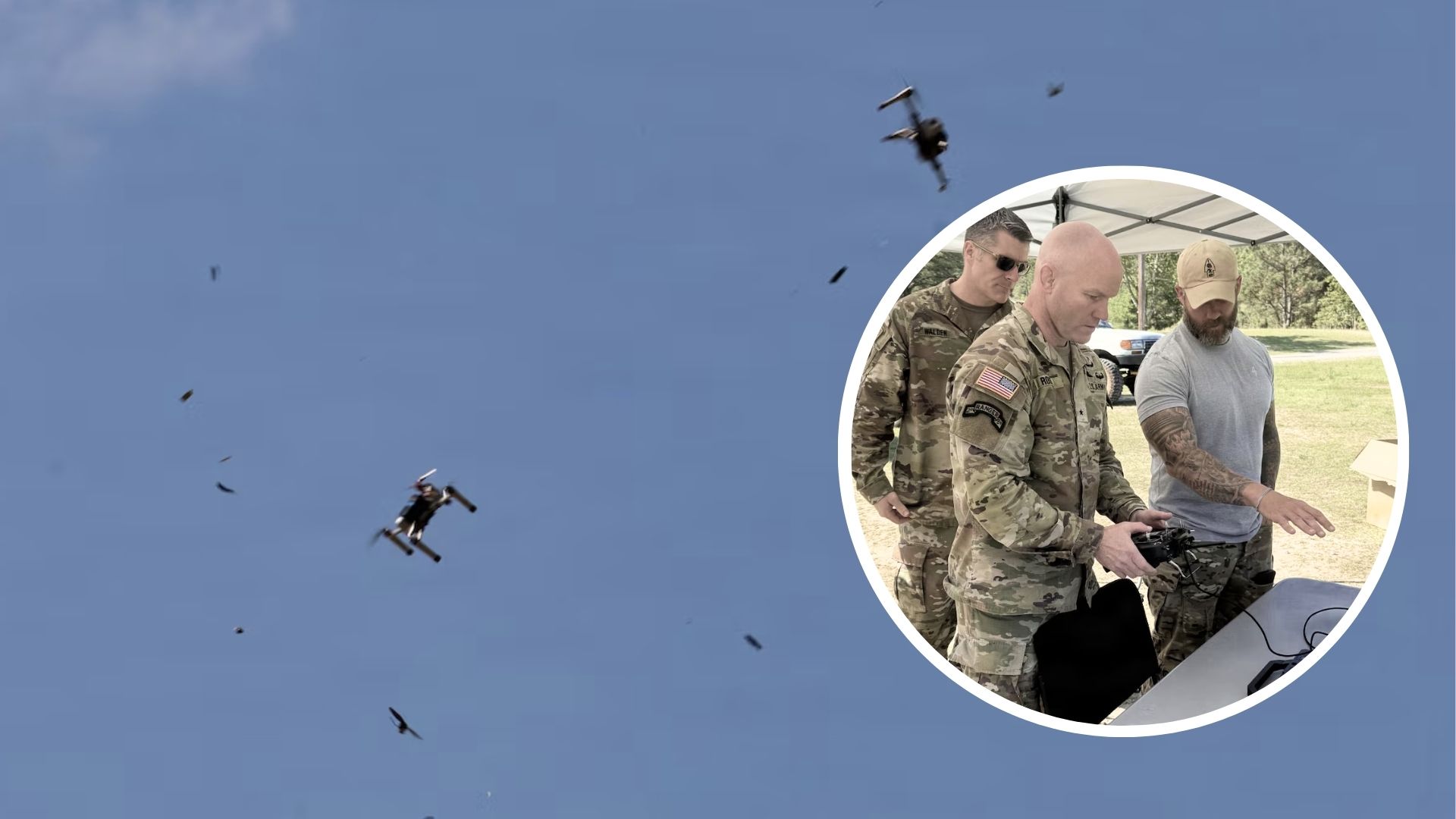
The Joint Interagency Task Force 401 awarded a three-year Indefinite Delivery/Indefinite Quantity contract with a $500 million ceiling to Perennial Autonomy, according to War.gov and DefenseNews. The award covers a family of AI-enabled counter-unmanned aerial systems, including the Merops interceptors, Bumblebee quadcopters, and Hornet midrange strike drones, which sources say are already in operational use with U.S. Central Command. Per reporting by War.gov and Interesting Engineering, the platforms combine computer vision, radio-frequency sensing, jam-resistant communications, and autonomous targeting while preserving warfighter decision authority; Army Brig. Gen. Matt Ross is quoted praising the systems ability to integrate with command-and-control architectures. This procurement and the parallel Army MOSAIC low-cost-interceptor effort reflect a broader shift toward attritable, AI-enabled kinetic defenses to lower cost-per-intercept and scale layered air defense.
What happened
The Joint Interagency Task Force 401 (JIATF-401) awarded a three-year Indefinite Delivery/Indefinite Quantity contract with a $500 million ceiling to Perennial Autonomy, according to a War.gov announcement. The contract funds deployment and scaling of low-cost, attritable air-to-air drone interceptors used to protect warfighters and power-projection platforms at home and abroad, per War.gov and DefenseNews.
The Army and DoD statements, reported by War.gov and Interesting Engineering, list the specific platforms covered by the award as the Merops interceptors, Bumblebee quadcopters, and Hornet midrange strike drones. War.gov and Interesting Engineering report that these systems integrate detection, tracking, and engagement capabilities using computer vision, radio-frequency sensing, jam-resistant communications, and autonomous targeting, while retaining warfighter decision-making authority. Army Brig. Gen. Matt Ross, JIATF-401 director, is quoted saying, "This partnership provides the joint force with state-of-the-art, counter-UAS capability to remain lethal on today's modern battlefield," in the War.gov release.
DefenseNews additionally reports that Perennial Autonomy developed the Merops interceptor under an effort known as Project Eagle, which traces to former Google CEO Eric Schmidt, and that the Merops unit cost is currently about $15,000 per interceptor versus estimates of $30,000 to $50,000 for Iranian Shahed-class attack drones, figures cited in congressional testimony and DefenseNews reporting.
Technical details
Editorial analysis - technical context
Public reporting describes the counter-UAS stack as combining real-time perception sensors and guidance with autonomy for interception. For practitioners, that implies emphasis on embedded computer vision pipelines that must operate under low-latency constraints, RF-spectrum sensing fused with optical data, autonomous target selection logic constrained by rules-of-engagement, and communications resilient to jamming. These requirements raise engineering trade-offs between onboard compute, model complexity, and energy use in small airframes.
The Army is pursuing complementary efforts for lower-cost point and area interceptors. Reporting in Interesting Engineering and The War Zone describes the MOSAIC-26-03 request for information, which asks industry to propose endo-atmospheric interceptors priced under $1 million per round, with subsystem cost caps and maturity timelines aimed at demonstrations by fourth quarter FY2026. That RFI specifies performance targets such as high speed (Mach 5 class in some public descriptions) and long range, and it breaks the problem into discrete tracks for seekers, rocket motors, fire-control, and integration to encourage specialist suppliers.
Context and significance
Journalistic coverage places this award within a broader U.S. effort to adapt air defense to massed, low-cost unmanned and cruise threats demonstrated in recent conflicts. DefenseNews and other outlets link Pentagon procurement moves to lessons learned from Ukraine and accelerated demand after attacks involving Shahed-style drones. For the defense-tech supplier base and autonomy practitioners, the contracts and RFI signal growing market pull for attritable autonomy, hardened perception stacks, and scalable production of low-cost kinetic interceptors.
For practitioners
The two strands of reporting imply measurable priorities for teams building counter-UAS tech. Those include reducing per-unit compute cost for real-time perception, hardening ML models to RF and optical degradation, designing seekers and terminal guidance tolerant of clutter and electronic attack, and integrating autonomy with human-in-the-loop command-and-control.
What to watch
- •Industry responses to the MOSAIC-26-03 RFI and which suppliers win prototype awards, as reported by defense trade press.
- •Production and deployment rates for Merops, Bumblebee, and Hornet systems and any DoD statements on inventory or unit-cost trends.
- •Technical disclosures or demonstrations addressing seeker performance, autonomy-safe modes, and jam-resistant communications.
Sources for reported facts in this piece include the War.gov JIATF-401 announcement, DefenseNews reporting on the Perennial Autonomy award and Merops pricing, and coverage by Interesting Engineering and The War Zone on MOSAIC and low-cost interceptor requirements.
Key Points
- 1JIATF-401 awarded a $500 million IDIQ to Perennial Autonomy, accelerating fielding of attritable, AI-enabled counter-UAS systems.
- 2The Army's MOSAIC RFI seeks interceptor rounds under $1 million, reflecting a cost-per-intercept trade-off between precision and scale.
- 3For practitioners, demand is shifting toward resilient, low-latency perception and autonomy that runs on constrained airframe compute and survives EW.
Scoring Rationale
The $500 million IDIQ and the MOSAIC low-cost-interceptor RFI create measurable procurement momentum for attritable, AI-enabled counter-UAS systems. The story matters for autonomy, embedded ML, seeker design, and defense supply-chain scaling.
Sources
Public references used for this report.
Practice interview problems based on real data
1,625 SQL & Python problems across 15 industry datasets — the exact type of data you work with.
Try 250 free problems