Intelliflicks Builds India's First AI Film Maharaja in Denims
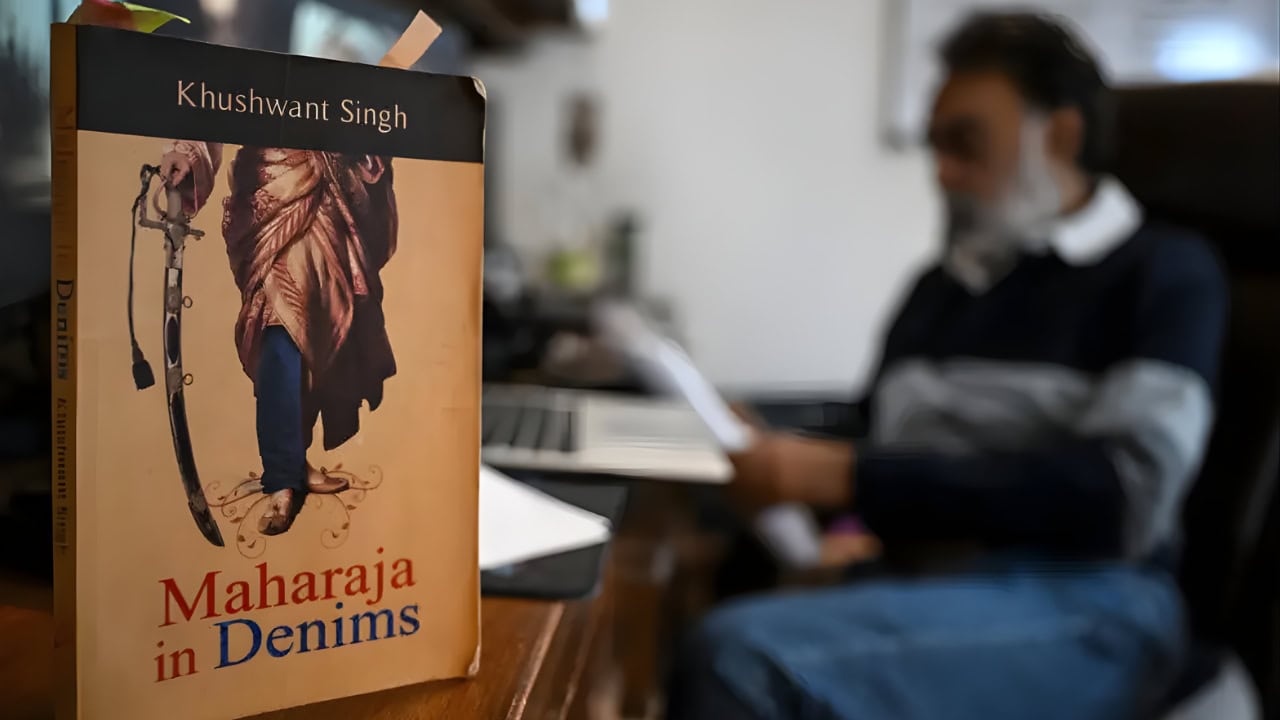
Intelliflicks Studios is producing Maharaja in Denims, a feature-length film generated largely with generative AI. The project, co-founded by author Khushwant Singh and ex-Microsoft executive Gurdeep Singh Pall, uses a micro-crew of six to create a historical drama without traditional actors, sets, or cameras. AI reduces production costs to roughly one tenth of a conventional budget, but the team faces realism challenges: current image-generation models underperform on Indian faces and period-accurate Sikh representations, and rapid model churn forces repeated re-renders and software upgrades. Co-producer Twenty21 Studios is attached, and music by Sukhwinder Singh keeps a human element. Competing AI films have delayed releases, highlighting technical and creative tradeoffs.
What happened
Intelliflicks Studios is producing Maharaja in Denims, positioning it as one of the world's earliest feature-length films created largely with generative AI. The project is co-founded by author Khushwant Singh and former Microsoft executive Gurdeep Singh Pall, and co-produced with Twenty21 Studios. The team operates with a micro-crew of six, claiming production costs reduced to roughly one tenth of a standard budget while eliminating traditional actors, sets, and camera logistics.
Technical details
The production pipeline substitutes AI-driven image and scene generation for conventional filming, but realism remains a hard technical problem. The team reports model limitations on fine-grained facial realism for South Asian physiognomy and historical Sikh figures, forcing iterative fixes and manual intervention. Rapid cadence in generative-image model releases creates a software-churn problem: newer models make earlier renders look dated, prompting re-renders and additional licensing or compute spend. Key technical constraints practitioners should note:
- •Data bias and domain coverage, with current models undertrained on Indian faces and cultural artifacts
- •Temporal-consistency and motion realism across long takes, which generative models struggle to maintain
- •Asset and pipeline versioning costs due to fast model upgrades and format incompatibilities
Capabilities and concrete choices
The team retains human creative control for score and voice by commissioning a title song from Sukhwinder Singh. Production prioritizes AI for visuals and scene assembly while keeping a director and cinematographer to curate outputs and manage continuity. The project has publicly framed these choices as productivity and cost wins, not replacement of creative authorship; Khushwant Singh summarized the shift plainly: "There is no actor fee. There is no fuss over them coming late or causing delays. There are no sets."
Context and significance
India produces more than 2,000 movies annually, and its industry is comparatively receptive to AI-driven workflows because cost savings scale across low- to mid-budget films. Unlike Hollywood, where strikes and union rules have constrained AI adoption, parts of Indian cinema are experimenting aggressively with generative tools. That said, the genre matters: mythological and sci-fi productions can mask artifacts, but realism and historical narratives expose model weaknesses. Competing projects such as Naisha, Chiranjeevi Hanuman: The Eternal, and regional titles have also marketed AI-first approaches; some have postponed release dates citing technical issues, underscoring the gap between proof-of-concept clips and a stable feature-length pipeline.
Why practitioners should care
This is a production-scale stress test of generative-video workflows that surfaces practical engineering problems: dataset gaps for non-Western demographics, asset versioning under model churn, compute and licensing cost volatility, and human-in-the-loop curation needs. For ML engineers, those are actionable signals for dataset collection, evaluation metrics for facial and motion fidelity, and pipeline design that supports reproducible renders and cheap rollbacks.
What to watch
Track public artifacts or technical writeups from Intelliflicks and partners for concrete pipeline choices, metadata standards they adopt for versioning, and any licensing or rights disputes around synthesized likenesses. The outcome will influence whether other regional studios scale generative pipelines or remain experimental.
Key Points
- 1Generative visuals reduce Intelliflicks' production costs to roughly one tenth, enabling micro-crew filmmaking at scale.
- 2Current models underperform on Indian faces and historical detail, forcing manual fixes, re-renders, and higher software costs.
- 3Model churn and cultural-data gaps create engineering priorities: dataset curation, temporal consistency, and versioned render pipelines.
Scoring Rationale
This story is a notable, practice-relevant deployment of generative AI at feature-film scale. It reveals real engineering friction points-dataset bias, temporal coherence, and pipeline versioning-that matter to ML practitioners building production workflows. It is significant but not a frontier-model breakthrough.
Sources
Public references used for this report.
View 5 more sources
- India's 'Maharaja in Denims' stakes claim in AI film race - RFIrfi.fr
- Does AI-produced film 'Maharaja in Denims' mark a shift in Indian ...scmp.com
- India's 'Maharaja in Denims' stakes claim in AI film race | Nationalwyomingnews.com
- World's first feature-length AI-generated film highlights AI challenges ...bizcommunity.com
- Intelliflicks Studios Unveils Trailblazing Generative AI Film - GoGetGPTgogetgpt.com
Practice interview problems based on real data
1,625 SQL & Python problems across 15 industry datasets — the exact type of data you work with.
Try 250 free problems