Indore Student Arrested Over AI-Generated NEET Papers
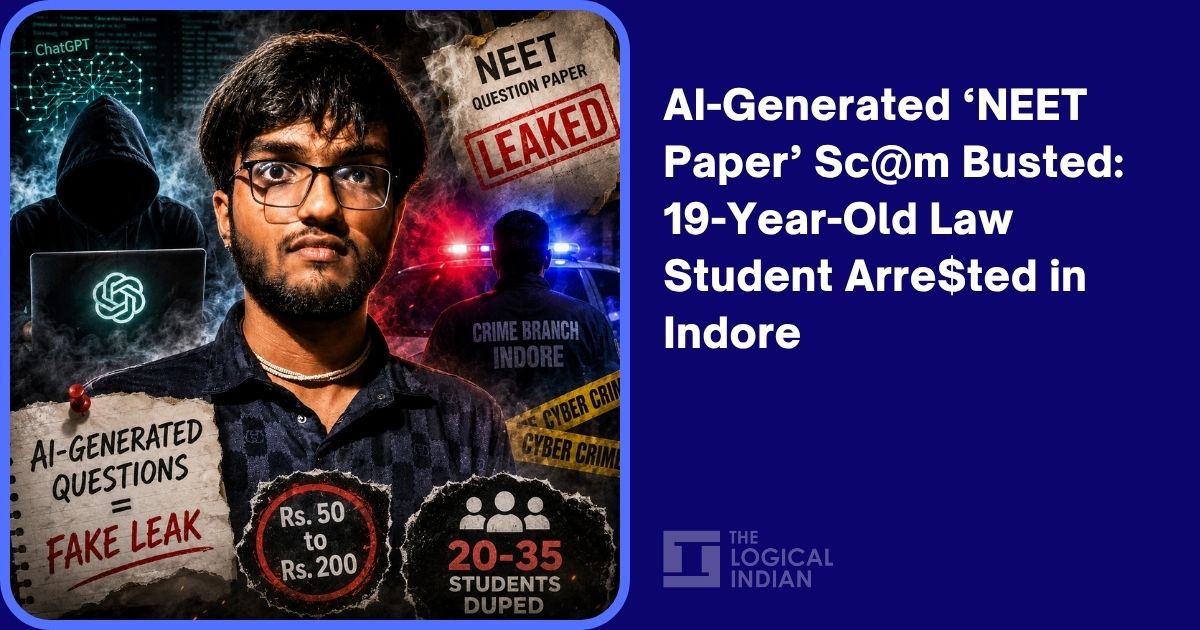
ANI and local reporting say the Indore Crime Branch arrested 19-year-old law student Akshay Malviya for allegedly selling AI-generated fake NEET question papers. The accused used ChatGPT to create the documents by feeding in old NEET papers, then marketed them via an Instagram account, charging Rs 50 to Rs 100 per paper and supplying documents to about 22-25 buyers, earning approximately Rs 25,000-30,000. Police registered a case under section 318(4) of the Bharatiya Nyay Sahita and section 66 of the IT Act. The fake papers had no relation to the actual NEET exam held on June 21, 2026.
What happened
The Indore Crime Branch arrested Akshay Malviya, a 19-year-old first-year law student from the Lasudia area of Indore, for allegedly selling AI-generated fake NEET question papers. Per ANI, Malviya used ChatGPT to create fraudulent papers by feeding in old NEET exam papers, then distributed them through an Instagram account. He charged buyers between Rs 50 and Rs 100 per paper and supplied documents to approximately 22-25 people, earning around Rs 25,000-30,000 in total. The Crime Branch acted after a tip-off from Kota Police, per Free Press Journal. ANI reports a case was registered under section 318(4) of the Bharatiya Nyay Sahita (cheating) and section 66 of the Information Technology Act; police confirmed the circulated papers had no relation to the actual NEET question paper administered on June 21, 2026.
Technical context
Generative large language models like ChatGPT can produce plausible-looking exam-style questions and formatted documents quickly, which lowers the barrier for low-cost fraud. Synthetic content often blends recycled fragments from real exam questions with invented items, producing material that appears credible to non-experts but fails provenance checks. The key forensic challenge is not plausibility - AI-generated exam content can look authentic - but verifiability: genuine leaked papers carry chain-of-custody evidence that AI-generated fakes cannot replicate.
Industry context
The Week's coverage frames this as part of a broader pattern of AI-assisted exam scams emerging around India's re-NEET examination cycle in June 2026, alongside political controversies and proxy-candidate arrests in Bihar. For practitioners in platform trust and safety, the case illustrates that small transaction values (Rs 50-100) complicate fraud-detection based on payment signals alone, making platform-level content monitoring and rapid takedown processes more important.
Key Points
- 1Indore Crime Branch arrested 19-year-old law student Akshay Malviya for selling ChatGPT-generated fake NEET exam papers on Instagram for Rs 50-100 each, earning Rs 25,000-30,000 from about 22-25 buyers.
- 2Police charged Malviya under BNS section 318(4) (cheating) and IT Act section 66; the fake papers had no connection to the actual NEET exam held June 21, 2026.
- 3The case shows generative AI lowers the cost of producing plausible-looking exam fraud content; effective detection relies on provenance verification rather than content plausibility assessment.
Scoring Rationale
A concrete, well-sourced example of generative AI enabling low-cost exam fraud in India, relevant to AI safety, trust-and-safety practitioners, and policy discussions around AI misuse. The incident is localized and lacks systemic technical novelty, but the clear AI misuse pattern and legal precedent under India's BNS and IT Act make it editorially solid. Score unchanged.
Sources
Public references used for this report.
View 3 more sources
Practice interview problems based on real data
1,625 SQL & Python problems across 15 industry datasets — the exact type of data you work with.
Try 250 free problems