Indonesia Strengthens AI Weather Cooperation With Japan
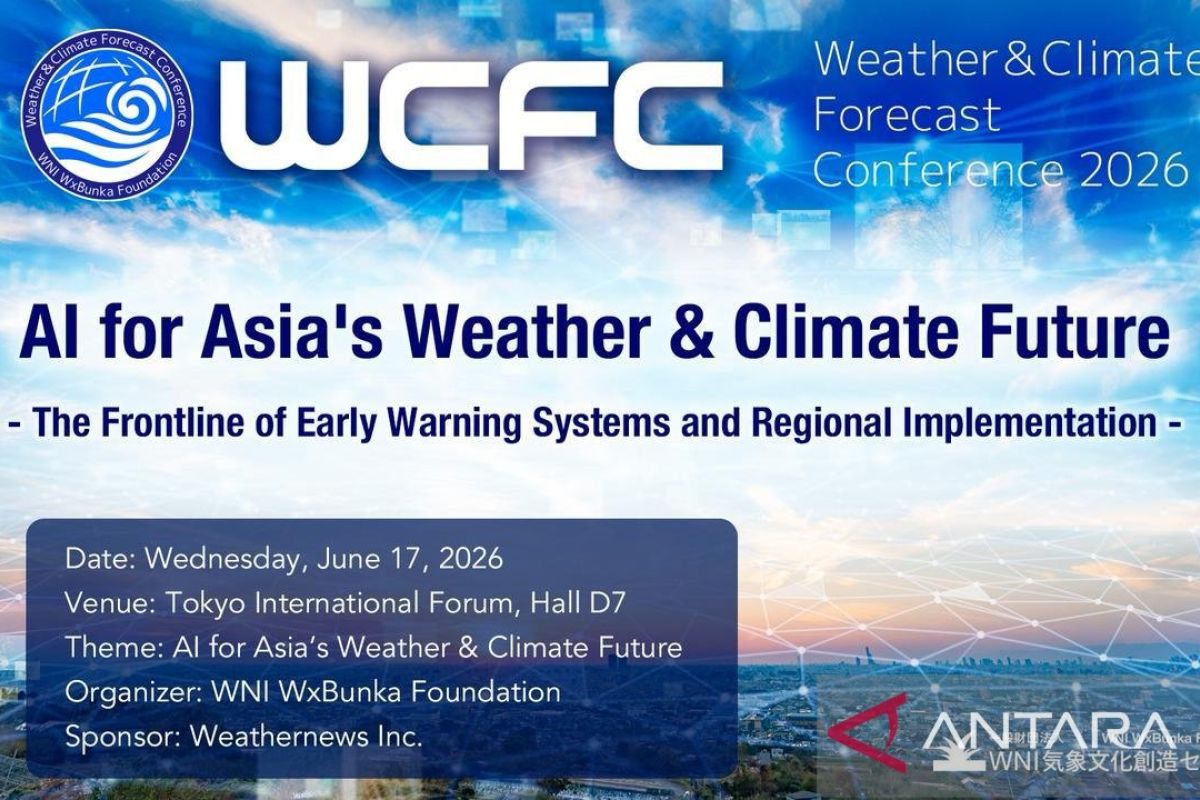
Antara reports an Indonesian delegation is preparing to participate in the 2nd WNI Weather & Climate Forecast Conference (WCFC) 2026 in Tokyo on June 17, 2026. The delegation is expected to include representatives from the Meteorology, Climatology, and Geophysics Agency (BMKG), University of Indonesia (UI), Gadjah Mada University (UGM), Sepuluh Nopember Institute of Technology (ITS), and units within PT Pertamina (Persero), Antara reports. Antara quotes Tovic Rustam of the Sakuranesia Foundation saying the forum will focus on AI for early warning systems and regional implementation. Antara also reports a February 2026 agreement titled "A Project for AI-Based Tropical Cyclone and Flood Forecasting in Indonesia" between BMKG and Weathernews Inc.
What happened
Antara reports an Indonesian delegation is preparing to take part in the 2nd WNI Weather & Climate Forecast Conference (WCFC 2026) in Tokyo, scheduled for June 17, 2026. Antara names expected participants as the Meteorology, Climatology, and Geophysics Agency (BMKG), University of Indonesia (UI), Gadjah Mada University (UGM), Sepuluh Nopember Institute of Technology (ITS), and entities within PT Pertamina (Persero). Antara quotes Tovic Rustam, founder and strategic advisor of the Sakuranesia Foundation, saying, "WCFC 2026 is not only about weather technology and AI, but also about how Asia is beginning to build a new future of collaboration that is more integrated, sustainable, and oriented toward the safety of humanity amid the challenges of global climate change." Antara also reports that BMKG and conference organizer Weathernews Inc signed a collaboration titled "A Project for AI-Based Tropical Cyclone and Flood Forecasting in Indonesia" in February 2026.
Editorial analysis - technical context
Organizations and research groups running comparable projects typically combine numerical weather prediction, ensemble methods, and machine learning-based post-processing or nowcasting to improve short-term forecasts and early warnings. For practitioners, these efforts commonly require interoperable observational feeds, consistent metadata standards, and scalable inference pipelines to run models across regional domains. Data-sharing, model evaluation on historically held-out disaster events, and integration with operational decision-support systems are recurring technical challenges seen in similar bilateral projects.
Industry context
Collaborative forums that pair national meteorological agencies with private weather companies and universities often aim to accelerate technology transfer, operational adoption, and workforce training. For Indonesia, a tropical archipelagic nation repeatedly cited in Antara as disaster-prone, regional cooperation can expand access to satellite-derived products, high-resolution reanalysis, and vendor-run AI services that complement national systems.
What to watch
Observers should track whether WCFC 2026 produces concrete deliverables such as pilot implementations, data-sharing protocols, or technical roadmaps for AI-driven early warning systems; announcements of pilot sites or timelines for the February 2026 BMKG--Weathernews Inc project; and any capacity-building commitments involving universities and energy-sector partners. Monitoring published benchmarks and evaluation metrics from pilot projects will be important for practitioners assessing model transferability to tropical, maritime-heavy domains.
Key Points
- 1Indonesia will join WCFC 2026 in Tokyo on June 17, 2026, with national agencies, universities, and Pertamina entities participating.
- 2A February 2026 BMKG 6Weathernews Inc collaboration focuses on AI-based tropical cyclone and flood forecasting, creating operational pilot opportunities.
- 3Industry observers note bilateral forums often accelerate data sharing, operational pilots, and workforce training needed for regional early-warning systems.
Scoring Rationale
Regional cooperation on AI for weather and climate is notable for practitioners working on early-warning systems and operational forecasting, but it is not a frontier research breakthrough. The story has practical relevance for meteorology, data-sharing, and deployment workflows.
Sources
Public references used for this report.
Practice interview problems based on real data
1,625 SQL & Python problems across 15 industry datasets — the exact type of data you work with.
Try 250 free problems