India Elevates Ties With Sweden on AI and Defence
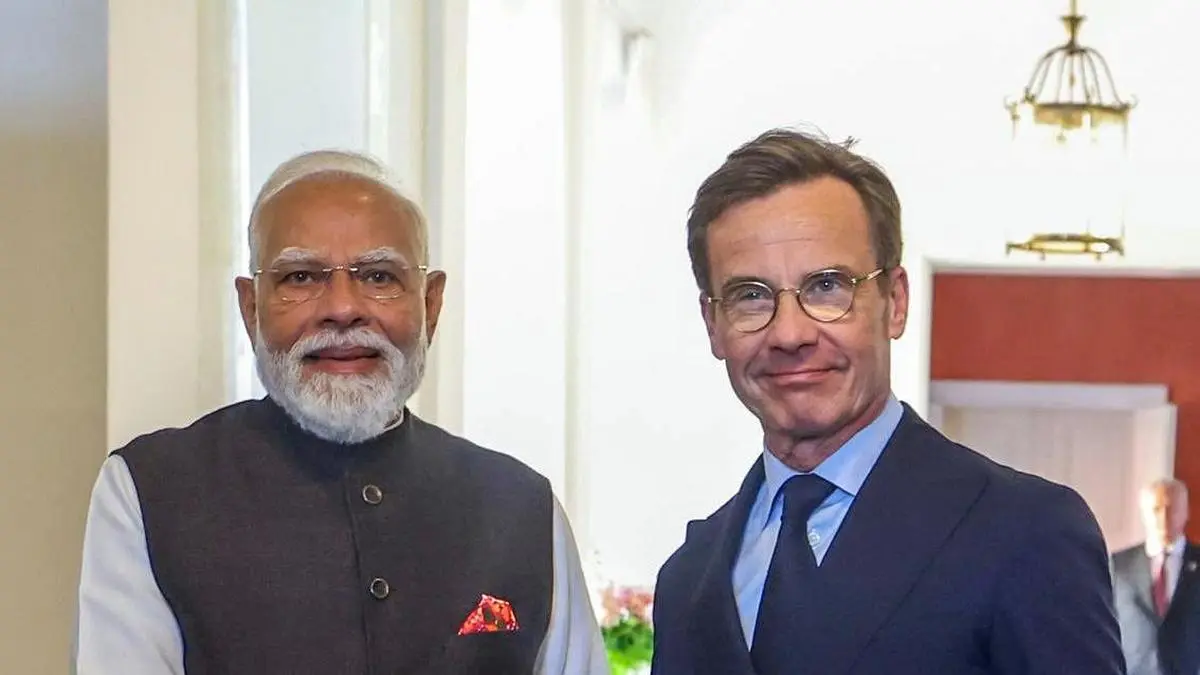
Prime Minister Narendra Modi and Swedish Prime Minister Ulf Kristersson held bilateral talks in Gothenburg on May 17, 2026, and agreed to elevate India-Sweden relations to a Strategic Partnership, according to press releases from the Government of India and the Government of Sweden. The leaders adopted the India-Sweden Joint Action Plan 2026-2030 as the roadmap for cooperation across political, economic, technological, security, climate and people-to-people domains, the Ministry of External Affairs (MEA) reports. Reporting by Government.se and India Today says the partnership is organised around four pillars, Strategic Dialogue for Stability and Security; Next-Generation Economic Partnership; Emerging Technologies and Trusted Connectivity; and Shaping Tomorrow Together, People, Planet, Health and Resilience. Her Royal Highness Crown Princess Victoria participated in the talks and Prime Minister Modi received the Royal Order of the Polar Star, Government.se reports.
What happened
India and Sweden agreed to elevate their bilateral relationship to a Strategic Partnership, according to a press release from the Government of India and a statement published by the Government of Sweden. The two leaders, Prime Minister Narendra Modi and Prime Minister Ulf Kristersson, held bilateral consultations in Gothenburg on May 17, 2026, and adopted the India-Sweden Joint Action Plan 2026-2030 as a roadmap for cooperation, the Ministry of External Affairs (MEA) says.
Details of the agreement
The Governments say the Strategic Partnership will be guided by four pillars, as described in official releases: - Strategic Dialogue for Stability and Security; - Next-Generation Economic Partnership; - Emerging Technologies and Trusted Connectivity; - Shaping Tomorrow Together, People, Planet, Health and Resilience. Government.se and the MEA note the leaders reviewed cooperation across trade, investment, emerging technologies, defence and security, green transition, digitalisation, space, research and education. Government.se reports that Her Royal Highness Crown Princess Victoria participated in the meetings and that Prime Minister Modi was conferred the Royal Order of the Polar Star.
Editorial analysis - technical context
Bilateral strategic frameworks that explicitly include an "Emerging Technologies and Trusted Connectivity" pillar typically create formal channels for R&D collaboration, standards dialogue, and capacity-building. For practitioners, this can translate into increased opportunities for cross-border research grants, industry-academic consortia, and vendor selection criteria that account for "trusted connectivity" and supply-chain provenance. Implementation of such cooperation commonly involves memoranda of understanding, joint research calls, and interoperable standards work that affect data governance, model evaluation, and product certification timelines.
Industry context
The MEA statement highlights that the recently concluded India-EU FTA was discussed and described as opening a new chapter in economic ties; the MEA and media coverage frame the Strategic Partnership as part of broader India-Europe engagement. Industry observers tracking this pattern note that Sweden brings strengths in cleantech and advanced manufacturing while India offers scale in software and talent. Such complementarities, when formalised, often accelerate pilot projects in climate-tech, defence platforms, and applied AI for industry domains such as manufacturing and energy.
What to watch
Observers should track publication of sectoral annexes or MoUs under the India-Sweden Joint Action Plan 2026-2030, announced by the MEA, that would translate the four pillars into specific programs. Indicators include announced joint research funding calls, establishment of joint testbeds or centres, defence cooperation memoranda, and bilateral working groups on data governance or AI safety standards. Also watch statements from European Commission representatives: Government.se reports that President Ursula von der Leyen participated in a joint press appearance with the two leaders, which could signal coordination with EU-level initiatives.
Reported sources and attribution
The factual elements above derive from the Government of India press release (Ministry of External Affairs), the Government of Sweden statement (Government.se), and reporting by India Today. Where the releases identify institutional pillars, participants, or the existence of the Joint Action Plan, those items are presented as reported facts.
Implications for practitioners
Industry and research teams engaged in cross-border AI or clean-technology projects should expect new institutional entry points from which to seek funding or partnerships. Editorial analysis: companies and research groups that participate in bilateral technical dialogues typically gain earlier visibility into procurement priorities and standards work, which can materially affect project roadmaps and compliance planning.
Key Points
- 1India and Sweden elevated bilateral ties to a Strategic Partnership and adopted the India-Sweden Joint Action Plan 2026-2030, formalising cooperation across tech, defence and green transition.
- 2Industry context: an "Emerging Technologies and Trusted Connectivity" pillar typically fosters joint R&D, standards dialogue, and pilot testbeds that affect data governance and product certification.
- 3What to watch: publication of sectoral MoUs, joint funding calls, defence memoranda, and working groups on AI governance will reveal how the partnership converts high-level goals into projects.
Scoring Rationale
The diplomatic upgrade formalises cooperation on emerging technologies and defence, creating institutional channels relevant to AI/DS practitioners. The story is notable but not frontier-shifting because it establishes frameworks rather than announcing concrete new standards, funding levels, or deployments.
Sources
Public references used for this report.
Practice interview problems based on real data
1,625 SQL & Python problems across 15 industry datasets — the exact type of data you work with.
Try 250 free problems