ICS/OT Security Emphasizes AI and Zero Trust
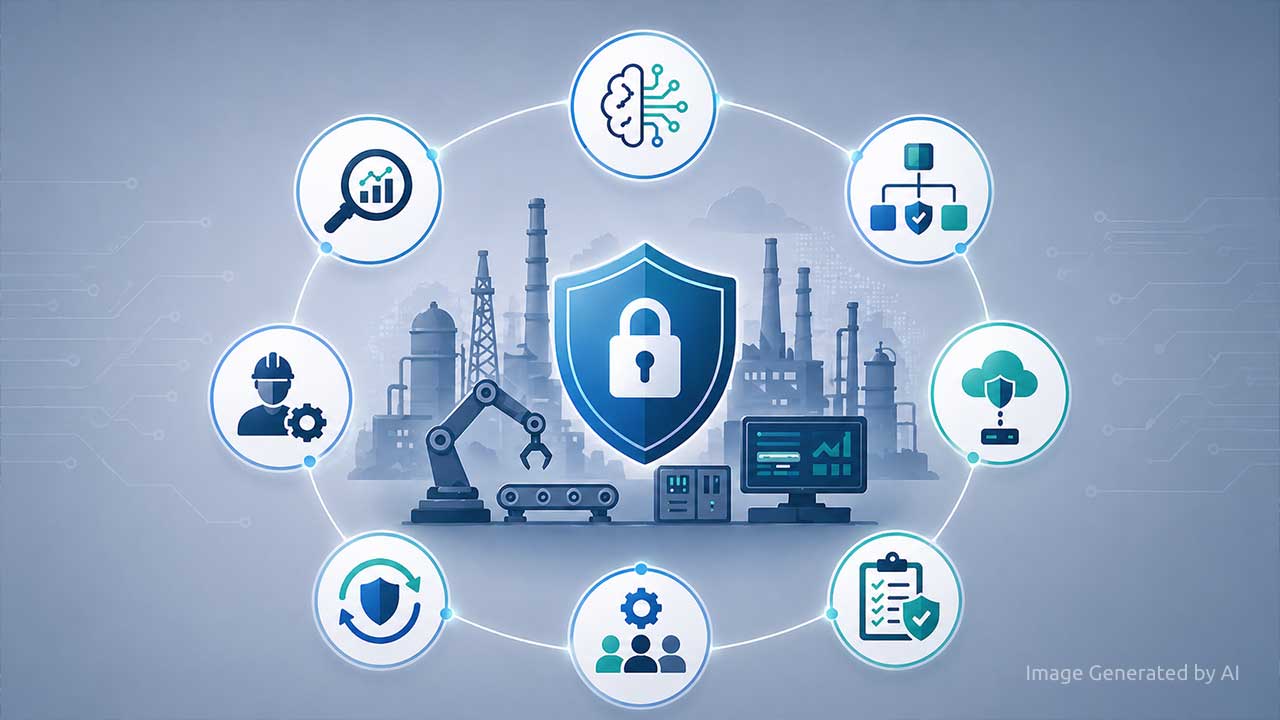
IIoT World outlines seven ICS/OT cybersecurity trends for 2026, drawn from five expert sessions at IIoT World virtual conferences. The report highlights AI-powered attacks that prioritise industrial data theft and extortion over encryption, and a shift in responsibility as CISOs and boards assume more direct ownership of OT risk, according to IIoT World. The article lists applicable frameworks including IEC 62443, NIST SP 800-82, and the EU NIS2 directive, and highlights operational approaches such as Zero Trust with PKI, the Purdue Model, SBOM scrutiny, and secure-by-design frameworks. IIoT World frames outbound data loss prevention, auditable baselines, and executive sponsorship as central defensive priorities for 2026.
What happened
IIoT World published a synthesis of seven ICS/OT cybersecurity trends for 2026, based on five expert sessions at IIoT World virtual conferences on ICS cybersecurity, AI, and energy security. The write-up reports a notable shift in attacker behavior toward using artificial intelligence to exfiltrate industrial data and to generate more sophisticated attacks, with modern ransomware campaigns prioritising data theft and extortion over pure encryption, per IIoT World. The article also reports increased executive ownership of OT risk, and lists applicable standards and directives including IEC 62443, NIST SP 800-82, and the EU NIS2 directive.
Technical details
IIoT World describes defensive and governance approaches that practitioners are weighing in 2026. Key items called out include Zero Trust with PKI for device and session authentication, the Purdue Model as a segmented reference architecture, and increased scrutiny of SBOMs for firmware and embedded software supply chains. The article stresses auditable baselines and visibility for outbound data flows as critical given the reported pivot toward data stealing by attackers.
Editorial analysis
Industry observers note that AI-driven reconnaissance and payload generation compress attack timelines and raise the value of industrial datasets for adversaries. Companies operating comparable industrial environments commonly respond by expanding telemetry collection, enforcing strict egress controls, and integrating identity-bound device authentication. These are labour- and tooling-intensive changes that typically require executive sponsorship and clearer governance, which matches the reporting on shifting responsibility to CISOs and boards.
Context and significance
For practitioners, the combination of AI-enabled offensive tooling and stronger regulatory frameworks raises both technical and compliance priorities. Adopting standards such as IEC 62443 and aligning with NIS2 reporting obligations creates auditable control baselines; implementing Zero Trust and SBOM processes addresses attacker techniques emphasised in the IIoT World coverage.
What to watch
- •Uptake of PKI-backed device identity in operational networks
- •Regulatory enforcement actions under NIS2 affecting OT operators
- •Tooling that links SBOM data to firmware vulnerability management
Observers should track vendor announcements and regulatory guidance for implementation details.
Key Points
- 1AI-driven attacks are shifting ICS risk toward industrial data theft, raising the need for outbound data controls and telemetry.
- 2Executive ownership of OT risk is increasing, enabling centralized visibility, standardized policies, and funding for OT security programmes.
- 3Framework alignment-IEC 62443, NIST SP 800-82, and NIS2-plus Zero Trust, PKI, and SBOM processes create auditable baselines for 2026 compliance.
Scoring Rationale
This story is practically important for OT and security practitioners because it aggregates expert panels into actionable trend guidance: AI-driven data theft, regulatory alignment, and technical controls. It is notable rather than industry-shaking, with direct relevance to operational teams implementing controls and governance.
Practice interview problems based on real data
1,625 SQL & Python problems across 15 industry datasets — the exact type of data you work with.
Try 250 free problems