IBM Reports Q1 Revenue Beat Amid AI Pressure
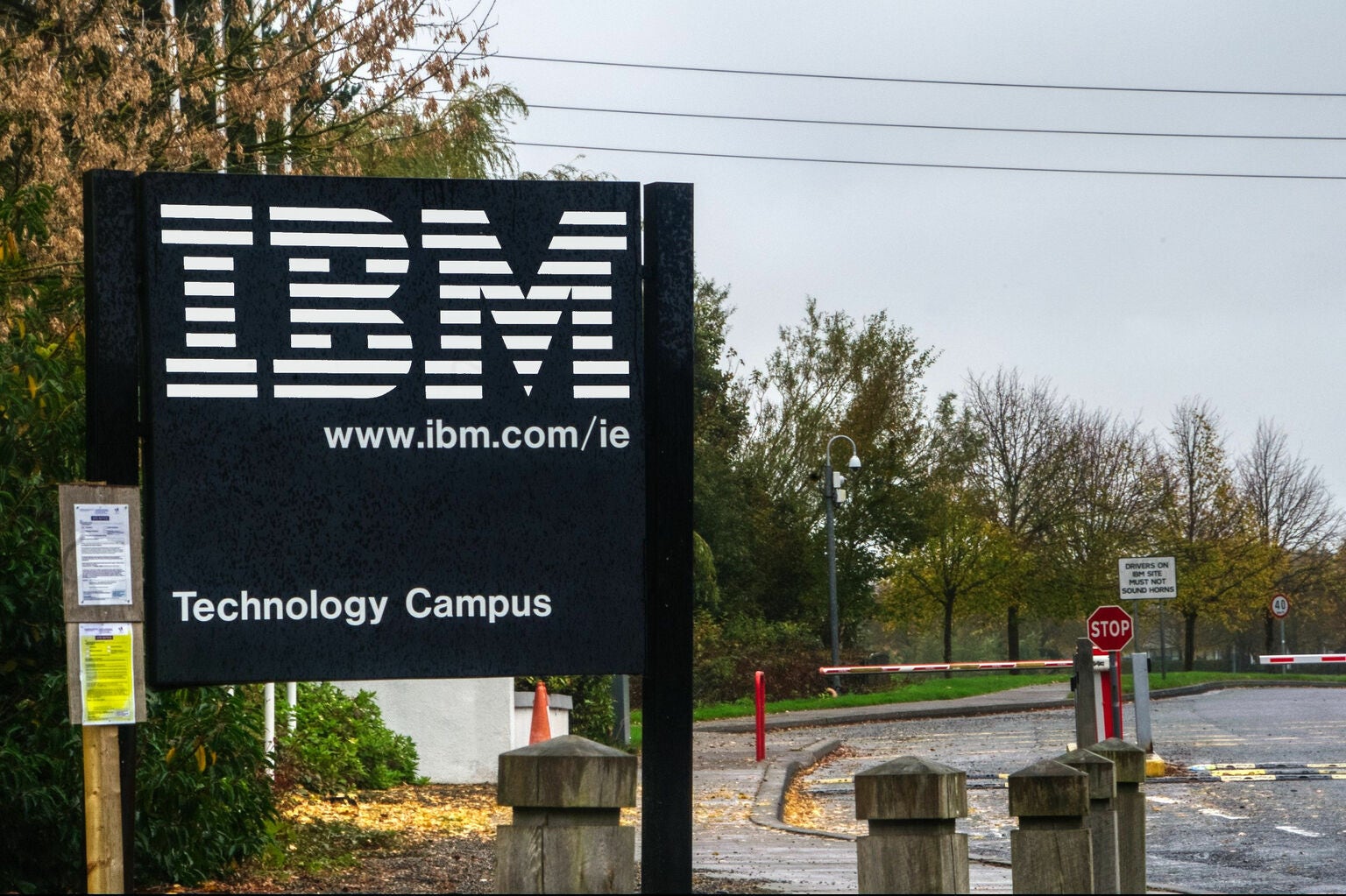
IBM delivered a stronger-than-expected first quarter, with revenue up 9% to $15.92 billion and adjusted EPS of $1.91, beating consensus. Growth was concentrated in Software and Infrastructure: Red Hat rose about 13%, while IBM Z mainframe revenue jumped roughly 51% and infrastructure sales grew 15.2%. Management reiterated full-year guidance, including over 5% revenue growth (constant currency) and a $1 billion improvement to free cash flow, but framed outlook conservatively citing geopolitical risks and AI-driven market uncertainty. The stock fell about 6% in after-hours trading as investors reacted to the unchanged guidance and persistent concerns that third-party generative AI tools could cannibalize high-margin software. Executives argue AI is accretive to modernization demand, pointing to Watsonx tools and mainframe adoption as offsetting forces.
What happened
IBM reported a first-quarter beat, posting $15.92 billion in revenue, a 9% year-over-year increase, and adjusted EPS of $1.91 versus Street estimates of $1.81. The company highlighted stronger performance in Software and Infrastructure, with Red Hat growth near 13% and IBM Z mainframe revenue jumping roughly 51%. Despite the outperformance, IBM maintained its full-year guidance, citing geopolitical uncertainty and prudent planning. The stock fell about 6% in after-hours trading as markets digested the unchanged outlook amid AI competition concerns.
Technical details
Management emphasized traction across three reportable segments and specific product drivers. Key data points to track:
- •Software: reported around $7.05 billion revenue, growing ~11%, driven by Red Hat and hybrid-cloud services.
- •Infrastructure: grew 15.2% to approximately $3.33 billion, led by demand for new mainframe systems.
- •Watson and modernization tools: IBM pointed to Watsonx and Watsonx Code Assistant as part of its AI tooling stack for enterprise modernization.
Context and significance
The quarter tests two competing narratives for enterprise AI. On one hand, independent AI vendors and tools from rivals, including claims from Anthropic about modernizing legacy code, have stoked investor fear that generative AI will automate tasks and compress software revenues. On the other hand, IBM argues generative AI acts as an accelerator for legacy modernization and hybrid-cloud consumption, especially where deep integrations and mission-critical mainframes remain central. The results underline that high-margin enterprise relationships and platform integration still matter: mainframe and hybrid-cloud contracts are sticky and can expand with successful modernization projects. The reaffirmed guidance, however, signals management expects ongoing macro and geopolitical headwinds, which limits upside to near-term valuation expansion.
Practical implications for practitioners
Expect continued investment and integration work rather than wholesale displacement of enterprise stacks. For ML/AI teams engaged with large enterprises, this means:
- •prioritize interoperability with hybrid-cloud and mainframe adapters;
- •design AI tools that augment, not replace, existing core systems, focusing on safe modernization of legacy codebases;
- •build measurable ROI hooks that show incremental consumption of core infrastructure.
What to watch
Track adoption metrics for Watsonx tooling, incremental mainframe usage tied to AI modernization, the integration outcomes from the Confluent acquisition, and any forward guidance changes tied to geopolitical developments. If IBM can show demonstrable net-new consumption from Gen AI projects, investor skepticism may ease and multiple compression could reverse.
Key Points
- 1IBM beat Q1 estimates with 9% revenue growth, but conservative guidance triggered a negative market reaction, pressuring valuation.
- 2Software and Infrastructure growth (Red Hat ~13%, Z ~51%) shows AI can accelerate legacy modernization, not just disrupt it.
- 3Maintained guidance and geopolitical caution signal execution and macro risks still cap upside despite product momentum.
Scoring Rationale
IBM's quarter is notable for practitioners because it validates that enterprise AI adoption can drive infrastructure consumption while also highlighting market sensitivity to guidance and AI competition. The story affects enterprise strategy and vendor selection but is not a frontier-model or regulatory watershed.
Sources
Public references used for this report.
View 4 more sources
- IBM Stock Slides Late Despite Earnings Beating Expectationsinvestors.com
- Zacks Investment Research: Stock Research, Analysis, & Recommendationszacks.com
- IBM delivers strong Q1, maintains outlook - Constellation Researchconstellationr.com
- International Business Machines Corp (IBM) Q1 2026 Earnings Callgurufocus.com
Practice interview problems based on real data
1,625 SQL & Python problems across 15 industry datasets — the exact type of data you work with.
Try 250 free problems