Hyundai Deploys Robot Dogs for World Cup Security
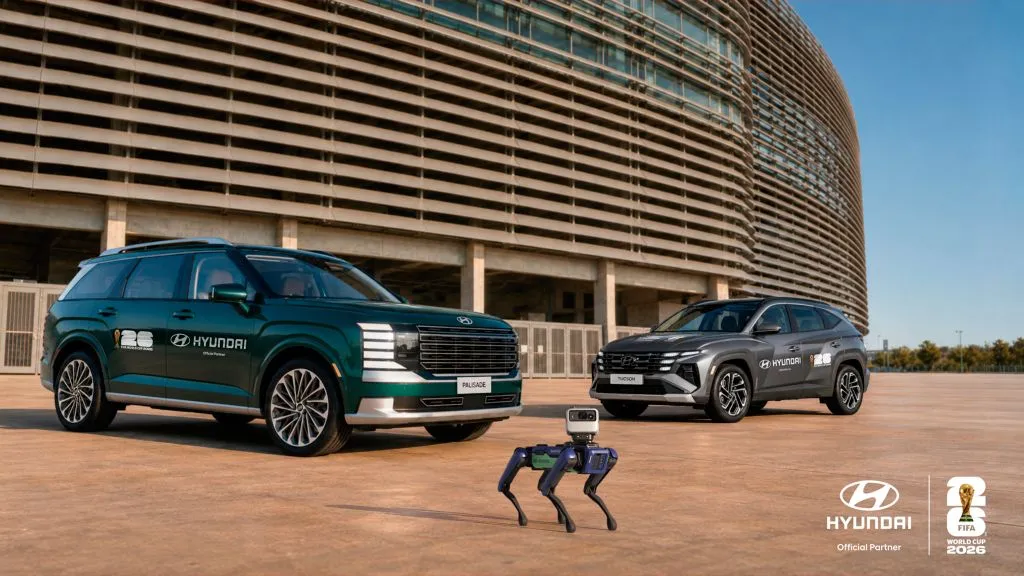
Hyundai and Boston Dynamics have deployed four robot dogs to support security operations at FIFA World Cup 2026 sites, according to reporting by Axios. Axios reports two Spot units will be stationed at the International Broadcast Center in Dallas and two at MetLife Stadium in New Jersey. Boston Dynamics told the Houston Chronicle that the robots will perform perimeter security inspections, assist personnel investigating suspicious packages or hazardous materials, and "do not have facial recognition capabilities." WFAA reports more than 30 agencies, including federal partners, are part of the North Texas security plan where the robots will operate. Sightings of the machines at AT&T Stadium prompted public concern about surveillance, a reaction documented by Chron and Futurism. Hyundai's marketing materials and campaign pages also highlight robotics demonstrations tied to the tournament.
What happened
Hyundai and Boston Dynamics are deploying four robotic quadrupeds to support security operations at FIFA World Cup 2026 sites, per reporting by Axios. Axios corrected an earlier account to state there are four robots, with two Spot units assigned to the International Broadcast Center in Dallas and two Spot units assigned to MetLife Stadium in New Jersey. The Houston Chronicle quotes a Boston Dynamics spokesperson saying the robots "do not have facial recognition capabilities" and that the Spot units will be used for perimeter inspections and to assist security personnel with investigating suspicious packages or other potentially hazardous materials. WFAA reports that more than 30 agencies, including federal partners, are participating in the Dallas-Fort Worth security operation where the robotic dogs have been deployed.
Editorial analysis - technical context
Robotic quadrupeds such as Spot are typically equipped with multi-modal sensor suites, visual cameras, thermal imagers, lidar in some configurations, and onboard networking for telemetry. Industry deployments commonly use these platforms for remote inspection of hazardous or hard-to-access areas, routine perimeter patrols, and live video feeds to human operators. Companies integrating Spot into security stacks generally configure the robot to stream camera feeds and run perimeter routes under supervised autonomy rather than fully autonomous decision-making.
Context and significance
Industry observers note that major public events serve as scaled tests for integrating field robotics into live security operations. Deployments at high-visibility venues highlight operational questions beyond core robotics capability: sensor governance, data retention and access policies, and public communications about what the systems are doing. Reporting from Chron and Futurism records public unease about perceived surveillance, while Boston Dynamics public statements emphasize limited, inspection-focused roles for the robots. Hyundai promotional materials showcased elsewhere on its website also tie robotics demonstrations, including Atlas in marketing campaigns, to its broader World Cup activation.
For practitioners
- •Logistics and systems integration are the practical challenges at this scale: networking across multi-agency command centers, secure telemetry, and ensuring operators can triage alerts efficiently.
- •Privacy and legal compliance are operational constraints; documenting sensor capabilities and retention policies is essential when deploying camera-equipped robots in public spaces.
- •Human-in-the-loop controls and fail-safe behaviors are standard mitigations used in similar security deployments to avoid automated enforcement or misidentification.
What to watch
Observers and technical teams should track official documentation or procurement records that specify sensor configurations and data handling for these units, and watch for any after-action reporting from local agencies about false positives, maintenance issues, or communications breakdowns. Media follow-ups that quote named agency officials, Boston Dynamics, or Hyundai will be the primary sources for further technical or policy details.
Bottom line
This deployment is an operational-scale example of robotics moving into routine public-event security. The immediate technical profile described in reporting is narrow: camera-equipped quadrupeds used for perimeter inspection and hazardous-material assessment, with vendors publicly denying facial-recognition capability. The event will surface practical lessons about multi-agency integration, transparency, and public acceptance of robotic systems.
Key Points
- 1Reported deployment of four Spot robots at World Cup sites demonstrates robotics moving from pilots to operational security roles at scale.
- 2Vendors emphasize inspection-focused use and no facial recognition, but public concern highlights the need for transparent sensor and data policies.
- 3Multi-agency events reveal integration challenges: networking, human-in-the-loop operations, and clear communications are essential for field deployments.
Scoring Rationale
The story is notable for operationalising robotics at a major global event and raising surveillance and integration questions relevant to practitioners. It is not a research breakthrough, so it rates as a notable, practice-oriented development.
Sources
Public references used for this report.
Practice interview problems based on real data
1,625 SQL & Python problems across 15 industry datasets — the exact type of data you work with.
Try 250 free problems