Humanoid Robot Chases Boars in Poland Demonstration
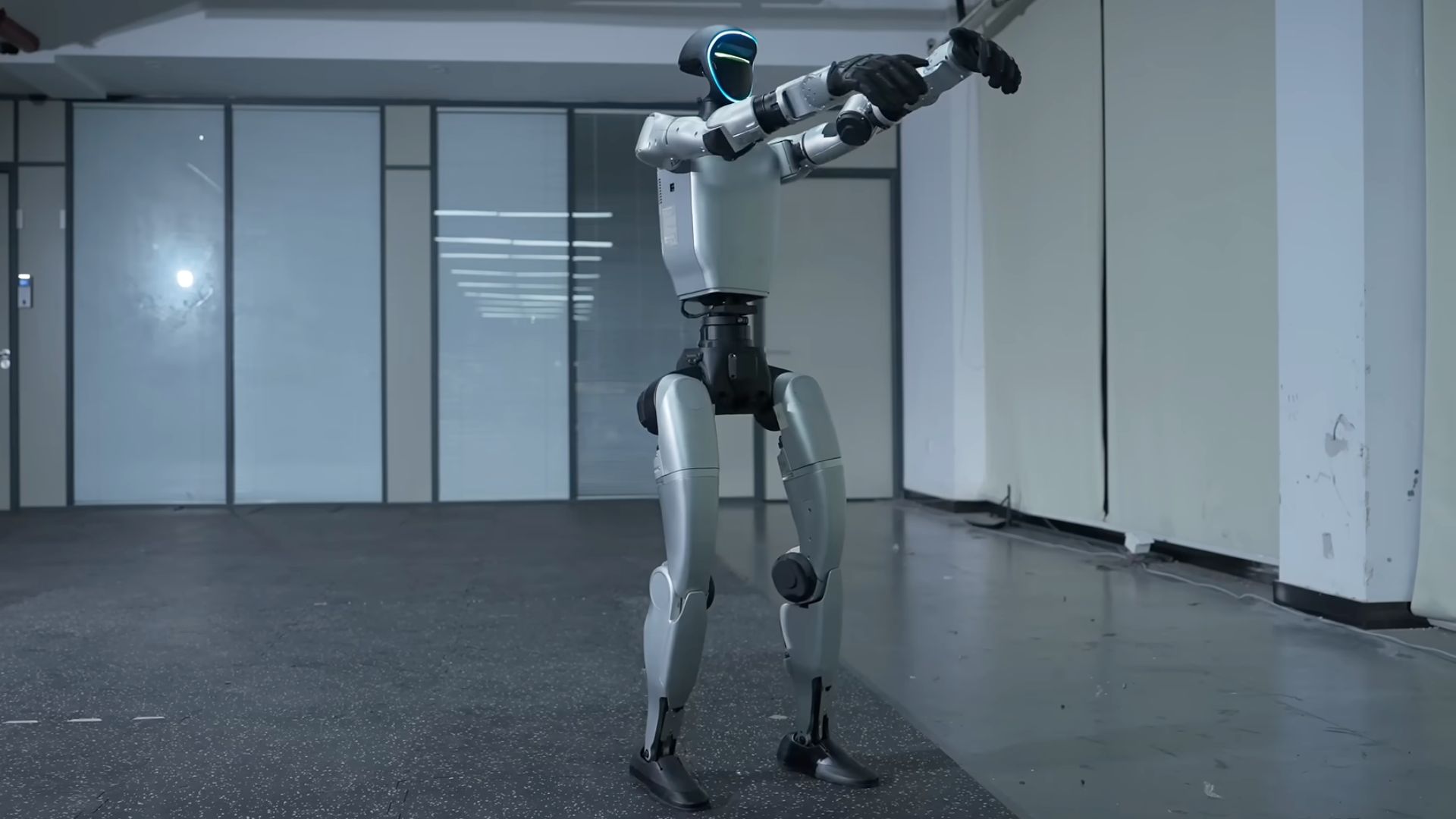
A customized humanoid robot, known as Edward Warchocki, was filmed jogging and riding a skateboard while attempting to herd wild boars in Warsaw. The robot is a modified Unitree G1 Unitree G1 outfitted with protective gear and an interactive conversational stack developed by local engineers. The stunt is positioned as an early field trial of embodied AI as a public-facing marketing and engagement tool, not a robust wildlife-management system. Public reaction mixed curiosity and enthusiasm; the boars ignored the robot and left the scene. The experiment highlights practical gaps in perception, social acceptability, and safety that practitioners must resolve before deploying humanoids in uncontrolled urban environments.
What happened
A customized humanoid named Edward Warchocki was filmed in Warsaw attempting to herd wild boars, jogging across grass and riding a skateboard. The platform is based on Unitree hardware, specifically Unitree G1 Unitree G1, reported at 4.3-foot height. The team behind the project includes entrepreneur Radoslaw Grzelaczyk and AI developer Bartosz Idzik, who provided the conversational and behavior stack. The boars largely ignored the robot and dispersed, underscoring the limits of the demonstration.
Technical details
The field unit is a modified commercial humanoid with visible add-ons: a backpack, knee pads, helmet lights and a skateboard rig. The software side is described as an adaptive conversational system that mixes proprietary tools with off-the-shelf components to produce dynamic, unscripted replies during live interactions. Notable prior tests cited include an endurance trek where a Unitree G1 logged 130,000 steps across the Altay snowfield in -47.4 C.
- •The demo emphasizes embodied presence and social engagement rather than reliable autonomy.
- •Sensors and perception appear oriented to human interaction, not robust animal detection or deterrence.
- •The conversational stack aims for on-the-fly responses, increasing unpredictability in public settings.
Context and significance
This is an early example of humanoids being trialed as public-facing marketing agents, a step beyond digital avatars and scripted mascots. For practitioners, the event highlights three persistent engineering gaps: perception robustness in complex open-world scenes, interaction design that scales beyond novelty, and operational safety around animals and crowds. It also illustrates how hardware availability from vendors like Unitree lowers the bar for creative field experiments, accelerating real-world HRI (human-robot interaction) trials.
What to watch
Track follow-on deployments, any commercial deals tied to branded influencer stunts, and regulatory responses regarding public safety and wildlife interaction. Engineers should expect pressure to add validated animal-detection models, stronger remote supervision, and clearer usage policies before similar units become common in urban spaces.
Key Points
- 1Embodied public demos test social engagement but reveal perception and safety shortfalls around animals and crowds.
- 2Customizing commercial humanoids enables rapid field experiments, accelerating practical HRI learning and marketing use cases.
- 3Adaptive conversational stacks increase unpredictability in public deployments, raising supervision and compliance requirements.
Scoring Rationale
The event is a notable real-world field trial of embodied AI with clear relevance to practitioners working on HRI, deployment, and safety, but it lacks technical novelty or broad industry consequences.
Practice interview problems based on real data
1,625 SQL & Python problems across 15 industry datasets — the exact type of data you work with.
Try 250 free problems