HP Introduces ZGX Nano G1n Desk-Side AI Node
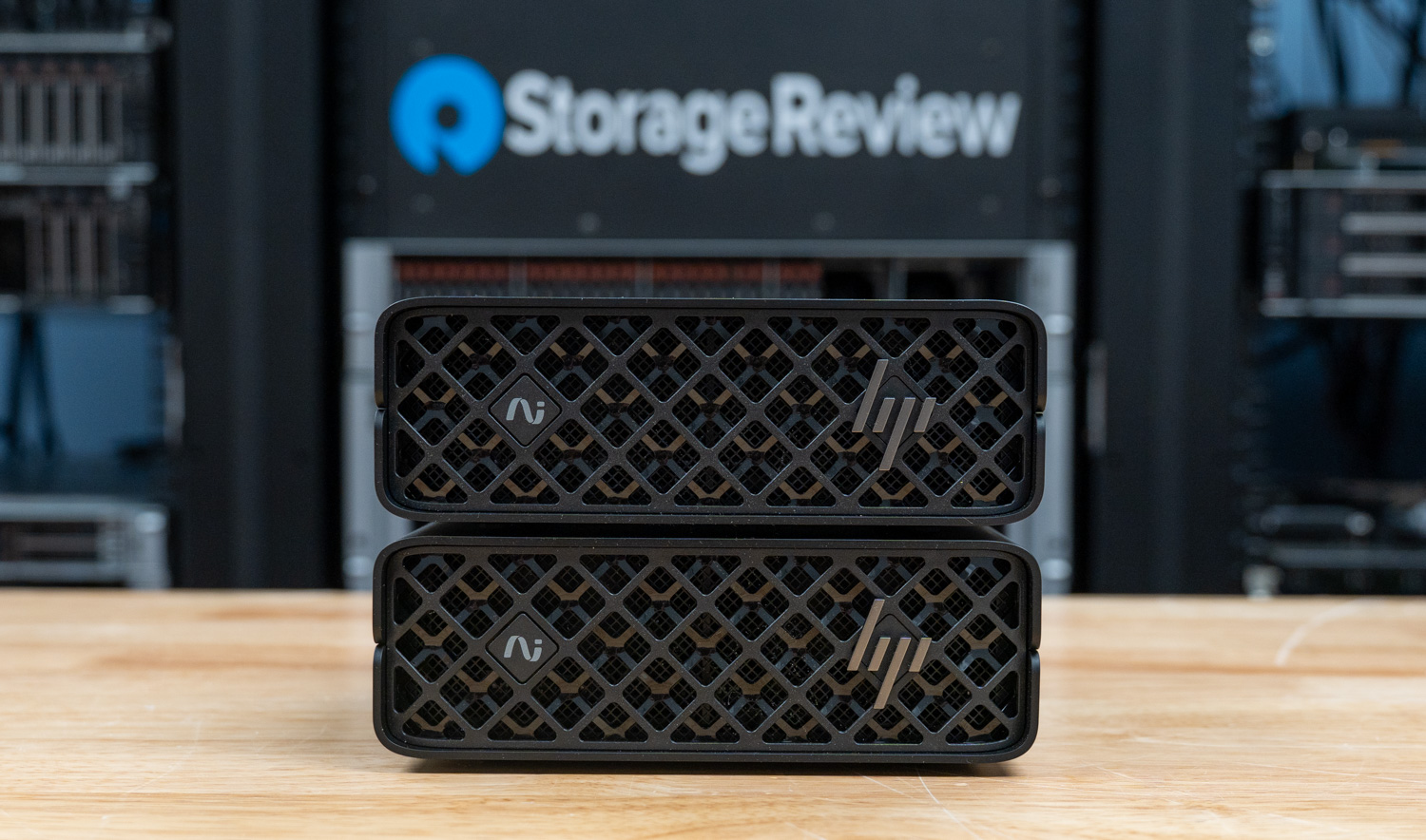
StorageReview published a hands-on review of the HP ZGX Nano G1n AI Station, reporting it uses the NVIDIA GB10 Grace Blackwell Superchip, delivers approximately 1,000 TOPS of FP4 compute, and includes 128GB of unified LPDDR5x memory, per StorageReview. The review notes the chassis is built from up to 75% recycled aluminum with packaging carrying up to 93% recycled content, and lists thermal/noise figures of 22 dBA idle and 27.6 dBA under load. StorageReview also reports the unit ships with TPM 2.0 in FIPS 140-2 mode, Common Criteria EAL4+, BIOS-level secure boot and PXE controls, and a factory-installed self-encrypting OPAL NVMe drive. StorageReview states the system runs NVIDIA DGX OS 7 / Ubuntu 24.04 and does not support Microsoft Windows.
What happened
StorageReview published a review of the HP ZGX Nano G1n AI Station describing a compact, desk-side AI node built around NVIDIA's GB10 Grace Blackwell Superchip. Per StorageReview, the unit provides roughly 1,000 TOPS of FP4 compute, 128GB of unified LPDDR5x memory, and dual 200GbE networking in a 150mm chassis. StorageReview reports hardware details including a soldered 16-channel memory subsystem, a single M.2 PCIe Gen5 slot with 2TB or 4TB OPAL SED NVMe options, a rear I/O set with 10GbE RJ-45 and two QSFP 200GbE ports (ConnectX-7), and that the system runs NVIDIA DGX OS 7 / Ubuntu 24.04 (no Microsoft Windows support).
Technical details
StorageReview highlights the chassis and thermal design as differentiators, reporting HP uses up to 75% recycled aluminum and 20% recycled steel and that packaging may contain up to 93% recycled content. The review lists noise and thermal metrics at 22 dBA idle and 27.6 dBA under load, and an estimated peak dissipation of roughly 780 BTU/hr. On security, StorageReview reports the unit ships with TPM 2.0 operating in FIPS 140-2 certified mode, meets Common Criteria EAL4+, includes BIOS-level secure boot and PXE controls, and uses a factory-installed self-encrypting OPAL NVMe drive.
Industry context
Editorial analysis: Compact AI nodes with server-class features are becoming a common form factor for edge and developer workflows. Companies shipping small-form-factor systems increasingly combine high-bandwidth unified memory, accelerated compute, and enterprise-grade networking to support local inference and development workloads while easing integration with on-prem provisioned fabrics. Security certifications such as FIPS 140-2 and Common Criteria are frequently required for procurement in regulated sectors, which raises the relevance of hardware-based root of trust and self-encrypting storage in these builds.
Context and significance
Editorial analysis: For practitioners, the combination of 128GB unified memory and the GB10 architecture matters for models that benefit from large context and reduced host-device transfer. The reported quiet operation and compact chassis make this class of device more usable in office or lab settings than traditional rack gear. The sustainability claims (recycled aluminum/steel and high recycled-content packaging) reflect a broader vendor trend toward lifecycle and procurement-conscious product design.
What to watch
Editorial analysis: Observers should track third-party benchmark results showing end-to-end throughput and memory-limited model performance on GB10 hardware, interoperability with existing inference stacks (including GPU-direct and RDMA over Converged Ethernet), and the availability of enterprise management tooling for secure provisioning and firmware attestation in regulated deployments. StorageReview did not quote HP on product roadmap or customer targets, and the review does not include vendor statements on long-term support policies.
Key Points
- 1HP's ZGX Nano combines a GB10 superchip with 128GB unified memory, enabling larger models to run without frequent host-device transfer.
- 2The unit's FIPS 140-2 and Common Criteria EAL4+ coverage addresses procurement requirements in regulated environments, easing hardware acceptance hurdles.
- 3Sustainable materials and low noise figures show a vendor trend toward office-friendly, lifecycle-conscious AI appliances for developer and edge use cases.
Scoring Rationale
A notable hardware release for practitioners: the ZGX Nano packs server-class networking, 128GB unified memory, and security certifications into a desk-side form factor. This is relevant for teams evaluating on-prem or edge inference nodes, but it is not a paradigm-shifting platform-level breakthrough.
Practice interview problems based on real data
1,625 SQL & Python problems across 15 industry datasets — the exact type of data you work with.
Try 250 free problems