Hardware Hacker Adapts SXM2 V100 to PCIe for Cheaper Local LLMs
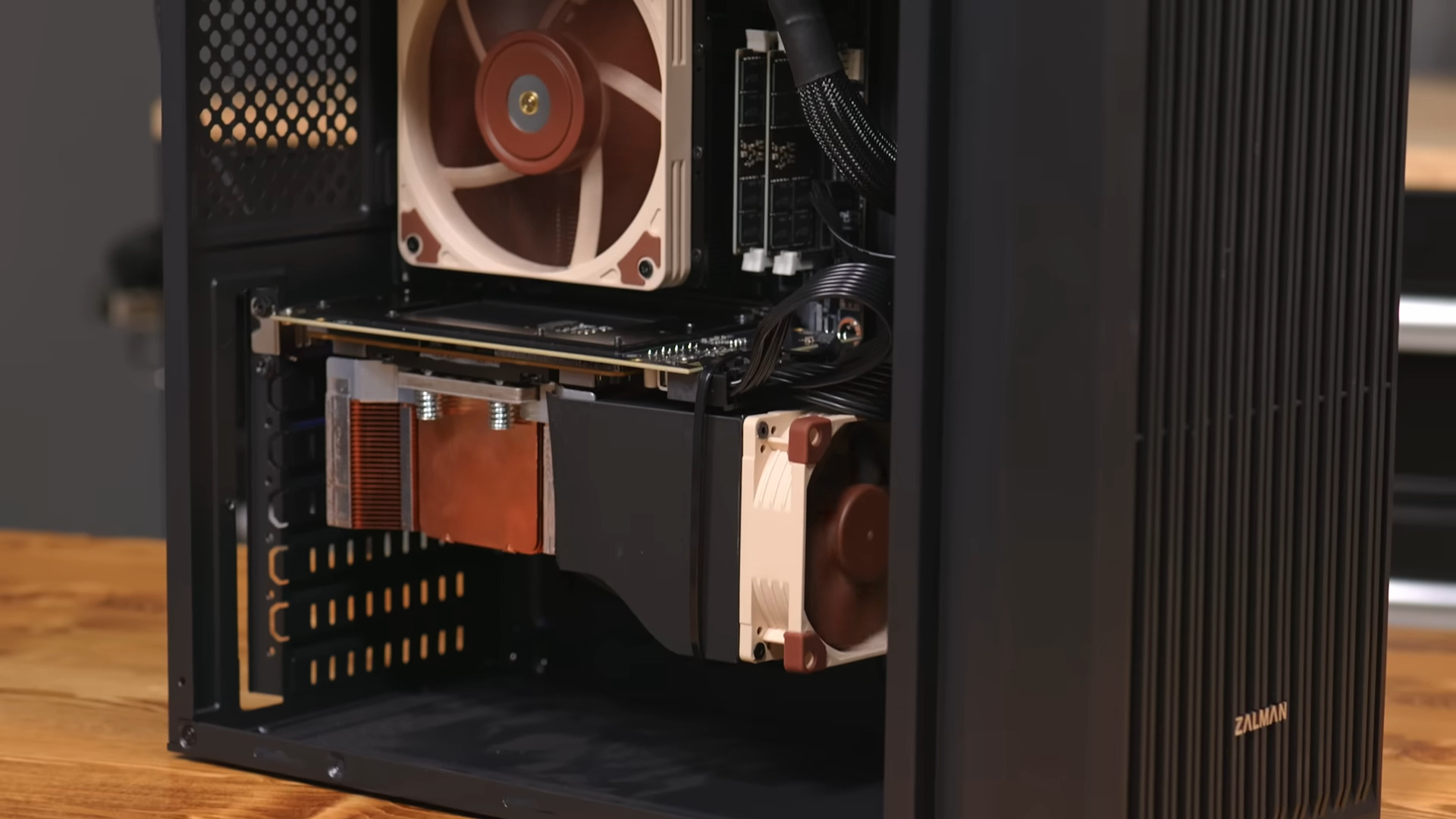
Hackaday reports that creator Hardware Haven adapted a 16 GB Nvidia V100 SXM2 server GPU to a consumer PCIe slot using an adapter, buying the card for about $100 and the adapter for roughly $100, per Hackaday. The card, which dates from 2017, required a 3D-printed fan shroud and additional cooling. Hackaday tested the mod against an RTX 3060 12 GB and found the V100 delivered more tokens per second at slightly higher efficiency but incurred substantially higher idle power. For practitioners, repurposing enterprise GPUs can materially reduce upfront cost for self-hosting, at the expense of power, thermal, and compatibility tradeoffs.
What happened
Hackaday documents that Hardware Haven acquired a 16 GB Nvidia V100 SXM2 enterprise GPU for about $100 and purchased an adapter board for roughly $100 to mount the card on a consumer PCIe motherboard, according to Hackaday. The V100 is an enterprise SXM2 card from 2017, and the builder added a 3D-printed fan shroud to address cooling, Hackaday reports. In head-to-head testing cited by Hackaday, the V100 outperformed an RTX 3060 12 GB in tokens-per-second and achieved slightly higher efficiency, while showing much higher idle power draw.
Technical details
Hackaday describes the core impediment as the V100's SXM2 form factor, which is common in servers but not supported on consumer motherboards; the adapter converted the proprietary connector to a standard PCIe interface. The build required mechanical work (a printed shroud) and attention to cooling and power delivery, Hackaday notes. The published benchmarks in the article compare throughput and power, with the V100 winning on raw token throughput but losing on idle efficiency, per Hackaday.
Industry context
Editorial analysis: Repurposing older enterprise GPUs via adapters is a known cost-arbitrage tactic in the enthusiast community. Such builds can lower the capital required to run larger local models, but they typically introduce operational overheads that include nonstandard cooling, unusual power connectors, potential driver or firmware mismatches, and uncertain long-term toolchain support. Observed patterns in similar hacks show these tradeoffs often shift cost from purchase price to integration and maintenance.
What to watch
For practitioners: monitor secondary-market pricing for SXM2 cards and adapter availability, driver compatibility with current CUDA/toolchain releases, and practical measures of thermal and idle power overhead. Reporting like Hackaday's is an early signal that DIY hardware arbitrage remains possible, but widespread adoption on marketplaces could compress the price advantage.
Key Points
- 1Repurposing enterprise SXM2 GPUs via adapters can cut upfront GPU costs for local-model hosting, but integration costs rise.
- 2Older datacenter cards such as the V100 can beat modern consumer GPUs on throughput for some workloads, with worse idle efficiency.
- 3Secondary-market arbitrage windows often close quickly; adapter availability and driver support determine practical longevity of hacks.
Scoring Rationale
This is a practical hardware hack that lowers entry cost for running local LLMs, making it useful to practitioners experimenting with self-hosting, but it is niche and operationally constrained.
Sources
Public references used for this report.
Practice with real Ad Tech data
90 SQL & Python problems · 15 industry datasets
250 free problems · No credit card
See all Ad Tech problems