Grab Pilots On-Demand Autonomous Rides in Punggol
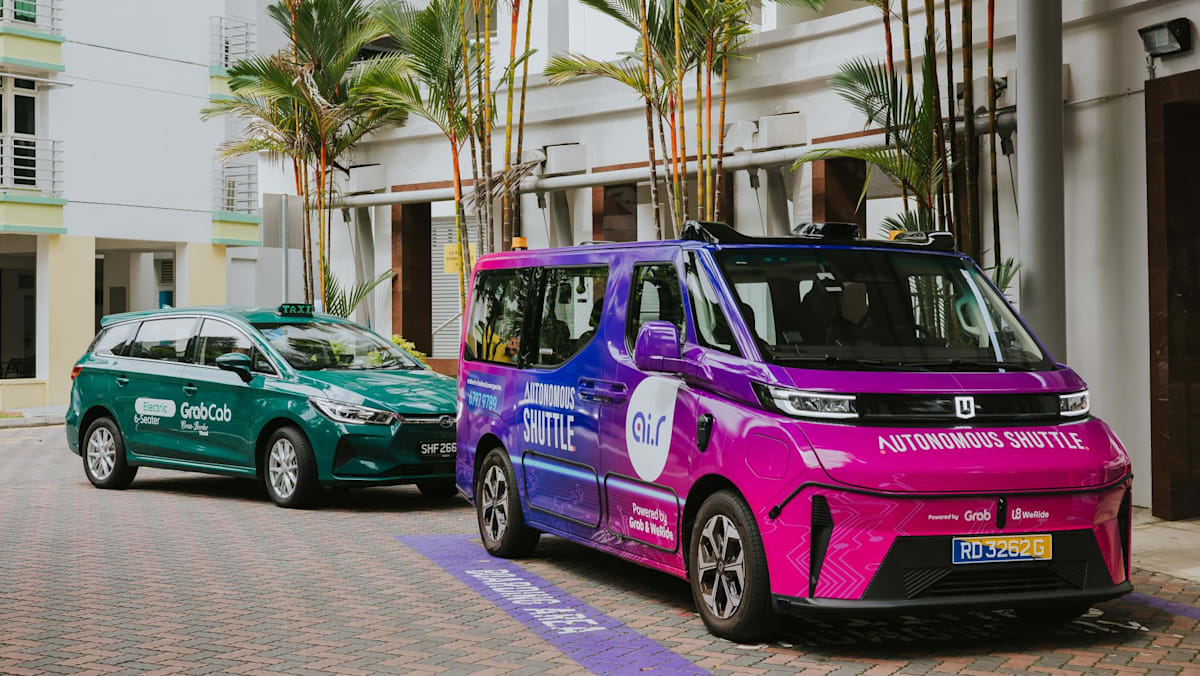
Grab announced on July 29 that it will pilot an on-demand autonomous vehicle service in Punggol, allowing trial riders to book direct trips between existing shuttle stops. The service is due to open gradually to the public in Q4 2026 with commercial fares, while existing fixed-route shuttles remain free, according to reports from Grab, Singapore's Land Transport Authority, and local media.
Grab announced on July 29 that it will pilot an on-demand autonomous vehicle service in Punggol, Singapore, enabling riders to book direct trips between existing pick-up and drop-off points rather than travel on a fixed shuttle route.
The trial will open to selected riders in the coming months and gradually become available to the public in Q4 2026, when commercial fares will apply, according to Grab. The Land Transport Authority (LTA) described the pilot as an enhancement to Punggol's existing autonomous shuttle services.
From fixed routes to booked trips
Under the pilot, riders can select existing stops served by the current shuttle network, and the autonomous vehicle will take a direct route between those points. Grab currently operates Punggol shuttle Routes 1 and 3, while ComfortDelGro operates Route 2, AsiaOne reported. The existing services will remain free while the on-demand trial is introduced, according to The Business Times.
Grab president and chief operating officer Alex Hungate said the next phase brings "increased flexibility with on-demand, direct routing" in response to community feedback. He also described the service as part of Grab's "hybrid mobility strategy, where AVs complement our core driver community to expand transport options for the public," according to The Business Times.
Grab stated that the service is intended to connect residential areas with amenities including clinics, markets, schools, and Punggol Coast MRT station. The Business Times reported that additional Punggol pick-up and drop-off points are to be added progressively this year in consultation with LTA and local community stakeholders.
Rider feedback informed the change
LTA linked the shift from fixed routing to direct bookings to post-ride survey feedback. Among roughly 270 Punggol residents surveyed, almost 60% preferred choosing their boarding and alighting locations, while around 40% preferred more direct routes, CNA reported.
LTA reported that more than 11,500 unique riders had used Punggol's autonomous shuttle services as of July 12. AsiaOne separately reported that 99% of around 900 post-ride survey respondents said they felt safe and would recommend the service. The differing ridership figures reflect different reported scopes: Grab's own shuttle service had served more than 9,000 riders since the start of 2026 and accumulated about 90,000 km of local-road autonomous mileage, according to AsiaOne, while LTA's 11,500 figure covers the broader autonomous shuttle service.
Deployment context
Grab's Punggol autonomous mobility work began in 2025 with Guangzhou-based autonomous vehicle company WeRide, The Business Times reported. The company introduced Community Rides for local leaders and residents in January 2026, followed by wider public operations in April, according to the publication.
AsiaOne reported that Grab has established an autonomous vehicle fleet depot in Punggol and that the company intends to expand its fleet this year. Hungate told The Business Times that Grab aims to deploy "thousands of AVs together with fleet partners across South-east Asia by 2030."
For autonomous-mobility practitioners, the Punggol pilot is a notable operational transition: it retains a controlled set of known stops while replacing a predetermined route with on-demand routing. Comparable geofenced AV deployments typically use this kind of bounded service area to test dispatching, rider matching, route selection, fleet utilization, and operational support before expanding service coverage.
Key Points
- 1Grab's Punggol pilot replaces fixed shuttle routing with booked direct trips between existing stops, with public commercial service targeted for Q4 2026.
- 2LTA survey findings showed demand for rider-selected stops and direct routes, providing reported evidence for the service enhancement.
- 3Comparable geofenced AV deployments use bounded on-demand operations to test dispatch, routing, fleet utilization, and support processes before wider expansion.
Scoring Rationale
The pilot is a notable real-world autonomous mobility deployment that moves beyond fixed-route shuttles toward on-demand routing. It is geographically limited, but offers practitioners useful evidence about the operational evolution of geofenced AV services and their transition toward fare-paying operations.
Sources
Public references used for this report.
Practice with real Ride-Hailing data
90 SQL & Python problems · 15 industry datasets
250 free problems · No credit card
See all Ride-Hailing problems