Grab Deploys Delivery Robots to Accelerate Pickups
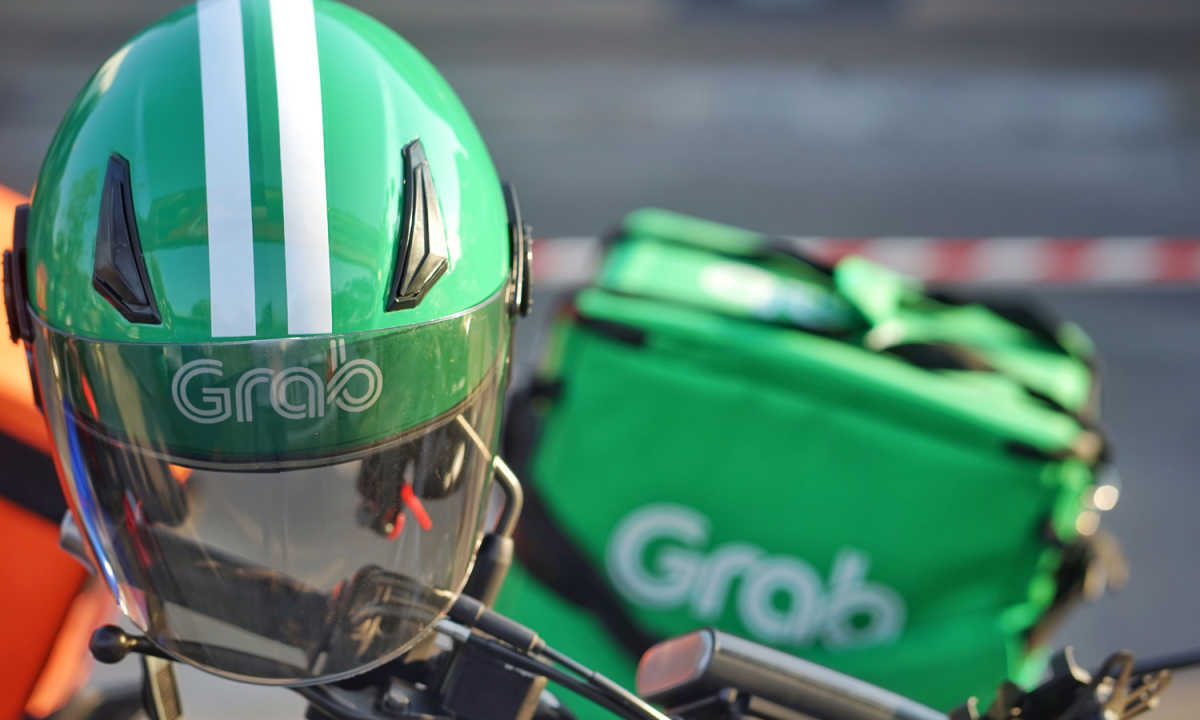
Grab is rolling out an AI-powered delivery robot called Carri and a suite of AI features first shown at GrabX 2026, aiming to cut driver idle time and speed order handoffs. CEO Anthony Tan said drivers lose roughly 10% of earning time searching for restaurants or waiting in office towers; Carri will locate restaurants inside malls and hand orders to riders so they can take the next job sooner. The push follows Grab's January acquisition of Chinese robotics firm Infermove, which brings expertise in mobile manipulation, imitation learning, and a crowdsourced training pipeline called Rider Shadow System. The move signals Grab doubling down on embodied intelligence to reduce last-mile costs and improve throughput across Southeast Asia.
What happened
Grab is preparing to deploy an AI-enabled delivery robot, Carri, and showcased 13 AI features at GrabX 2026 as part of a broader push into robotics and embodied intelligence. CEO Anthony Tan framed Carri as an assistant for drivers, not a replacement, noting drivers currently lose around 10% of earning time locating restaurants or waiting for customers. The rollout follows Grab's January acquisition of Chinese robotics company Infermove, acquired to accelerate development of autonomous, manipulation-capable delivery robots.
Technical details
Infermove's public profile and reporting describe a stack built for unstructured, last-mile environments using a mix of data-driven learning techniques. Key points practitioners should note:
- •Infermove emphasizes imitation learning, reinforcement learning, and proprietary end-to-end algorithms to handle mobile manipulation and navigation in cluttered pedestrian settings.
- •The company uses a crowdsourced data pipeline called Rider Shadow System that collects driving and interaction data from last-mile mobility devices, accelerating real-world training data acquisition and reducing reliance on purely simulated data.
- •Product-level capabilities described include sidewalk delivery robots with upper-limb manipulation and sensory stacks likely tuned for perception and contact interactions, enabling the robot to find a merchant location in a mall and transfer packages to a human rider.
Context and significance
This is not a theoretical research demo. Grab's strategy pairs software advances with operational scale across Southeast Asia, a market with dense urban malls, high pedestrian traffic, and diverse building typologies. Combining in-house logistics scale with Infermove's embodied intelligence addresses two persistent obstacles for physical robots: the sim-to-real gap and costly, slow data collection. The Rider Shadow System design is significant because it treats delivery riders as a distributed sensor network, turning routine rider trips into training data for complex manipulation and navigation behaviors. That approach short-circuits a common bottleneck for embodied AI startups and increases the probability of real-world robustness faster than simulated-only methods.
Business and operational implications
Deploying Carri as a driver aid preserves existing workforce economics while increasing throughput. If robots can reliably shave wait and search time, platform-level metrics such as deliveries per driver-hour, average order cycle time, and unit economics per order will improve. Reuters and industry commentary have flagged potential cost reductions in last-mile delivery from robots and drones, with some estimates suggesting per-order costs could fall dramatically in high-density corridors.
What to watch
Implementation details matter. Monitor pilot geographies, sensor suites, human-robot handoff success rates, regulatory responses in Singapore and regional markets, and whether Grab open-sources tooling or integrates Infermove tech into fleet teleops. Also watch metrics Grab reports for driver earnings, delivery latency, and robot uptime during the early pilots.
Bottom line
Grab is moving from acquisition to deployment, combining Infermove's embodied learning techniques with operational scale. For practitioners, this is a live example of how crowdsourced, real-world training data and hybrid learning methods are being used to solve the last-mile robotics problem at scale.
Key Points
- 1Grab is fielding an AI delivery robot, Carri, to reduce driver idle time by roughly 10%, improving throughput and earnings per hour.
- 2Infermove's stack uses imitation learning, reinforcement learning, and a Rider Shadow System to accelerate real-world robot training and close the sim-to-real gap.
- 3Deploying robots as driver assistants preserves workforce economics while offering a pathway to materially lower per-order last-mile costs in dense urban markets.
Scoring Rationale
The story moves a major Southeast Asian platform from acquisition to imminent deployment of embodied AI, a notable step for last-mile robotics. It is regionally important and technically relevant, but not yet a global paradigm shift until pilots prove scale and economics.
Sources
Public references used for this report.
Practice with real Ride-Hailing data
90 SQL & Python problems · 15 industry datasets
250 free problems · No credit card
See all Ride-Hailing problems