Governments Twist AI Safety To Coerce Tech Firms
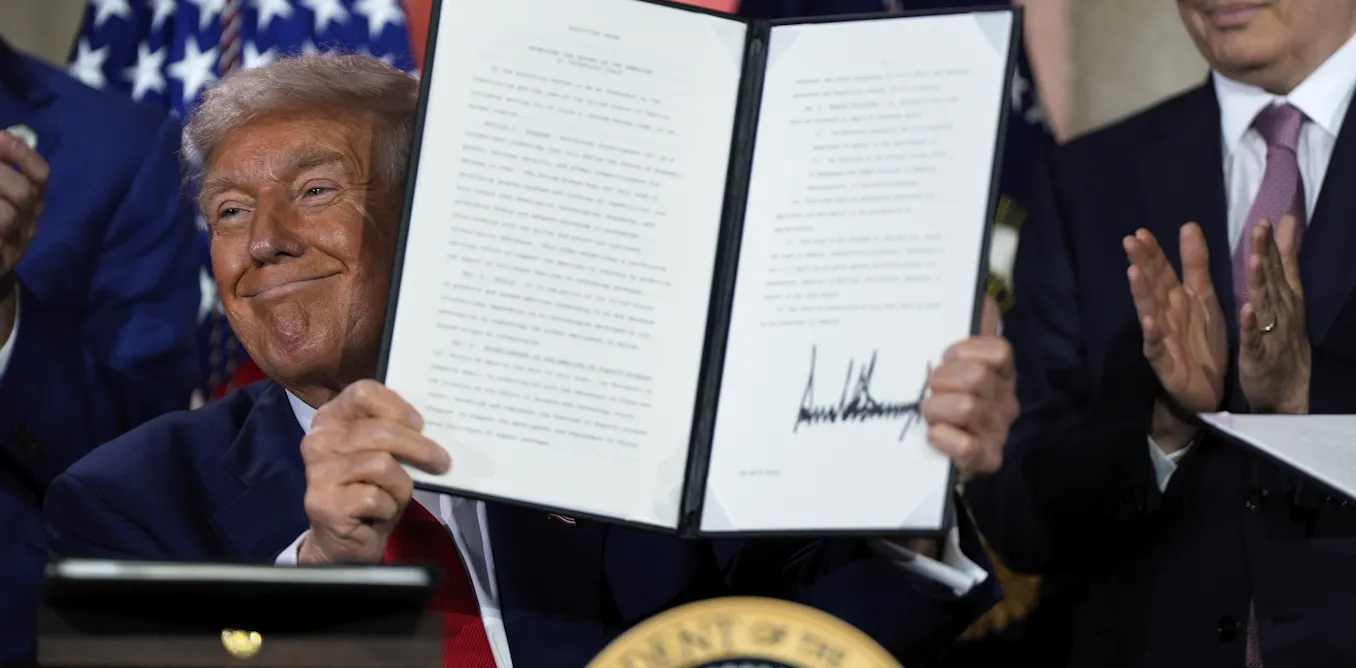
According to The Conversation, a June 4, 2026 article by Michael Gregory, governments are reframing AI safety rules toward coercion rather than public protection. The Conversation reports that President Donald Trump's 2025 executive order on so-called "woke AI" put the tech industry on notice and that Trump ordered the federal government to stop using Anthropic and its model Claude, labeling the company a national security risk. The Conversation also reports that Anthropic had resisted removing built-in safeguards against domestic surveillance and autonomous weapons from products used by the Pentagon. Industry observers should read this coverage as an example of how regulatory language can be repurposed into procurement and compliance pressure.
What happened
The Conversation published a June 4, 2026 article by Michael Gregory arguing that some governments are reframing AI-safety rhetoric into coercive levers. According to The Conversation, President Donald Trump's 2025 executive order on so-called "woke AI" signaled political expectations for vendors. The Conversation reports that Trump ordered the federal government to stop using Anthropic and its model Claude, labeling the company a national security risk. According to The Conversation, Anthropic had refused to remove built-in safeguards that prohibited domestic surveillance and autonomous weapons from products it supplied to the Pentagon.
Editorial analysis
Technical context: Companies, vendors, and public procurers operate in an environment where safety and national-security language overlap. Industry-pattern observations: governments seeking control over outputs or use-cases can repurpose safety standards into procurement conditions, increasing legal and operational friction for model providers and downstream integrators.
Context and significance: For practitioners, the story highlights non-technical risk vectors: procurement restrictions, reputational leverage, and policy-driven feature constraints. These forces can affect model deployment decisions, auditability requirements, and contractual terms even when the underlying technical trade-offs (e.g., guardrails vs utility) remain unchanged.
What to watch
For practitioners: monitor procurement guidance, federal contracting lists, published executive orders, and vendor safety-policy revisions; watch for explicit clauses linking safety compliance to permitted use-cases or market access.
Key Points
- 1Governments can recast AI safety language into procurement and compliance pressure, raising vendor legal and market risk.
- 2Public reports show Anthropic and its model Claude were publicly targeted under national-security claims, illustrating the stakes for model governance.
- 3Practitioners should track policy language and contracting rules because safety standards can function as de facto controls on deployment.
Scoring Rationale
This story matters because policy and procurement actions can rapidly reshape deployment constraints and compliance requirements for ML teams. It is notable but not frontier-breaking; the primary audience is practitioners tracking regulatory risk and vendor governance.
Practice interview problems based on real data
1,625 SQL & Python problems across 15 industry datasets — the exact type of data you work with.
Try 250 free problems