
Government Trains Artisans in AI Tools for Livelihoods
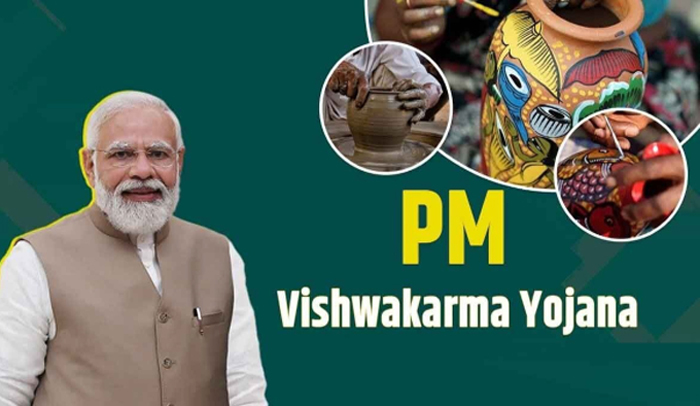
The Ministry of Micro, Small and Medium Enterprises (MSME) trained more than 2,500 artisans and craftspeople under the PM Vishwakarma Scheme to adopt practical AI tools for product design, branding, marketing, and market access. The hands-on programme introduced participants to ChatGPT, Indus, and Google Gemini and focused on applied skills: AI fundamentals, digital product development, packaging, customer engagement, and business efficiency. Framed under the government theme "AI for Social Good" and linked to the Delhi Declaration from the IndiaAI Impact Summit, the initiative aims to bridge the digital divide, increase global competitiveness for artisans, and seed AI adoption at the grassroots level. For practitioners, the programme signals rising demand for localized, low-friction AI workflows, plus new data, IP, and digital-supply-chain considerations.
What happened
The Ministry of Micro, Small and Medium Enterprises (MSME) trained over 2,500 beneficiaries, primarily traditional artisans and craftspeople, under the PM Vishwakarma Scheme to use AI tools for livelihood enhancement and business growth. The programme introduced participants to practical workflows using ChatGPT, Indus, and Google Gemini and emphasized applied outcomes such as improved product design, branding, packaging, and market access. The initiative is positioned publicly under the government theme "AI for Social Good" and referenced the Delhi Declaration from the IndiaAI Impact Summit.
Technical details
The training model prioritized hands-on, accessible modules rather than algorithmic deep dives. Course elements included basic AI literacy, prompt-driven content generation, image and design ideation, and digitized marketing workflows. Participants were shown how to use ChatGPT for customer engagement scripts, product descriptions, and localized content; Indus for language and regional support; and Google Gemini for multimodal design prompts and generative ideation. Practical topics covered:
- •AI fundamentals and safe usage: basic prompt engineering, bias awareness, and verifying model outputs
- •Product and packaging design: generating concept variants, color palettes, and layout suggestions
- •Branding and marketing: writing product descriptions, social copy, and creating localized campaigns
- •Business workflows: using AI to streamline inventory notes, estimate costs, and improve customer correspondence
Context and significance
This is a first-of-its-kind cross-ministry push to integrate grassroots artisanal sectors into mainstream AI adoption at scale. MSMEs and informal craft sectors account for a large share of employment and exports in India, so upskilling artisans has macroeconomic relevance beyond individual business improvements. For AI practitioners, the programme foreshadows increased demand for tools that are:
- •regionally localized and language-aware,
- •optimized for low-bandwidth and low-literacy contexts,
- •explainable and safe for nontechnical users.
The initiative also expands the data and use-case frontier for applied AI. Artisanal design iterations and customer preferences will create new, culturally specific datasets and prompt libraries. That raises opportunities for tailored model fine-tuning, lightweight on-device models, and domain-specific UI/UX for creative workflows. At the same time, it surfaces operational challenges around intellectual property for generative outputs, data ownership, and consent when designs incorporate traditional motifs.
Risks and implementation caveats
Rapid onboarding of nontechnical users amplifies common practitioner concerns. Models can hallucinate product claims, replicate copyrighted patterns, or propose culturally insensitive design variants. Connectivity, device access, and digital payment integration will determine real commercial impact. Measurement will require tracking metrics beyond attendance, such as conversion rates on digital platforms, price premiums achieved, and export inquiries generated.
What to watch
The programme's long-term value will depend on measurable commercial outcomes and follow-through. Key signals to monitor are expansion of training cohorts, partnerships with e-commerce marketplaces, the emergence of localized AI tools or plugins for craft designers, and policy guidance on IP and data rights for artisan-generated content. For ML teams, this is an early indicator to prioritize multilingual, low-latency, and human-centered generative features designed for small business workflows.
Bottom line
The MSME-led training is a pragmatic step toward democratizing AI utility in an economically important sector. It creates near-term demand for applied tooling, localized models, and operational guardrails, while raising important data governance and IP questions that practitioners must address when designing solutions for similar user populations.
Key Points
- 1MSME trained over 2,500 artisans on practical AI tools, seeding grassroots adoption and new applied use cases for generative models.
- 2Training focused on ChatGPT, Indus, and Google Gemini to improve design, branding, and market access, raising demand for localized AI tooling.
- 3Program creates practical opportunities and risks, including IP, data governance, and the need for low-bandwidth, explainable AI workflows.
Scoring Rationale
The programme meaningfully expands AI adoption at the grassroots level and creates practical demand signals for localized models and tooling. It is not a frontier research or platform release, so its impact is notable but not industry-shaking.
Sources
Public references used for this report.
View 5 more sources
- Empowering Artisans: AI Meets Tradition under PM Vishwakarma ...devdiscourse.com
- AI Training for Artisans under PM Vishwakarma - Rediff Moneymoney.rediff.com
- Govt imparts AI training to 2500 artisans under PM ... - News18news18.com
- Where Heritage Meets Intelligence: Empowering Artisans through AIpublicnow.com
- PM Vishwakarma AI training for artisans | 60SecondsNow60secondsnow.com
Practice interview problems based on real data
1,625 SQL & Python problems across 15 industry datasets — the exact type of data you work with.
Try 250 free problems


