
Google Sets Minimum Requirements For Gemini Intelligence
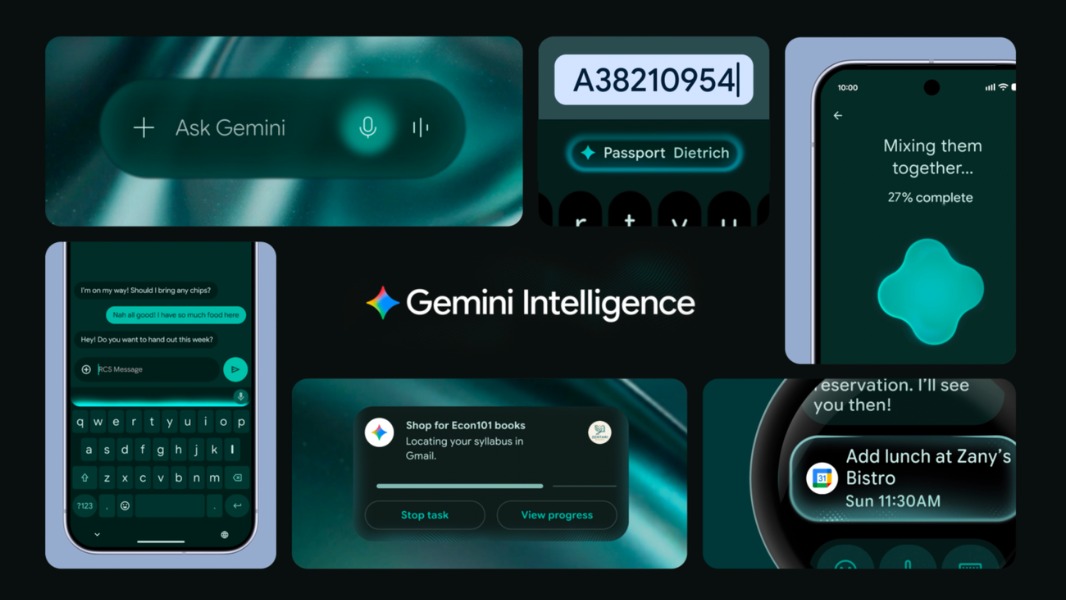
Google has disclosed system requirements for Gemini Intelligence, the agentic feature introduced for Android at I/O. How-To Geek reports that Google's documentation (and reporting from 9to5Google, cited by How-To Geek) requires a qualifying "flagship" chip, at least 12GB of RAM, and support for media features such as HDR and spatial audio. How-To Geek also reports Google requires at least five years of OS updates and six years of quarterly security updates, and that devices must support the small local model Gemini Nano v3. Engadget reports Google intends to roll out Gemini Intelligence first to recently released Pixel and Samsung Galaxy phones. The requirements rule out many pre-2026 devices, according to the coverage.
What happened
Google published documentation and product pages for Gemini, its new assistant platform, and related reporting has extracted minimum device requirements for the agentic feature branded Gemini Intelligence. How-To Geek reports that Google's documentation (citing 9to5Google) lists a qualifying "flagship" system-on-chip, at least 12GB of RAM, and support for media features including HDR and spatial audio. How-To Geek also reports the documentation requires devices to receive at least five years of OS updates and six years of quarterly security updates, with quality levels becoming more strictly enforced in 2027. How-To Geek and other coverage state that devices must support the local small model Gemini Nano v3 to run Gemini Intelligence. Engadget reports Google expects to bring Gemini Intelligence initially to recently released Pixel and Samsung Galaxy phones.
Technical details
Per reporting, the requirement to run Gemini Nano v3 on-device is a gating factor beyond raw RAM and SoC capability. How-To Geek reports that Gemini Nano v3 currently runs on recent flagship chips and commodity hardware in some 2026 devices, but many phones released before 2026 are ineligible. The documentation items cited by How-To Geek emphasize both hardware acceleration (flagship SoC support) and long-term platform support (multi-year OS and security update windows) as prerequisites.
Editorial analysis - technical context
Industry-pattern observations: Requiring local support for a compact model like Gemini Nano v3 plus 12GB of RAM and advanced media codecs concentrates high-capability AI experiences on newer flagships. Comparable mobile AI features historically rely on either cloud-only inference or a hybrid of local and cloud models; mandating local model compatibility increases device-level compute and update hygiene demands and reduces the addressable device pool at launch.
Context and significance
Editorial analysis
For the mobile ecosystem, the combination of a chipset floor, explicit RAM minimums, and long update commitments raises the bar for which devices can host agentic on-device experiences. This affects how quickly broad Android fragmentation can be bridged for advanced assistant features and changes the practical deployment surface for app developers and model integrators. Vendors that maintain long OS/security update windows and enable the required media and neural acceleration features will be prioritized by this criteria, according to the reporting.
What to watch
For practitioners
track which OEMs publish explicit support for Gemini Nano v3 and which device SKUs are listed as qualifying in Google's official compatibility documentation. Also monitor whether Google updates the documented quality and update requirements in 2027, and watch third-party reporting (for example 9to5Google and Engadget) for lists of supported devices and any firmware or driver changes required to enable local model acceleration. If you build mobile experiences that expect on-device Gemini capabilities, validate feature availability on target devices rather than assuming Android version parity.
Key Points
- 1Reported minimums (flagship SoC, 12GB RAM, HDR/spatial audio) make many pre-2026 phones ineligible, shrinking the initial install base.
- 2Requiring local support for Gemini Nano v3 raises device-level compute and update expectations, favoring newer flagships with neural acceleration.
- 3Industry pattern: long update windows and strict quality rules concentrate advanced mobile AI on manufacturers that commit to extended OS/security support.
Scoring Rationale
This matters to mobile and ML practitioners because the documented requirements limit which devices can run agentic, on-device models and therefore shape deployment targets and testing matrices. The story is notable but not industry-shaking because it affects rollout scope rather than introducing a new model architecture or regulation.
Sources
Public references used for this report.
Practice interview problems based on real data
1,625 SQL & Python problems across 15 industry datasets — the exact type of data you work with.
Try 250 free problems