Google Previews Android 17 With Gemini Intelligence Features
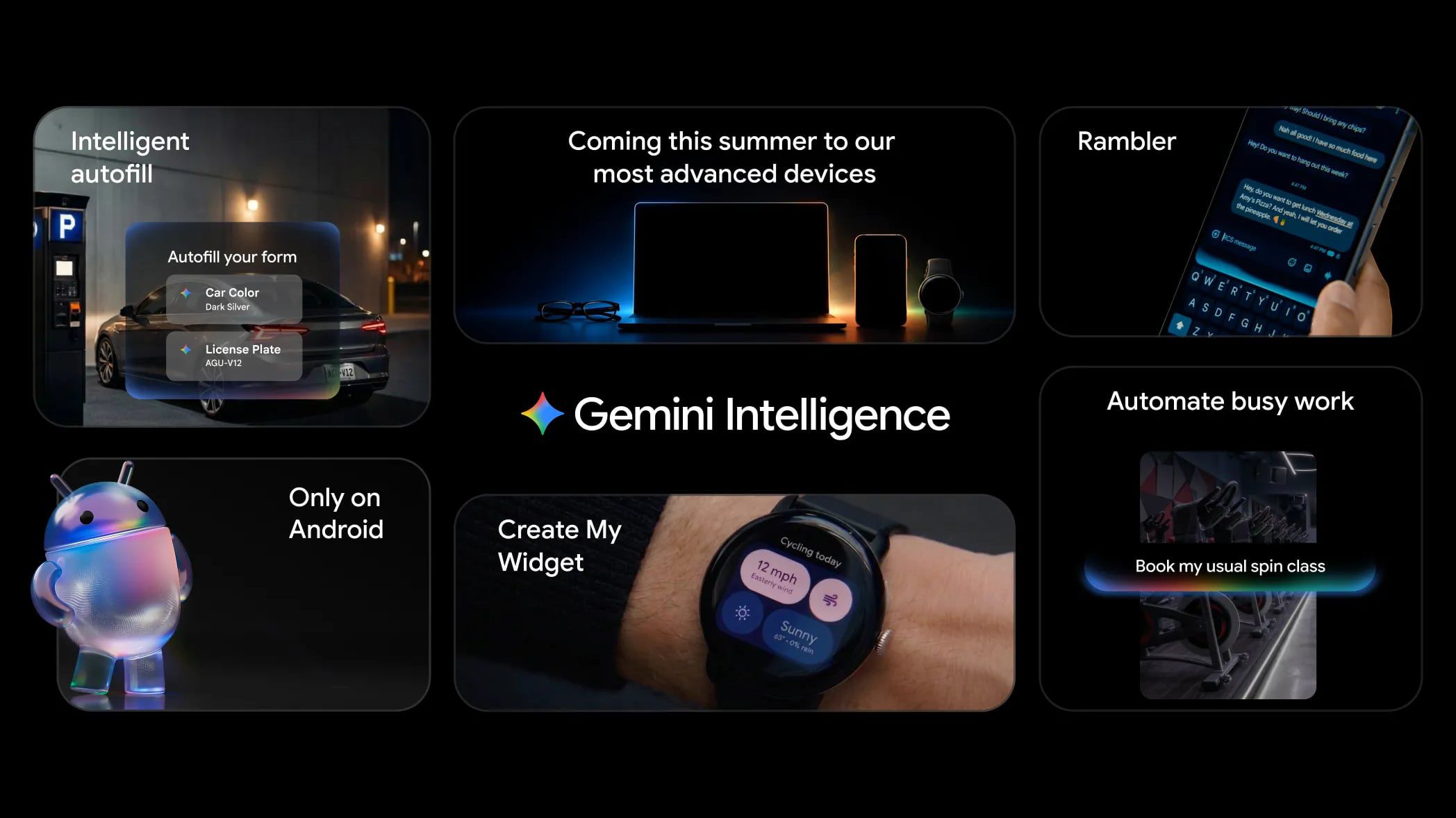
Google previewed Android 17, unveiling a suite of generative-AI features grouped under the Gemini Intelligence label, per reporting by MacRumors, The Verge, Wired, and Engadget. The preview highlights expanded autonomous task automation, on-screen visual context, deeper Chrome integration for research and autofill, a new voice-dictation feature called Rambler, and a natural-language widget builder called Create My Widget (sources: MacRumors, The Verge, Wired). Google also previewed Googlebook laptops, billed as devices "crafted for Gemini" with partners including Acer, ASUS, Dell, HP, and Lenovo, and said they will arrive this fall (Engadget). Wired and other outlets flagged a small on-device model in Chrome and raised privacy and user-control questions. Industry coverage places the preview ahead of Apple's iOS 27 announcements next month.
What happened
Google previewed Android 17 and a branded suite of generative-AI features called Gemini Intelligence in a pre-I/O event, as reported by MacRumors, The Verge, Wired, and Engadget. Reported feature highlights include expanded autonomous task automation that can act in apps, Gemini drawing visual context from on-screen content to perform actions such as building shopping carts from a screenshot, deeper integration with Chrome for summarization and auto-browsing tasks, and broader autofill driven by personal app data (MacRumors; The Verge; Wired). The preview also introduces a voice-dictation feature named Rambler that removes filler words and produces concise messages, and a natural-language widget authoring tool called Create My Widget (MacRumors; The Verge).
Technical details
Per reporting, Gemini Intelligence bundles existing and new Gemini capabilities for premium Android devices; The Verge quotes Ben Greenwood, Google's director of Android experiences, saying it "brings the very best of Gemini to our most advanced Android devices." Chrome integration includes enhanced summary and comparison flows and an auto-browse capability that can complete multi-step tasks like booking appointments (The Verge; MacRumors). Wired reported that a small, approximately 4-GB AI model is embedded into Chrome, a detail raised as a privacy consideration in coverage of the release (Wired).
Industry context
Ecosystem and hardware
Engadget and Android.com reporting describe Googlebook as a new laptop family "crafted for Gemini" and list OEM partners including Acer, ASUS, Dell, HP, and Lenovo, with initial devices expected this fall (Engadget; Android.com). Reporting notes tighter interoperability promises between Android phones and Googlebooks, such as accessing phone files from the laptop file browser (Engadget).
What to watch
Editorial analysis
Companies adding deeper on-device multimodal assistants tend to balance latency, compute, and privacy trade-offs. Observers have previously documented pushback to heavy-handed OS-level AI integrations on other platforms, and Engadget's coverage contrasts Google's approach with Microsoft's Copilot+ rollout and the user reactions it provoked. The presence of an on-device model in Chrome amplifies the privacy and update-management questions that come with embedding models in client software (Wired; Engadget).
Observers should track device eligibility and performance tiers for Gemini Intelligence, how Google surfaces consent and data controls for autofill and visual-context features, and OEM uptake of Googlebook designs. Coverage also suggests monitoring developer access to task automation APIs and the rollout timing for broader app support-The Verge reports task automation expanding "soon," while other outlets indicate staged availability across premium phones like the Galaxy S26 series and Pixel 10 (The Verge; Android Central).
Bottom line
Google's Android 17 preview packages several practical generative-AI features under Gemini Intelligence, pairs those features with a new laptop family, and surfaces the same trade-offs-compute, privacy, user control-that have shaped prior OS-level AI efforts. Reporting is clear about features and partner lists; commentary about market reception and long-term competitive effects appears in industry coverage but is not documented as a Google statement (MacRumors; The Verge; Wired; Engadget).
Key Points
- 1Android 17 centralizes generative features under Gemini Intelligence, accelerating mobile assistant capabilities across UI, messaging, and browsing.
- 2Bundled on-device models and Chrome integration heighten privacy and update-management trade-offs that practitioners should evaluate.
- 3Googlebook OEM partnerships signal a push for AI-first laptops, shifting some compute and UX expectations for Android ecosystems.
Scoring Rationale
This preview combines a major platform release (Android 17) with a branded AI suite and a new device family, creating meaningful implications for mobile developers, privacy engineers, and OEMs. It is notable but not a paradigm shift, and recent reporting raises practical questions practitioners must monitor.
Sources
Public references used for this report.
View 6 more sources
- Gemini’s latest updates are all about controlling your phonetheverge.com
- The Top New Features in Google’s Android 17—and Gemini Intelligence—Coming This Summerwired.com
- The new Gemini era heads to Android this summer with automation everywhereandroidcentral.com
- Android 17 is getting redesigned emoji, and Google is clearly never bringing back the blobs [Gallery]9to5google.com
- Google Previews Android 17 With 'Gemini Intelligence' a Month Before Apple's iOS 27 Revealmacrumors.com
- 13+ Huge New Android Features Just Got Announced for I/O: Here's Everythingdroid-life.com
Practice interview problems based on real data
1,625 SQL & Python problems across 15 industry datasets — the exact type of data you work with.
Try 250 free problems