Google Launches Gemini Enterprise Agent Platform
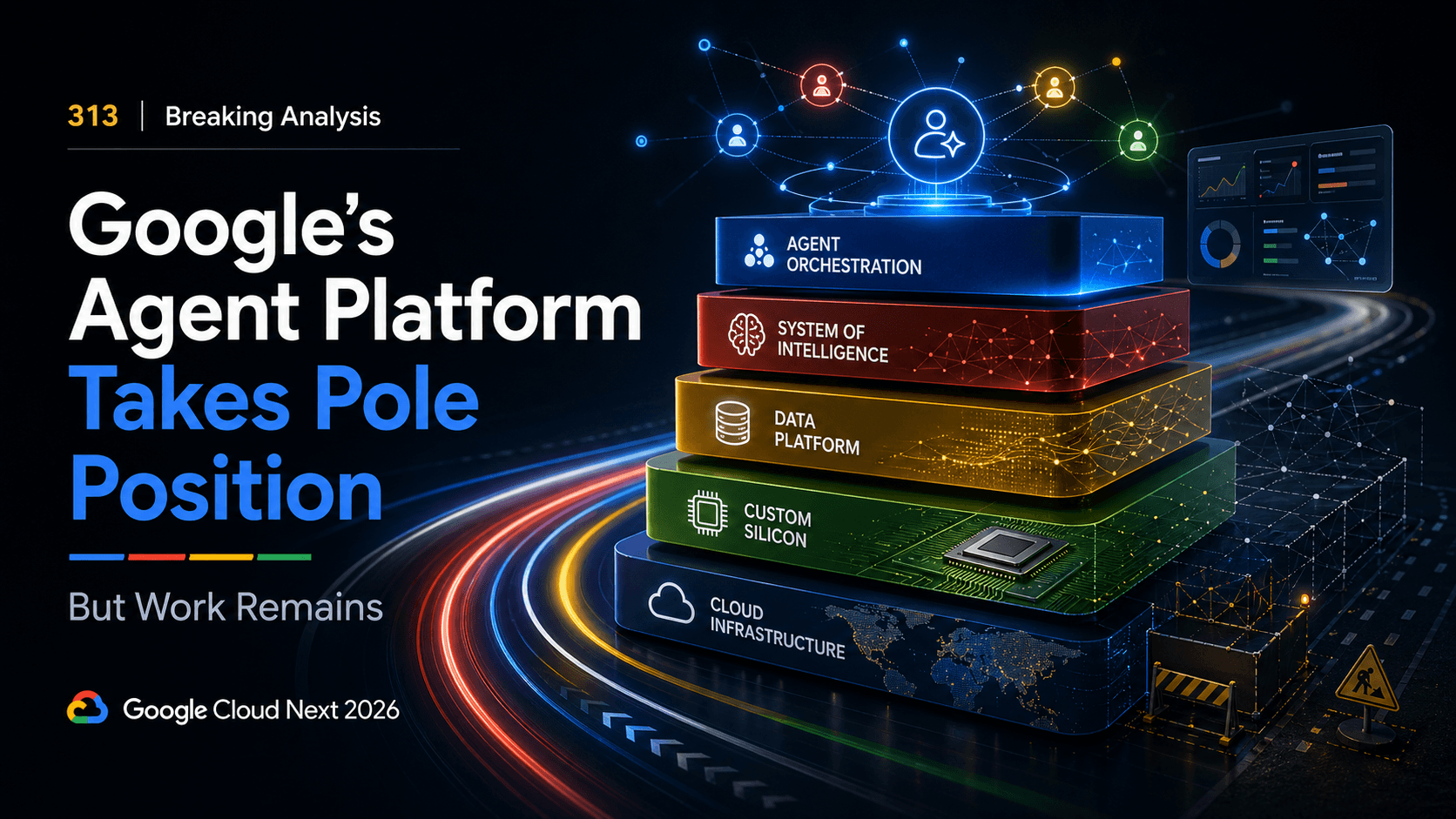
Google announced the Gemini Enterprise Agent Platform on April 22, 2026, rebranding and consolidating Vertex AI under the Gemini Enterprise banner, according to a Google Cloud blog post by Michael Gerstenhaber and Michael Bachman. The platform, described by Google Cloud as a single destination to build, scale, govern, and optimize agents, includes a visual low-code environment called Agent Studio, an Agent Gateway, and first-class access to more than 200 models via Model Garden (Google Cloud blog). Reuters reported that CEO Sundar Pichai and Google Cloud CEO Thomas Kurian framed agents as central to Google's enterprise monetization, and Kurian said, "The experimental phase is behind us, and now the real challenge begins" (Reuters). Partner-built agents from vendors such as Accenture, Adobe, Atlassian, Deloitte, Oracle, Palo Alto Networks, Salesforce, ServiceNow, Workday are available in the Agent Gallery, per a Google Cloud partner post.
What happened
Google Cloud announced the Gemini Enterprise Agent Platform on April 22, 2026, presenting it as the successor to Vertex AI and the company's unified environment for building and operating AI agents, per a Google Cloud blog post by Michael Gerstenhaber and Michael Bachman. The announcement states that all Vertex AI services and roadmap evolutions will be delivered through the Agent Platform going forward (Google Cloud blog). Reuters reported from Google Cloud Next that CEO Sundar Pichai and Google Cloud CEO Thomas Kurian emphasized agents as a commercial priority; Reuters quotes Kurian saying, "The experimental phase is behind us, and now the real challenge begins."
Technical details
Google Cloud's blog describes the platform as combining model selection, agent building, orchestration, DevOps and governance in one product. The public post lists a new low-code interface called Agent Studio, an Agent Gateway for secure traffic control, and integration with Model Garden, which Google says provides access to more than 200 models including Google's first-party breakthroughs and supported third-party models such as Anthropic's offerings (Google Cloud blog). A separate Google Cloud partner post details an Agent Gallery that offers partner-built agents from vendors including Accenture, Adobe, Atlassian, Deloitte, Oracle, Palo Alto Networks, Salesforce, ServiceNow, Workday, and others (Google Cloud partner post).
SiliconANGLE's analysis of Cloud Next describes related infrastructure moves announced at the event, including pre-announcements around TPU 8 variants (TPU 8t and 8i) and performance claims reported at the show; SiliconANGLE frames the silicon and data-stack announcements as part of Google's case for end-to-end integration from hardware to applications (SiliconANGLE). Reuters also reported that Sundar Pichai reiterated Alphabet's capital-spending guidance of $175 billion to $185 billion and said just over half of computing investment for machine learning would be dedicated to the cloud business (Reuters).
Industry context
What to watch
Practical implications for engineers and architects
Editorial analysis
The consolidation of model tooling, orchestration, and governance into a single product reflects a broader vendor trend to productize agent workflows for enterprise adoption. Companies building agent platforms typically focus on three linked problems: secure system integration, developer tooling for multi-step workflows, and governance to meet compliance needs. The inclusion of a partner marketplace follows an established enterprise pattern where third-party domain agents accelerate adoption by offering vertical use cases.
For practitioners, the technical payoff of integrated platforms is reduced engineering overhead for connecting models to enterprise systems, but it often shifts complexity into configuration, policy rules, and observability. Teams evaluating vendor platforms should plan for integration work around identity, audit trails, and tool-use safety, which vendors highlight as key features.
Observers should track three indicators to judge real-world value: adoption by large enterprise customers (license and paid-seat growth), the maturity of observability and RBAC features in production agent deployments, and measurable cost/performance data tied to the new TPU 8 family or equivalent infrastructure. Also monitor how strictly Google enforces the "Google Cloud Ready - Gemini Enterprise" vetting process for partner agents and whether independent security reviews surface gaps in the platform's tool-use safeguards.
Platform consolidation can shorten time-to-prototype for multi-system agents but does not eliminate the need for robust testing of oracle calls, rate limiting, and rollback strategies. Integration testing at the orchestration layer and end-to-end observability remain essential when agents are granted action capabilities. Vendors will continue to trade off convenience against control; practitioners should validate governance controls and data flows against organizational compliance requirements before scaling autonomous agents.
Key Points
- 1Google launched the Gemini Enterprise Agent Platform, unifying Vertex AI into a single agent-focused product, per Google Cloud blog.
- 2Platform bundles tooling-Agent Studio, Agent Gateway, Model Garden-and partner agents, reducing integration overhead for enterprise teams.
- 3Editorial analysis: Integrated agent platforms accelerate deployments but shift complexity to governance, observability, and secure system integration.
Scoring Rationale
This launch is a major product consolidation from a top cloud vendor that standardizes agent development and governance, which materially affects enterprise AI deployments and platform choices. The score reflects significant practitioner relevance without being a frontier-model paradigm shift.
Sources
Public references used for this report.
Practice interview problems based on real data
1,625 SQL & Python problems across 15 industry datasets — the exact type of data you work with.
Try 250 free problems