Google Expands Gemini for Home to 16 Markets
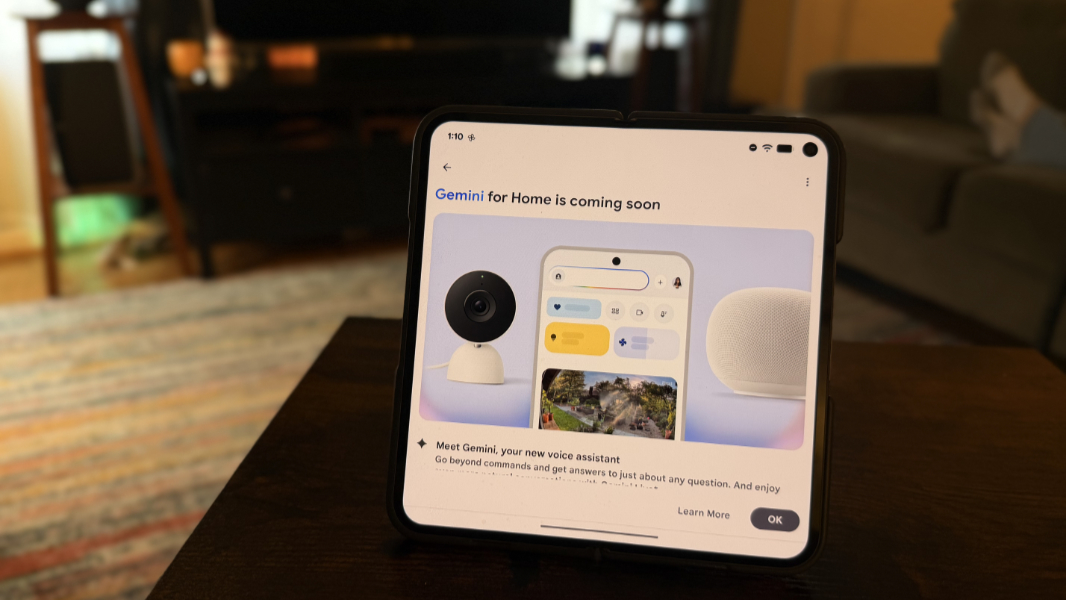
Google has expanded early access for Gemini for Home into 16 additional markets across Europe and the Asia‑Pacific and added support for seven new languages. The rollout extends Ask Home conversational queries, natural‑language automation creation, and tiered AI camera capabilities to more households. Core features require the redesigned Google Home app (v4.0) and some advanced functionality remains gated behind Google Home Premium subscription tiers. For ML engineers and smart‑home integrators this widens the addressable user base, increases localization requirements for voice and NLU, and changes product integration and privacy considerations tied to cloud vs. on‑device processing.
What happened
Google expanded early access for Gemini for Home to 16 new countries across Europe and the Asia‑Pacific region and added support for seven additional languages, broadening the geographic and linguistic footprint of its home assistant. The expansion moves Gemini for Home beyond its initial English‑first markets and signals Google’s intent to make conversational, generative AI a default interaction layer in more smart homes.
Technical context
Gemini for Home bundles several components: a redesigned Google Home app (v4.0) with a bottom navigation redesign, Ask Home (a search/chat experience for home queries), natural‑language automation creation, and AI camera features that provide descriptive captions and searchable video history. Ask Home supports quick device queries, real‑time device control, and conversational automation creation. Google differentiates capability levels via Google Home Premium tiers: the Standard tier enables saved household information and advanced automations while the Advanced tier unlocks AI camera descriptions, search of video history, and Home Brief summaries.
Key rollout details — The broader rollout requires the updated Google Home app and relies on server‑side feature flags to enable Ask Home and other capabilities. Simple device queries ("Which lights are on?"), ad‑hoc commands ("Close all blinds"), and on‑device control remain available to free users; creation and saving of personalized automations require Premium subscriptions. AI camera features that produce richer captions and searchable video archives are positioned behind the top Premium Advanced tier. Google’s staged approach follows prior Gemini/Android app rollouts where functionality varies by region and language availability; earlier coverage noted that Gemini replaced Bard as Google’s primary Android AI helper but was not yet a full Assistant replacement.
Why practitioners should care
For ML engineers, voice UX designers, and smart‑home integrators, the expansion increases the scale and diversity of real‑world telemetry for conversational systems. Wide regional increases require robust localization pipelines (speech recognition, intent classification, NLU for new languages), updated utterance datasets, and testing across accents and device variants. Product teams must account for feature gating by subscription tier: design fallbacks for users without Premium, ensure privacy‑preserving defaults where camera AI and video search are enabled, and revalidate latency and throughput when requests cross data centers servicing new regions. For teams building integrations with Google Home APIs, the rollout means more endpoints and potential changes in capabilities visible to end users depending on their locale and subscription.
Operational and privacy implications
The tiered model concentrates higher‑risk inference (detailed camera descriptions, searchable video history) behind paid tiers, which changes threat models and compliance needs. Engineers should map which capabilities remain local or on‑device versus those sent to Google servers; update consent flows and data retention policies accordingly; and plan for opt‑in/out UX for camera AI features.
What to watch
Adoption metrics in the newly supported languages and markets; developer documentation updates detailing API/intent differences across locales; latency and error rates as traffic increases regionally; and how Google gates or replicates sensitive inference workloads (camera description, video search) between cloud and edge to meet privacy and regulatory requirements.
Key Points
- 1Geographic expansion increases real‑world variation in voice and NLU data, forcing stronger localization, accent handling, and test coverage.
- 2Feature gating by Google Home Premium tiers concentrates high‑value AI (camera captions, searchable history) behind subscriptions, shifting privacy and compliance priorities.
- 3Staged rollout and server‑side flags mean integration behavior will vary by region and user tier; design for capability fallbacks and clear UX states.
Scoring Rationale
This is a meaningful product expansion that materially affects smart‑home developers, localization teams, and privacy engineers but does not constitute a foundational model or infrastructure breakthrough. Practitioners should prepare for broader regional traffic and localization demands.
Sources
Public references used for this report.
Practice interview problems based on real data
1,625 SQL & Python problems across 15 industry datasets — the exact type of data you work with.
Try 250 free problems