Google Brings Gemini AI To Cars With Built-In
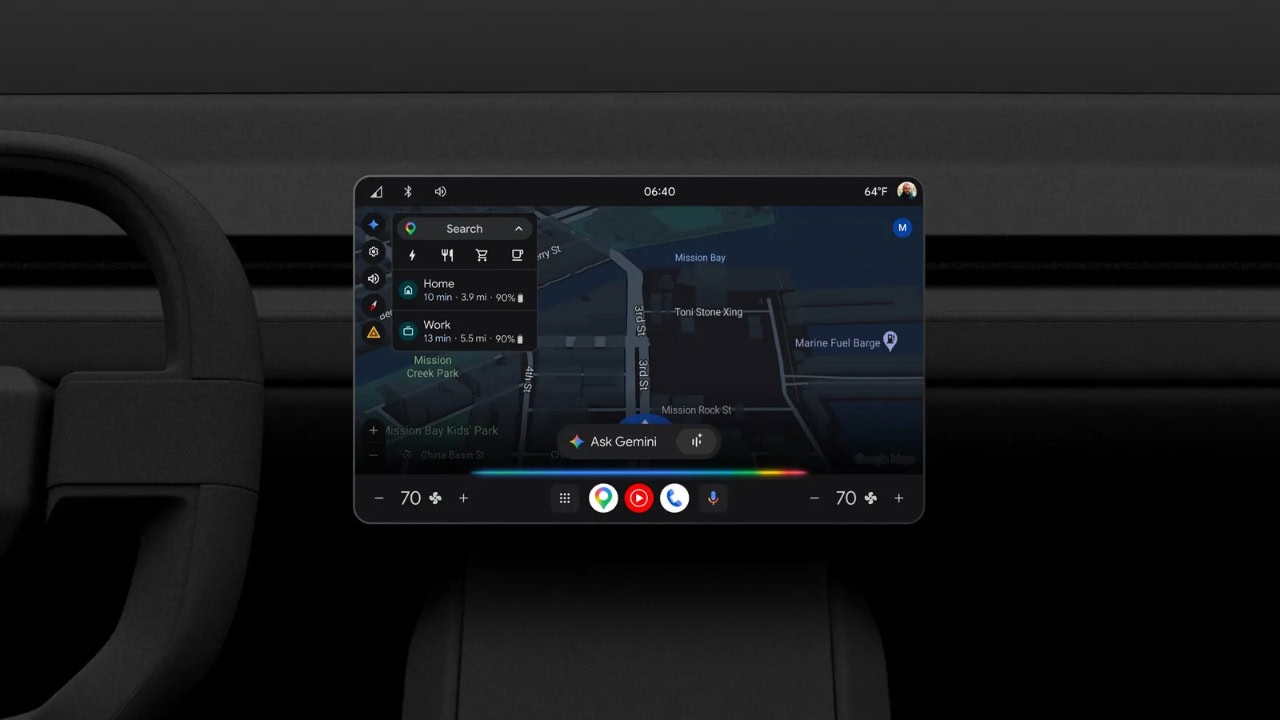
According to Google's company blog, Gemini is rolling out to vehicles with Google built-in as an upgrade that replaces Google Assistant in-car. Google states the software update will reach both new and existing cars starting with English-language users in the United States, and eligible drivers signed into their Google Account will see an upgrade prompt, per Google. General Motors announced it will upgrade about 4 million vehicles model year 2022 and newer, according to GM's press release and reporting by CNET. Reporting from TechCrunch and Android Authority notes Gemini can answer vehicle-specific questions using manufacturer-provided owner's manuals, control in-car settings, summarize messages, and includes a Gemini Live mode for open-ended conversations.
What happened
According to Google's blog post, Gemini is being rolled out to cars with Google built-in to replace the existing Google Assistant in those vehicles. Google states the rollout will start with English-language users in the United States and will be delivered to both new and existing compatible vehicles via a software update. General Motors announced in a company release that it plans an upgrade to about 4 million GM vehicles, model year 2022 and newer, as reported by CNET and GM. Google and multiple outlets report that eligible users signed into their Google Account will receive an on-screen prompt when the update is available.
Google's blog and reporting by Android Authority and TechCrunch describe core Gemini capabilities in cars: tapping into manufacturer-provided owner's manuals to answer vehicle-specific questions, controlling Android Automotive OS-exposed functions such as climate and EV charge status, summarizing incoming messages, planning routes with contextual filters, and surfacing content from apps available via the Google Play Store in-car. TechCrunch and Google also describe Gemini Live as a beta mode for more open-ended, real-time conversations that drivers can activate by voice or a UI control.
Editorial analysis - technical context
Companies integrating large multimodal assistants into embedded vehicle systems commonly face tradeoffs across latency, connectivity, and privacy. Industry-pattern observations: delivering natural, context-aware responses while maintaining responsive voice interactions typically requires a hybrid edge/cloud approach, careful model routing, and tightened telemetry controls to avoid user-perceived lag. Vehicle OEMs and platform providers must also manage OTA update sequencing and rollback paths to ensure infotainment stability during mass rollouts.
Industry context
Industry reporting places this rollout in a broader trend of moving advanced conversational AI into transport environments where the assistant can access vehicle-specific telemetry and documentation. Observed patterns in similar deployments show faster user adoption when assistants can use manufacturer data (owner's manuals, telematics) to give precise guidance, but these integrations often trigger closer scrutiny from privacy, safety, and regulatory stakeholders. The GM announcement illustrates how automakers and platform partners coordinate messaging and opt-in requirements during staged upgrades.
What to watch
For practitioners
monitor how vendors instrument and expose Android Automotive OS APIs for assistant access, and whether Google documents developer-facing interfaces or constraints for app integrations. Observers should track rollout expansion beyond US English, measured latency and offline-fallback behavior in real driving conditions, and any published telemetry or privacy opt-in flows. Also watch for reporting on real-world safety interactions and regulatory responses as conversational assistants gain richer access to vehicle controls and user data.
Key Points
- 1Industry observation: In-car large-model assistants increase demand for hybrid edge/cloud architectures to balance latency, reliability, and model-size constraints.
- 2Industry observation: Access to manufacturer data (owner's manuals, telematics) materially improves assistant usefulness but raises governance and privacy tradeoffs.
- 3Industry observation: Broad OTA rollouts to millions of vehicles elevate CI/CD, rollback, and monitoring into primary engineering concerns for embedded ML teams.
Scoring Rationale
Large-scale deployment of Gemini into factory-installed vehicle infotainment systems affects practitioners building conversational assistants, embedded ML stacks, and OTA delivery pipelines; the GM upgrade to about 4 million vehicles amplifies operational impact and testing surface.
Sources
Public references used for this report.
View 5 more sources
- Google expands Gemini AI rollout to cars with Google built-in: Here's what you can doandroidauthority.com
- Gemini is rolling out to cars with Google built-intheverge.com
- GM Adds Google Gemini for Drivers to Rev Up With AI Assistantcnet.com
- Gemini for Android Automotive is rolling out soon, even if your car ...9to5google.com
- GM Rolls Out Google Gemini AI to 4 Million Vehiclesautoweek.com
Practice interview problems based on real data
1,625 SQL & Python problems across 15 industry datasets — the exact type of data you work with.
Try 250 free problems