
Gamification Transforms Classroom Learning with AI
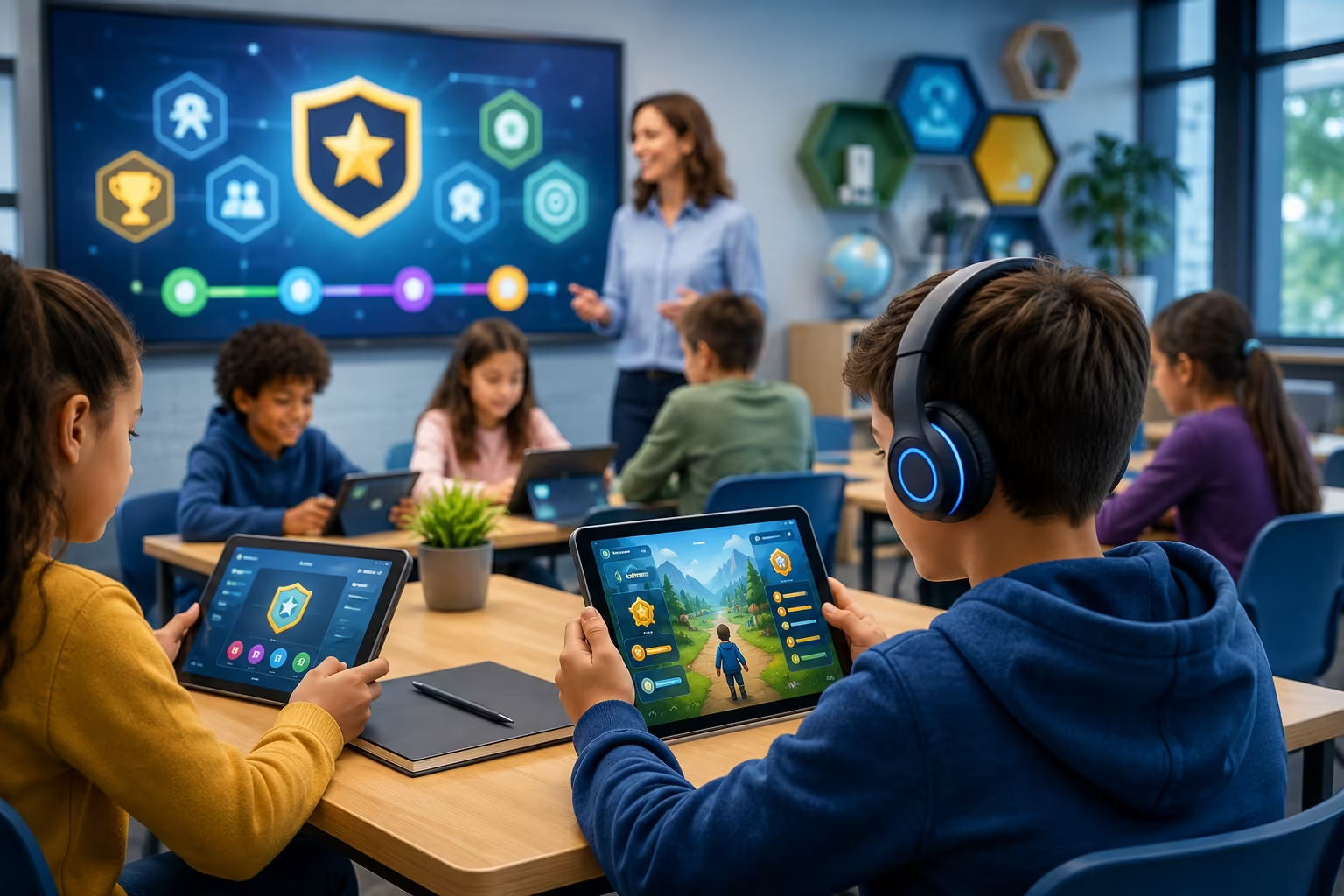
EdCircuit reports that gamification in classrooms has moved beyond simple points, badges, and leaderboards into a broader instructional framework combining psychology, technology, personalized learning, and AI. Implementations now include digital escape rooms, mission-based science investigations, micro-credentials for demonstrated mastery, team challenges, and personalized learning pathways. AI accelerates this shift by enabling adaptive experiences tailored to individual students. A 2026 Frontiers Education systematic review and meta-analysis of 81 studies found that gamified, AI-supported digital learning environments produce significant positive effects on learning outcomes and student engagement compared with non-AI instruction, with implications for data pipelines, assessment validity, and student privacy.
What happened
EdCircuit reports that gamification in modern classrooms is evolving from basic rewards systems into a broader instructional framework that blends psychology, technology, personalized learning, and AI. Contemporary implementations include digital escape rooms, mission-based science investigations, micro-credentials for demonstrated mastery, collaborative team challenges, and personalized learning pathways tailored to individual students.
EdCircuit states that many implementations shift focus away from surface-level rewards toward sustained engagement and meaningful mastery, and that AI is accelerating this evolution by enabling adaptive experiences.
Research context
A 2026 systematic review and meta-analysis published in Frontiers in Education examined 81 peer-reviewed empirical studies (from 2015-2025) on gamified, AI-supported digital learning environments (GAI-DLEs) in school settings. Using PRISMA 2020 guidelines and random-effects models, the review found that GAI-DLEs produce a significant positive effect on science learning outcomes compared with non-AI instruction, with subgroup analyses by education level, AI technology type, and region providing additional granularity.
Technical considerations
AI-enabled gamification typically involves student modeling and proficiency estimates, adaptive content recommendation, rule-based progression systems, and real-time feedback analytics. Practitioners integrating these systems should account for labeled mastery data requirements, calibration of reward mechanics to learning objectives, and evaluation frameworks that separate engagement metrics from learning outcomes. Privacy-preserving telemetry and interoperability with existing learning management systems are common engineering requirements.
What to watch
Key indicators include vendor evidence of learning gains beyond engagement metrics, robustness of student models under curriculum variation, privacy and data-handling practices, portability standards for micro-credentials, and integration with gradebook and assessment systems.
Key Points
- 1A 2026 Frontiers Education meta-analysis of 81 studies found AI-gamified learning environments significantly improve outcomes over non-AI instruction.
- 2EdCircuit reports classrooms are shifting from badge-based rewards to mastery-focused missions powered by adaptive AI personalization.
- 3Practitioners must weigh engagement gains against data pipeline complexity, assessment validity, and student privacy when adopting AI-gamified systems.
Scoring Rationale
EdCircuit trend piece on AI-gamification in classrooms backed by a 2026 Frontiers meta-analysis of 81 studies. Relevant to edtech practitioners but a modest news event - a trend piece and supporting research rather than a product launch or policy shift.
Sources
Public references used for this report.
Practice with real Ad Tech data
90 SQL & Python problems · 15 industry datasets
250 free problems · No credit card
See all Ad Tech problems
