Galaxy Digital Launches $100M Crypto-Traditional Fund
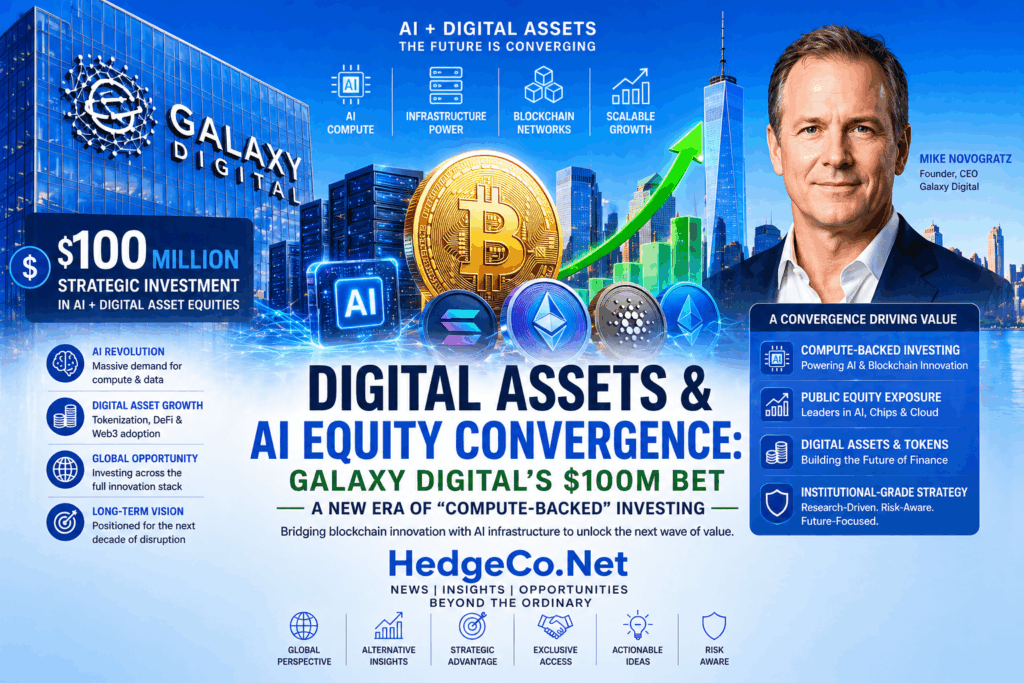
Public reporting states that Galaxy Digital is deploying $100 million into a hybrid investment strategy that blends digital assets with AI-linked equities (HedgeCo.Net; AInvest). AInvest further reports the vehicle is structured as a hybrid hedge fund with a reported 30% crypto / 70% traditional equity allocation focused on crypto-linked fintech and blockchain firms (AInvest). KuCoin coverage indicates the fund was planned for a Q1 launch (KuCoin). HedgeCo.Net frames the move as targeting so-called "compute-backed" assets tied to infrastructure such as data centers and GPUs. None of the scraped reports include a direct quote from Galaxy Digital on the fund rationale or specific terms.
What happened
Public reporting states that Galaxy Digital is directing $100 million into a hybrid strategy that mixes digital assets and AI-linked equities, framing the allocation as a bridge between crypto and traditional markets (HedgeCo.Net; AInvest). According to AInvest, the reported fund is structured as a $100M crypto-traditional hybrid hedge fund with a published allocation of 30% crypto / 70% traditional equity, focused on crypto-linked fintech and blockchain companies (AInvest). A KuCoin snippet reports the vehicle was planned for a Q1 launch (KuCoin). HedgeCo.Net describes the initiative as part of a broader shift toward "compute-backed" assets tied to infrastructure such as data centers, GPUs, and networking systems (HedgeCo.Net). None of the scraped coverage contains a direct Galaxy Digital quote disclosing internal rationale or exact product terms.
Technical details
Editorial analysis - technical context: Public reporting uses the term compute-backed to denote investments whose value derives from underlying compute capacity and data pipelines rather than token economics alone (HedgeCo.Net). The concept links two observable trends: rising institutional demand for GPU and data-center exposure to support large AI models, and investor interest in crypto infrastructure providers that capture fees or margins from network activity. This framing treats compute and related infrastructure as an asset class that can influence both equity and token returns.
Context and significance
Industry context: Coverage positions the fund as an example of convergence between digital-asset strategies and traditional equity investing (HedgeCo.Net; AInvest). For institutional and retail allocators, blended products with explicit compute or AI-equity exposure can alter correlation structures between crypto and public markets, with potential implications for portfolio construction and risk management. Reporting highlights that such vehicles move beyond pure token speculation toward exposure to firms and hardware that enable both AI workloads and blockchain services (HedgeCo.Net).
Market mechanics and investor implications
Editorial analysis: From a practitioner perspective, hybrid structures that combine token holdings with equities or infrastructure-related securities typically raise due diligence priorities around custody, valuation, and liquidity treatment for nonstandard assets. Those designing or evaluating similar products will need transparent valuation methodologies for token holdings, clear custody and settlement arrangements, and policies for handling hardware or provider concentration risks. Public reporting does not supply those operational details for Galaxy Digital's vehicle (HedgeCo.Net; AInvest).
What to watch
Observers should track several indicators to validate market impact and execution: fund launch documents or a formal Galaxy Digital filing that confirm allocation, custody, and gating terms; secondary-market flows into GPU, data-center, and cloud-provider equities if compute-backed investing gains traction; regulatory guidance on hybrid products that mix tokens and securities; and asset-manager disclosures that replicate the reported 30%/70% allocation profile (AInvest; KuCoin; HedgeCo.Net). Monitoring these items will clarify whether the announcement represents a product-level experiment or a broader reallocative trend.
Bottom line
Editorial analysis: Public reporting frames Galaxy Digital's $100M move as illustrative of a larger shift where compute capacity becomes a cross-cutting investment thesis across crypto and AI-related public equities. The immediate effects will depend on fund-level execution details and whether other managers duplicate the structure at scale. Reporters did not locate a direct Galaxy Digital quote explaining the firm-level rationale in the scraped coverage.
Key Points
- 1Hybrid funds that mix crypto and AI equities emphasize compute infrastructure, shifting returns drivers toward hardware, data, and service revenue.
- 2Reported allocations like a 30% crypto / 70% equity split can raise demand for GPU, data-center, and cloud-provider stocks as indirect crypto exposure.
- 3For practitioners, convergence heightens due diligence on custody, valuation, liquidity, and regulatory classification for hybrid token-equity products.
Scoring Rationale
Notable market-development: a major crypto institutional player allocating a material fund to hybrid crypto-equity strategies alters product mixes and could shift capital toward compute-related equities. The story is tactical rather than paradigm-shifting, and immediate impact depends on execution details that are not yet public.
Sources
Public references used for this report.
Practice with real FinTech & Trading data
90 SQL & Python problems · 15 industry datasets
250 free problems · No credit card
See all FinTech & Trading problems