Frontier exascale AI trains model of magnetic turbulence in cosmic plasmas
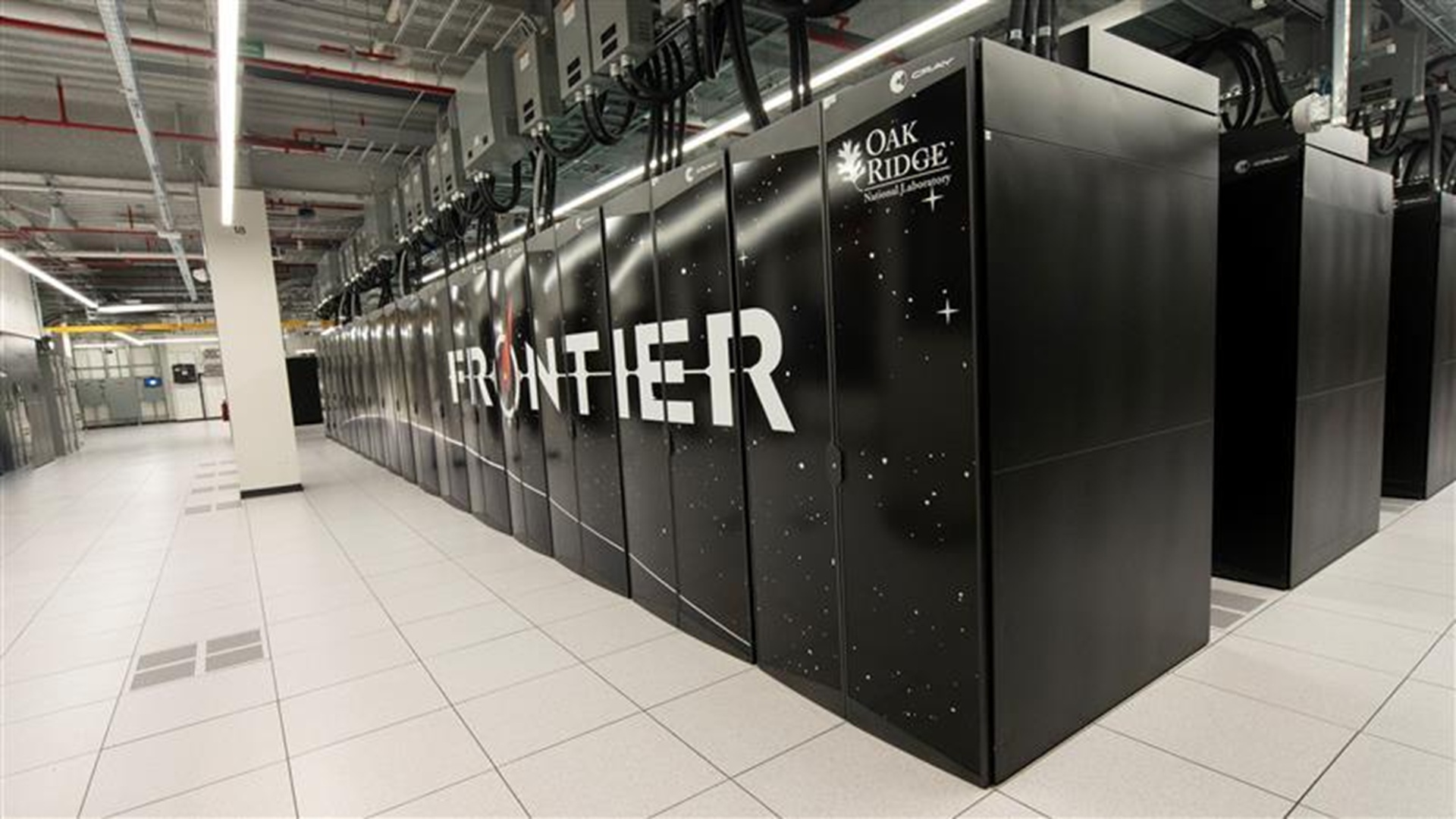
Researchers used the Frontier exascale supercomputer at Oak Ridge National Laboratory to train an AI model that captures magnetic turbulence in plasma, a step toward better modeling of stars and supernovae.
What happened
Frontier, the Oak Ridge National Laboratory supercomputer described as the first exascale system, was used to train an artificial intelligence model that captures magnetic turbulence within a plasma. The work, led by Semih Kacmaz and overseen by Eliu Huerta, aims to improve astrophysical modeling and predictions of cosmic events such as stars and supernovae.
Technical approach
To tackle the challenge, the team adopted a two-stage approach:
- •First, a physics-informed neural operator learns the behavior of plasma.
- •Then, a diffusion-based model reconstructs the small eddies and rapid fluctuations that define turbulent flows.
Why it matters
Huerta said, "This kind of capability has long been the dream of astrophysicists and many other scientists."
Key Points
- 1Frontier is the first exascale computer enabling AI-based modeling of complex plasma turbulence
- 2A two-stage approach combines physics-informed neural operators with diffusion models to reconstruct small-scale turbulence
- 3The work aims to improve predictions of cosmic events and support astrophysical research on stars and supernovae
Scoring Rationale
Grounded in exascale computing and AI-driven plasma turbulence modeling with no unsupported numeric claims.
Sources
Public references used for this report.
Practice interview problems based on real data
1,625 SQL & Python problems across 15 industry datasets — the exact type of data you work with.
Try 250 free problems