FIS Urges Proof-Based Governance for Agentic Commerce
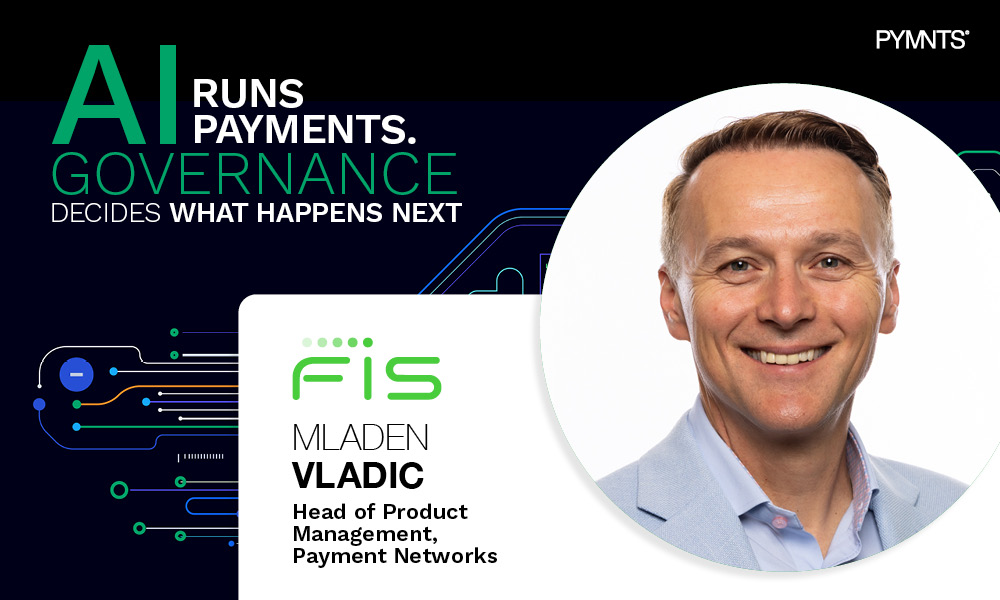
In a PYMNTS eBook, Mladen Vladic, Head of Product Management, Payment Networks at FIS, argues that integration is the critical failure point for AI governance in the emerging era of agentic commerce. The piece cites projections that AI agents could orchestrate up to $1 trillion in U.S. retail revenue by 2030, and warns that governance often breaks down when models operate in silos separated from authorization, authentication and dispute networks (PYMNTS). Vladic emphasizes that governance should be architected into the payment flow rather than layered on after deployment, and highlights a trade-off between rapid personalization and secure, receipt-backed proof of transactions (PYMNTS).
What happened
In a PYMNTS eBook, Mladen Vladic, Head of Product Management, Payment Networks at FIS, writes that the industry is entering an era of agentic commerce where AI agents act on behalf of shoppers to source and complete purchases (PYMNTS). The article states that AI agents are projected to help orchestrate up to $1 trillion in U.S. retail revenue by 2030 (PYMNTS). Vladic reports that AI governance most commonly fails at the point of integration, when purchase-event signals and item-level intelligence do not communicate within a single, secure infrastructure (PYMNTS).
Technical details
Vladic highlights concrete integration points he says are critical: embedding governance directly into authorization, authentication, and dispute networks rather than treating AI as a post-purchase optimization layer (PYMNTS). The article describes a loss of visibility when models operate in silos and calls for "receipt-backed proof" as a foundation for secure, auditable commerce interactions (PYMNTS). These are presented as structural design requirements for payment flows in agentic scenarios (PYMNTS).
Editorial analysis
Industry observers note that payments systems are uniquely sensitive to provenance, authentication, and liability, which raises the bar for any AI agent that initiates or completes transactions. Companies integrating automation into checkout or negotiation workflows typically need stronger end-to-end telemetry and cryptographic receipts to satisfy risk and compliance controls. This pattern makes the payoffs of personalization contingent on simultaneously upgrading integration and auditability capabilities.
What to watch
For practitioners
monitor vendor and standards activity around machine-readable receipts, cryptographic proof of buyer intent, and APIs that surface authorization and dispute lifecycle events to AI decision layers. Observers should also watch for pilot programs where retailers combine agentic interfaces with hardened payment rails, since those deployments will reveal gaps in observability and control. Finally, track regulatory guidance that treats agent-initiated transactions differently from human-initiated ones, because that could change required governance features.
Key Points
- 1Agentic commerce shifts AI from back-end support to primary customer engagement, increasing governance surface area across payment flows.
- 2Governance failures commonly occur at integration points, so auditability and receipt-backed proofs are prerequisites for trustworthy agentic payments.
- 3Practitioners should prioritize machine-readable receipts and APIs that expose authorization and dispute signals to AI layers before scaling agentic features.
Scoring Rationale
The piece highlights a notable infrastructure challenge for payments teams integrating AI agents, relevant to fintech and commerce practitioners. It is important for a subset of AI-in-payments projects but not a general-purpose frontier model release.
Sources
Public references used for this report.
Practice with real Payments data
90 SQL & Python problems · 15 industry datasets
250 free problems · No credit card
See all Payments problems