Filmmakers Resurrect Val Kilmer Using Generative AI
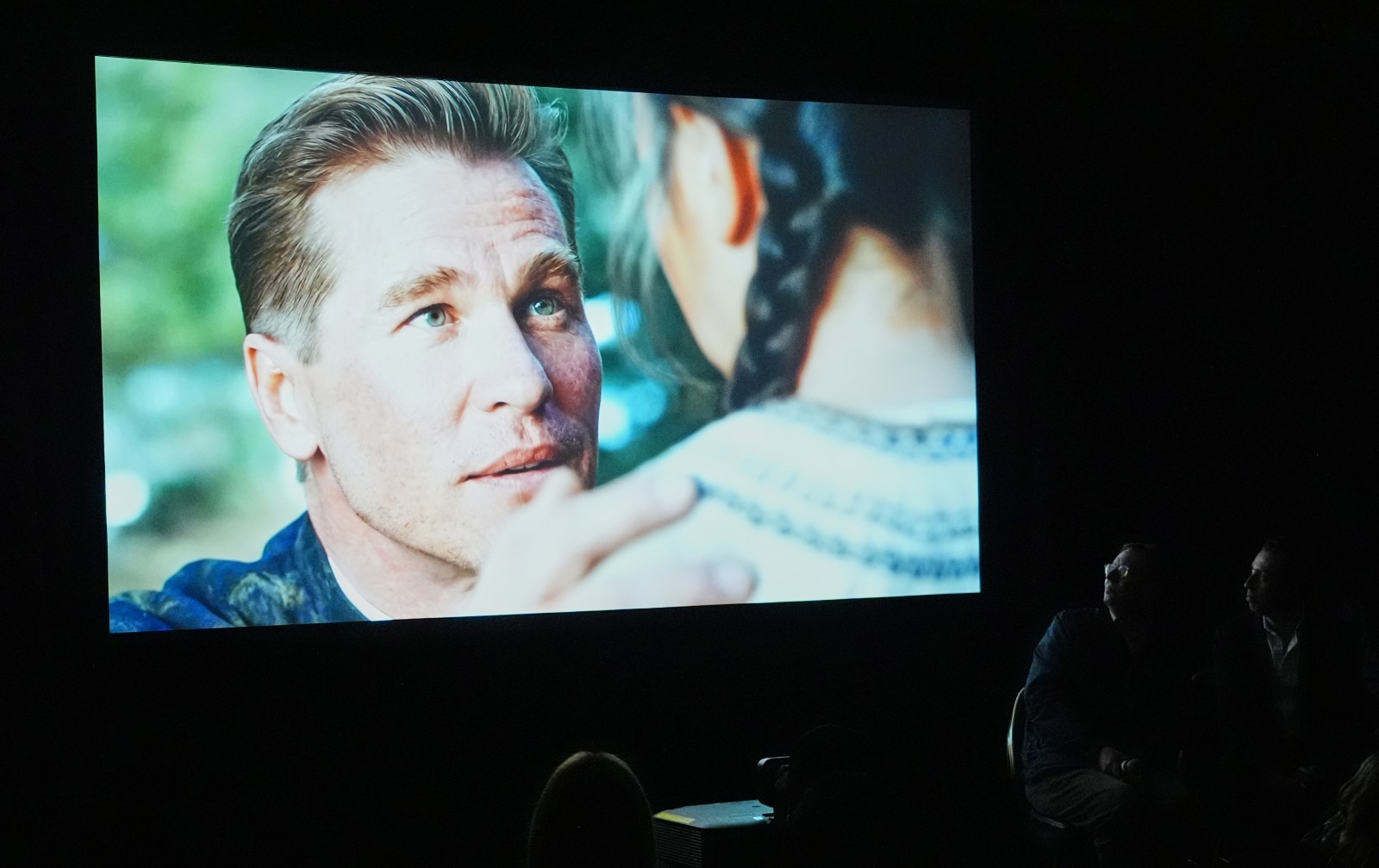
The upcoming historical drama As Deep as the Grave features a generative AI recreation of the late actor Val Kilmer, created with the cooperation of his family and estate. Director Coerte Voorhees and production company First Line Films used archival imagery and footage, along with AI-driven visual and audio synthesis, to portray Kilmer at multiple ages as Father Fintan. The trailer debuted at CinemaCon and the production says the work relied on "state-of-the-art" generative AI, though it has not disclosed precise tools or models. The announcement prompted both support from Kilmer's family and public backlash, crystallizing legal, ethical, and production questions for filmmakers and AI practitioners.
What happened
The independent film As Deep as the Grave will include an AI-generated performance of the late Val Kilmer, recreated with permission from his estate and family and shown in a trailer unveiled at CinemaCon. Director Coerte Voorhees and First Line Films say the project uses "state-of-the-art" generative AI to present Kilmer as Father Fintan at multiple ages, combining family-provided younger images, archival footage, and audio from his later years.
Technical details
The filmmakers have not disclosed specific models or vendors, so the pipeline can only be inferred from public descriptions. Practitioners should expect a multi-stage system that includes face-reenactment and neural-renderer components for temporally consistent facial performance, plus voice-cloning or speech synthesis tuned to Kilmer's damaged late-life voice.
- •Assets reportedly used: family-supplied photographs and archival footage to build multi-age datasets, plus on-set reference material for background actors and lighting.
- •Likely technical steps: facial alignment and identity encoding, expression transfer to a performance rig, neural rendering to match film grain and camera optics, and audio restoration or synthesis to produce dialogue.
- •Provenance and safeguards mentioned in industry discussion are absent from public statements; there is no disclosure of visible watermarking, signed attestations, or use of standards like C2PA to signal synthetic content.
Context and significance
This production sits at the intersection of creative VFX and generative AI, but it differs from classical CGI solutions used to finish performances in past films. Kilmer was cast before he became medically unable to record, and his estate and daughter Mercedes Kilmer provided explicit consent. That cooperation short-circuits some legal hurdles, but it does not eliminate broader ethical and labor questions. The rollout follows publicized industry uses of synthetic likenesses and intensifies debates about consent, posthumous rights, residuals, and contractual clauses that will now need to specify acceptable uses of image-synthesis and voice-synthesis technologies.
Why practitioners should care
Studios and VFX houses will see demand for modular, auditable pipelines that combine archival-data conditioning with high-fidelity rendering while preserving provenance. AI engineers and pipeline architects need to plan for dataset curation, bias auditing when reconstructing diverse ages and physiognomies, and integration of technical watermarking and metadata standards. Legal teams must negotiate estates, performance credits, and future monetization clauses well before production.
Public reaction and industry fallout
The announcement generated a mixed response. Some fans and commentators call the resurrection disrespectful and argue for legal limits, while the Kilmer family framed it as an artistic collaboration he would have supported. That split mirrors wider discourse and suggests regulators, guilds, and vendors will have to clarify best practices and rights-managed toolsets.
What to watch
Track disclosures from the filmmakers about the specific tools and any provenance measures, SAG-AFTRA or legal guidance updates on posthumous likeness use, and technical releases from vendors offering auditable face and voice synthesis with built-in provenance. The precedent set here will influence contracts, IP negotiations, and the design of production-grade synthetic-media pipelines.
Key Points
- 1Estate-approved AI recreation enables a posthumous starring role, setting a creative precedent for film productions using synthetic likenesses.
- 2Opaque technical disclosure leaves open questions about provenance, watermarking, and auditability for face and voice synthesis pipelines.
- 3Public backlash plus family support highlights the need for clear legal frameworks, contractual language, and industry best practices.
Scoring Rationale
This is a notable precedent: an estate-approved, AI-enabled feature performance elevates technical and legal concerns for film production. It is not a frontier-model breakthrough, but it will materially influence industry practices, contracts, and provenance demands.
Sources
Public references used for this report.
Practice interview problems based on real data
1,625 SQL & Python problems across 15 industry datasets — the exact type of data you work with.
Try 250 free problems